Free Shipping on Orders $99+
Use Code FLAT15 & Get 15% Off On All Orders
Choose your store
Prices, currency, and delivery follow the store you select.
Prices, currency, and delivery follow the store you select.
An outdoor display in Alaska has to be planned around the location as much as the event itself. A canopy used at a summer market in Anchorage can face very different conditions than one transported to Fairbanks or a coastal community where damp air, uneven ground, and stronger exposure change the setup requirements.
That makes portability only one part of the buying decision. The frame, fabric, anchoring method, wall configuration, transport system, and storage routine all need to work together. well-planned custom canopy tent can then serve as a repeatable branded environment instead of becoming equipment that is difficult to deploy once conditions change.
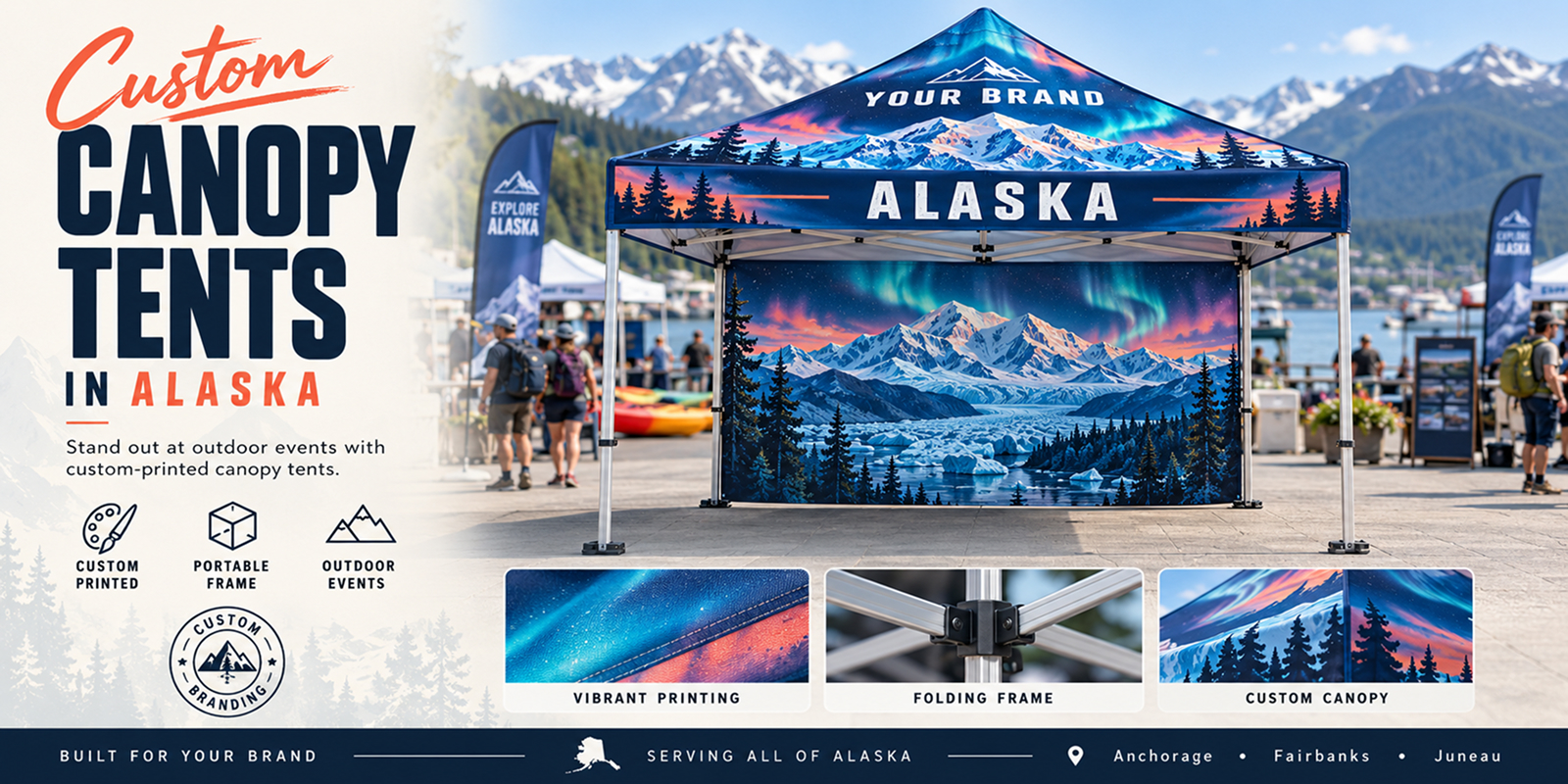
The term Alaska covers a wide range of operating conditions. Anchorage combines an urban event environment with access to parks, fairs, and outdoor commercial spaces. Fairbanks brings much larger temperature swings and a more pronounced interior climate. Coastal locations introduce persistent moisture, salt exposure, and changing wind conditions.
The same canopy can still work across these environments, but the way it is configured and managed should change with the venue.
| Location type | Planning consideration | Canopy priority |
|---|---|---|
| Anchorage events | Paved areas, parks, organized public events | Ballast options and compact footprint |
| Fairbanks outdoor events | Larger temperature variation | Fabric handling and seasonal storage |
| Coastal communities | Moisture, wind and damp ground | Protected frame and quick drying |
| Remote event sites | Transportation and limited local supplies | Compact packing and complete accessory kit |
| Fairgrounds | Assigned booth dimensions and venue rules | Correct footprint and compliant anchoring |
Anchorage Parks and Recreation considers events involving vendors or special equipment to be special events, with an application process for qualifying activities. That means the canopy should be planned alongside the event site rather than selected independently of it.
A lightweight pop-up frame is attractive because it makes transportation easier, but Alaska buyers should pay closer attention to frame construction and the way the structure will be secured once it reaches the site.
Printing Limitless uses aluminum frames with adjustable height systems on its custom canopy range. The 10 x 10 model uses telescopic legs with a 1.6-inch pole diameter, while the 10 x 20 configuration uses an aluminum frame with adjustable layers and poles measuring approximately 1.57 inches in diameter.
These specifications provide a useful starting point, but frame weight should never be treated as the entire anchoring system. A canopy that weighs approximately 37.48 pounds as a 10 x 10 stand still requires an appropriate anchoring method for the surface and conditions at the event.
That distinction becomes especially important when moving between gravel, grass, pavement, and other surfaces.
A setup that works on one Alaskan site may be impractical at another. Staking can be difficult on rocky ground, unsuitable on pavement, and restricted at some public or protected locations. A buyer traveling between venues should therefore have an anchoring plan that does not depend on a single type of ground.
Printing Limitless offers four sandbags as an available option on its 10 x 10 custom canopy, providing a practical starting point for locations where ground penetration is unavailable.
For larger or more exposed setups, venue requirements should determine the appropriate ballast. A 35 to 50 pound figure can be used as a buyer planning reference for some configurations, but it should not be presented as a universal Alaska requirement. The actual requirement can depend on the venue, canopy dimensions, surface, exposure, and local safety instructions.
The important point is to purchase the anchoring equipment before the event rather than discovering at setup that the supplied method cannot be used.
Alaska's damp coastal environments make fabric handling particularly important. A canopy graphic that gets packed away while wet can develop problems during storage even when the original material is designed for outdoor use.
Printing Limitless uses 600 denier acrylic-coated polyester with an 8 oz graphic weight on its custom canopy products. The 6 x 6 model also offers a PVC-free sustainable fabric alternative. Dye sublimation printing is used for the graphics.
The protective coating helps the fabric perform outdoors, but it does not eliminate the need for proper handling after a wet event. Printing Limitless specifically advises allowing the fabric to become completely dry after cleaning before storage.
For Alaska deployments, that means the event plan should include a place and enough time to dry the graphic before it goes into long-term storage.
This is especially important when a canopy moves directly between events without spending much time indoors.
A custom canopy has a large printable surface, so the quality of the graphic affects how the entire booth looks. Dye sublimation printing places the branding into the polyester material rather than treating the canopy as a simple surface that receives a conventional decal.
Printing Limitless uses dye sublimation on its custom canopy fabric and offers Pantone color matching as an optional feature. Buyers can upload existing artwork or work with a designer before production, with final design approval taking place before printing.
That workflow can be useful when the canopy needs to match an established brand identity. Instead of treating the roof, walls, and accessories as separate pieces, the artwork can be planned as one visual system.
A strong design should also account for viewing distance. The roof can carry recognizable brand colors and identity, while wall graphics can handle the information visitors need once they reach the booth.
A larger canopy gives you additional display area, but Alaska adds another consideration: how the complete system will travel between events.
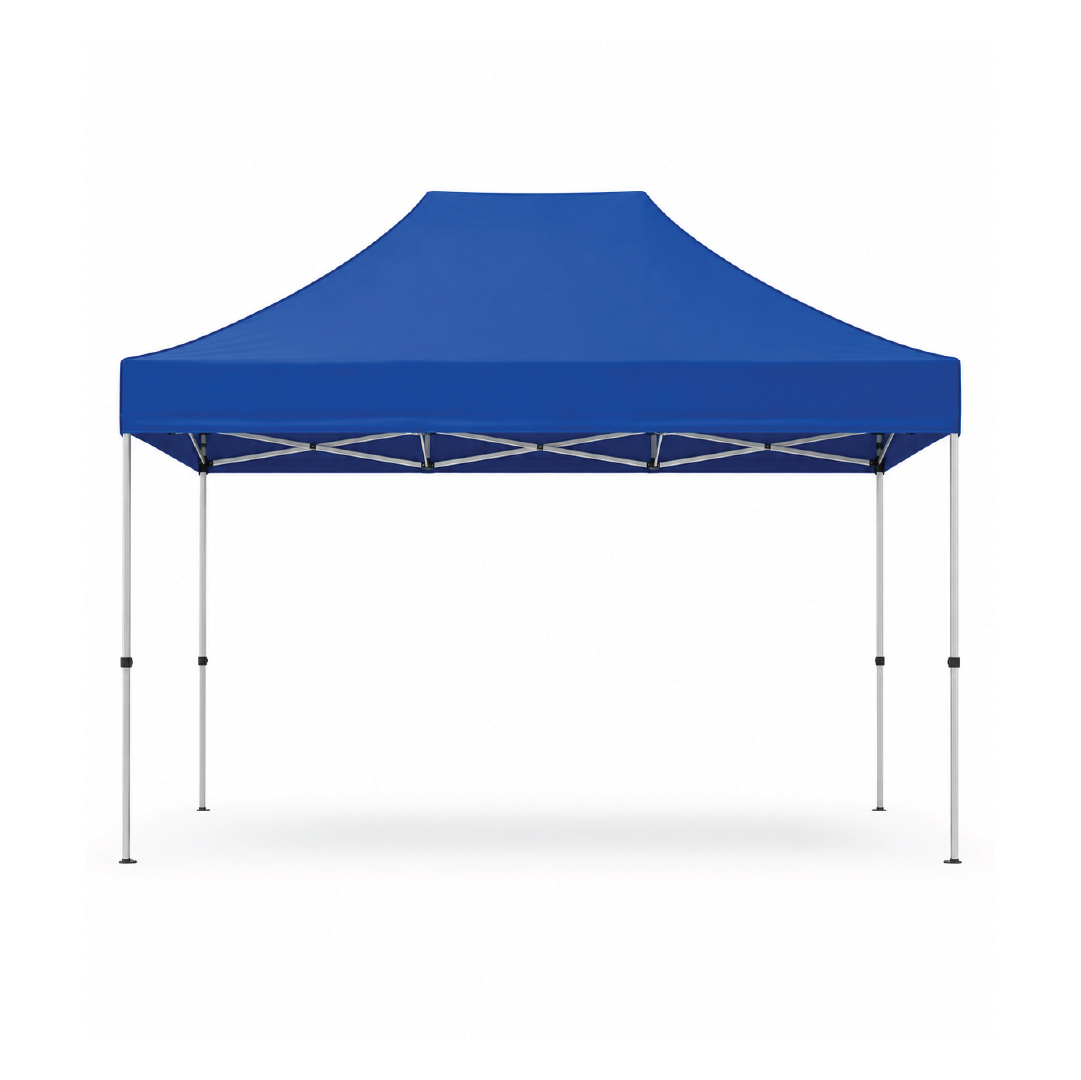
Printing Limitless offers 6 x 6, 10 x 10, and 10 x 20 custom canopy configurations. The 6 x 6 model is useful when the available footprint is limited, while the 10 x 10 format provides a more conventional event display area. The 10 x 20 configuration is suited to larger presentations requiring additional covered space.
| Size | Best suited to | Planning consideration |
|---|---|---|
| 6 x 6 | Compact promotional spaces | Easier to fit into smaller footprints |
| 10 x 10 | Standard event displays | Balanced display and working area |
| 10 x 20 | Larger exhibits | Requires additional floor and transport planning |
The 10 x 20 should not automatically be considered the better choice simply because it offers more space. A larger footprint also means more material, additional anchoring considerations, and greater transport requirements.
If the display will travel frequently, the smallest size that comfortably supports the intended activity can sometimes be easier to manage.
Remote Alaskan events create a practical problem that is easy to overlook. If a small accessory is missing at a local event, replacement may be simple. If the same problem occurs at a remote location, the entire display can be affected.
The canopy should therefore travel as a complete deployment kit.
Pack together:
The 10 x 10 Printing Limitless configuration includes options for sandbags, a topper, and flag attachments, while the 6 x 6 model offers an optional wheeled travel bag.
Keeping these components together reduces the chance of arriving at an event with the canopy itself but without the equipment needed to complete the setup.
A temporary event canopy should not be treated as a structure designed to remain standing through accumulating snow or ice.
Snow accumulation adds weight to the roof and changes the forces acting on the frame and fabric. A structure that is appropriate for temporary event use is not automatically suitable for carrying an unexpected overnight snow load.
The safest planning approach is to monitor event conditions and follow the venue's instructions for severe weather. If snow or dangerous conditions develop, the canopy should be taken down rather than treated as a temporary building.
This is especially important for events scheduled during Alaska's transitional seasons, when a mild daytime setup can encounter very different conditions later in the day.
Alaska does not have a single simple tent rule that can be applied to every city and event.
Anchorage's published temporary tent guidance states that a single tent of 400 square feet or less can fall outside the operational permit requirement under the listed fire code provisions. It also identifies certain open-sided arrangements up to 700 square feet that can qualify under specified separation and clearance conditions. Tents exceeding those limitations require an Anchorage Fire Department Operational Permit, and the guidance calls for structural stability documentation.
This is important for buyers considering larger custom configurations. A 10 x 10 canopy covers 100 square feet, while a 10 x 20 covers 200 square feet, so those standard footprints are below the cited 400 square foot threshold when considered individually. That does not mean every event using them is automatically permit-free.
Anchorage also has a separate special event process for public events, large private gatherings, and events using vendors or special equipment.
The venue and event type therefore need to be checked alongside the canopy dimensions.
The Alaska State Fair in Palmer provides a useful example of the level of practical planning that can go into an Alaskan outdoor display. Its vendor handbook advises exhibitors to prepare for all weather conditions and recommends that tents and structures have floors. It also states that tents should be secured to a floor for security against wind and rain.
The fair's vendor guidance also addresses accessibility, requiring vendor booths to comply with ADA accessibility requirements. It notes that vendors using ramps may need to position their booth farther from pavement or lower the booth to accommodate a functional ramp.
That introduces an important planning point: the canopy footprint is not necessarily the complete booth footprint.
If a display needs an accessible entrance, equipment, counters, or customer circulation space, those areas need to be considered before selecting the canopy size.
A canopy can fit inside the assigned space and still create an uncomfortable booth if the internal layout is too crowded.
The 10 x 10 format can provide enough room for a focused display, while a 10 x 20 canopy gives greater flexibility for product presentation and customer conversations. Wall configurations can then be used to create visual boundaries without closing the entire front of the space.
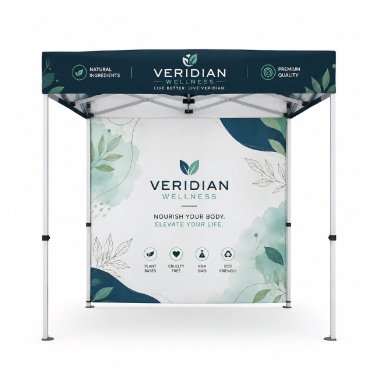
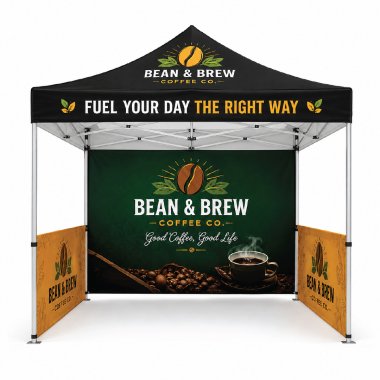
Printing Limitless offers different front, back, and side wall configurations on its canopy products, allowing the display to be configured around how visitors enter and move through the space.
For a busy event, keeping the primary entrance open can make the display easier to approach. A full rear wall can provide a strong branded background, while side panels can be selected according to the desired level of separation.
The best configuration is the one that supports the activity happening inside the canopy.
Electrical planning is another issue that can become complicated at remote outdoor events.
The Alaska State Fair's vendor handbook, for example, specifies that vendors using electricity must use heavy-duty extension cords rated for outdoor use and appropriate for the required amperage. It also prohibits certain exterior wiring arrangements and requires compatibility with the fair's electrical system.
This matters when a canopy display includes lighting, charging equipment, screens, or other electrical devices. The cable path should be planned so that it does not interfere with entrances, accessible routes, or customer movement.
The canopy itself does not solve the electrical problem. The complete booth layout needs to account for where power originates, where cables travel, and how the equipment will be protected from outdoor moisture.
Alaska event schedules can involve repeated deployment, so a canopy should be designed once and configured for consistent use.
Printing Limitless allows customers to choose between stand only, graphic only, and stand plus graphic bundle configurations on the 10 x 10 model. Buyers can also upload artwork at checkout or provide it later through a secure upload process. The company offers professional design assistance for buyers who need help developing the graphic.
That gives a buyer flexibility at different stages of the project. A company with finalized branding can move directly into artwork production, while a new campaign can use the design assistance workflow before the canopy is produced.
The result is particularly useful for organizations that expect the same branded display to travel to several Alaskan events.
Accessories are most useful when they support the way the booth operates.
A topper can improve visibility when the surrounding event has many competing displays. A flag can provide another high-visibility brand marker. Sandbags can provide an anchoring option where staking cannot be used.
Printing Limitless offers these options on its custom canopy configurations, including toppers, sandbags, and flag holder attachments.
Wall panels can also change the function of the space. A full rear wall can provide a consistent branded background, while half panels can preserve access and visibility. The 6 x 6 model provides several half and full wall choices as well.
Instead of adding every accessory, select the components that solve an actual site or display problem.
Storage conditions matter when a canopy will sit unused between seasons.
The fabric should be completely dry before it is packed away, particularly after exposure to rain, fog, or other moisture. The frame should also be inspected after transport so bent components, loose connections, or damaged fittings do not go unnoticed until the next event.
The Alaska State Fair itself provides a useful reminder that seasonal storage needs planning. Its winter storage program uses covered facilities with specific storage arrangements, demonstrating the importance of protecting equipment during the off-season.
A private canopy does not need the same storage arrangement, but the principle is similar. Keep the fabric dry, protect the frame, and store the complete system in a location where moisture and physical damage can be controlled.
Before ordering, work through these questions:
Venue
Structure
Fabric
Event operations
Travel
Printing Limitless offers several canopy sizes and configurations that allow an outdoor display to be built around the actual event footprint. Its custom range includes 6 x 6, 10 x 10 and 10 x 20 options, with aluminum frames, 600 denier acrylic coated polyester, 8 oz graphic weight and dye sublimation printing on its custom canopy products.
The product range also gives buyers control over the final presentation through wall configurations, toppers, flag attachments, sandbags, Pantone color matching, and design support. The 10 x 10 configuration also offers an eco-friendly tent fabric and recycled FR fabric option.
For Alaska, that flexibility is useful because the canopy may need to serve very different event environments over its working life. The right configuration can create a recognizable branded space while keeping the practical requirements of transportation, setup, and storage in view.