Free Shipping on Orders $99+
Use Code FLAT15 & Get 15% Off On All Orders
Choose your store
Prices, currency, and delivery follow the store you select.
Prices, currency, and delivery follow the store you select.
Arkansas can make a canopy work hard before the first customer even walks up. A summer afternoon can bring punishing heat and humidity, while a calm-looking setup can suddenly face heavy rain, strong straight-line winds, hail, or severe thunderstorms. Spring and fall deserve attention too, with Arkansas experiencing a secondary severe weather season outside the traditional spring peak.
That makes the buying decision less about picking a canopy that simply looks good and more about building a structure that fits how you'll actually use it. Fabric weight, UV protection, frame construction, anchoring, sidewall flexibility, fire documentation, storage, and branding quality all deserve a place in the specification.
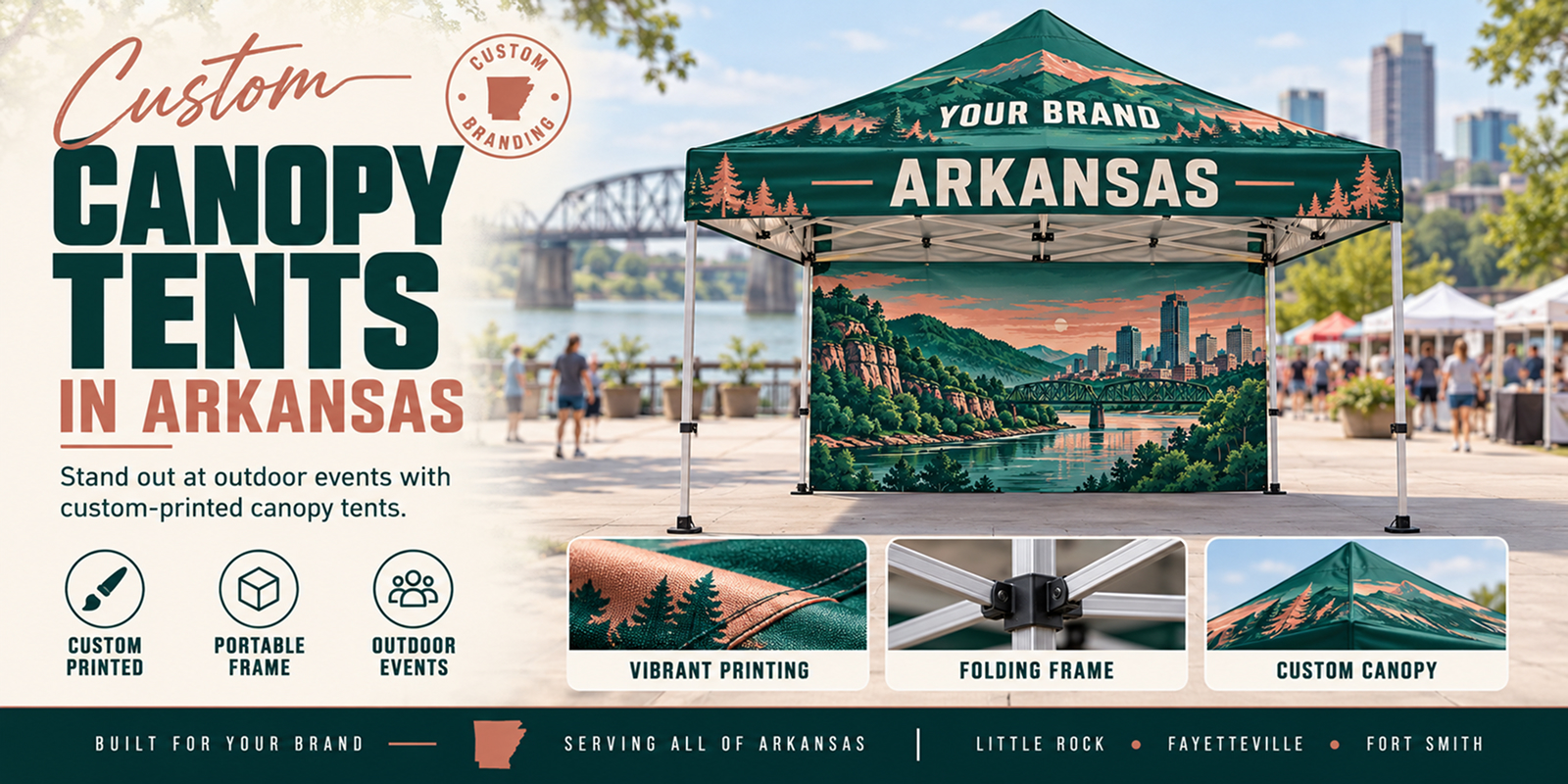
Instead of treating Arkansas weather as one broad category, it helps to connect each condition with the part of the canopy it affects.
| Arkansas condition | What it can affect | What to look for |
|---|---|---|
| Hot, humid summers | Interior comfort, fabric aging and graphic longevity | UV-treated fabric, breathable design options, and quality printing |
| Heavy thunderstorm rain | Roof drainage, displays and electronics | Water-resistant or waterproof fabric construction with properly sealed seams |
| Strong storm winds | Frame joints, legs, roof and anchoring | Commercial-grade frame construction and a properly engineered ballast system |
| Spring and fall severe weather | Overall booth stability and operating decisions | Reliable anchoring, weather monitoring and a setup that can be taken down safely |
| Damp storage conditions | Mildew, odors, staining and fabric deterioration | Mold and mildew-resistant materials plus complete drying before storage |
| Public or regulated locations | Permit and fire inspection requirements | Flame retardant documentation and permanently available certification where required |
The weather case is substantial. The National Weather Service notes that summer in parts of northwest Arkansas combines warm temperatures, humidity, and thunderstorms that can bring strong winds, hail, and tornadoes. Arkansas also experiences a secondary severe weather season in fall, so storm preparation should not be treated as a spring-only concern.
Arkansas heat creates an interesting problem for custom printing: the canopy has to provide shade while the graphics continue looking presentable after repeated exposure to strong sunlight.
A high-denier polyester construction can make sense for commercial use, with 600D being one established option rather than an absolute requirement for every canopy. PU coatings, UV treatments, and sealed seams can further improve weather performance, but the exact construction should be matched to the manufacturer's tested specifications rather than chosen from denier alone. Commercial canopy products available today, for example, use 600D PU-coated polyester with waterproof and UV-resistant specifications.
For Arkansas, the buying checklist becomes:
That last point matters. Even a moisture-resistant canopy can develop problems when it repeatedly goes into storage wet. And therefore, you need to dry the canopy completely before placing it into a closed storage bag for extended periods.
The frame determines how the canopy handles repeated setup, movement, and changing weather conditions. Arkansas buyers should therefore pay attention to the construction details that are easy to overlook when shopping by appearance.
| Frame consideration | Why it matters |
|---|---|
| Aluminum construction | Provides a lighter commercial frame option and avoids the rust concerns associated with damaged steel coatings |
| Commercial steel | Can provide high strength where transport weight is less important |
| Hexagonal legs | Can provide a stronger structural profile in some commercial frame systems |
| Reinforced joints | Reduce dependence on lightweight connection points during repeated setup |
| Straight-leg design | Keeps the usable footprint predictable and works well with many commercial sidewall configurations |
| Peak tension system | Helps keep the canopy fabric properly tensioned and reduces loose fabric that can collect water |
| Spring-assisted or flexible peak components | Can be considered where the manufacturer provides documented structural performance rather than relying on the feature name alone |
The supplied material specifically points toward hexagonal aluminum legs up to roughly 2 inches in profile and spring-assisted peak construction as newer commercial design approaches. Those features can be worth evaluating, but they should be treated as construction options rather than universal requirements or guaranteed protection against severe weather.
A canopy should also never be treated as a structure that can safely remain standing through severe weather simply because its frame is heavier. When severe thunderstorms, damaging winds, or tornado conditions are approaching, the appropriate response is to follow the venue's safety procedures and take the structure down when instructed or when conditions make continued operation unsafe. Arkansas weather can escalate quickly, and the National Weather Service documents damaging wind, hail, tornado, and flash-flood hazards associated with severe storms.
Anchoring is easy to treat as an accessory added after the canopy has been purchased. In Arkansas, it deserves to be considered during the original specification.
A 40 lb per leg requirement is used by some Arkansas markets, but it should not be advertised as a universal statewide rule. Fayetteville Farmers Market, for example, requires 40 lb per leg even for its smaller 4x6 and 5x5 canopies. Fayetteville's official temporary-structure requirements also state that tents must be adequately secured according to manufacturer recommendations.
That creates a useful purchasing checklist:
Before ordering, establish:
This is particularly important because a 10 x 10 canopy, 10 x 15 canopy, and 10 x 20 canopy do not present the same surface area to wind. The anchoring system should therefore be selected according to the actual footprint and the requirements of the location rather than adding an arbitrary weight package after purchase.
Arkansas does not operate as though every city and market has identical canopy requirements. Fayetteville provides a useful example of why buyers should check the specific location before finalizing a commercial canopy.
According to the city's current fire department guidance, a permit applies to tents and temporary structures that are:
| Fayetteville trigger | Requirement |
|---|---|
| More than 400 sq. ft. with one or more sidewalls | Tent permit and Fire Marshal inspection |
| More than 400 sq. ft. within 20 ft. of a building or structure | Permit and inspection |
| Open-sided individual or multiple tents exceeding 700 sq. ft. without a fire break | Permit and inspection |
| Covered by the applicable fire code requirements | Approved permit must be posted on site |
The city also requires flame-retardant certification for tents, canopies, and temporary structures covered by its requirements, with certification either affixed to the tent or kept available for inspection. Fayetteville's guidance also calls for No Smoking signs in conspicuous locations and specifies separation requirements involving buildings, lot lines, vehicles, generators, and other temporary structures.
That makes compliance documentation part of the buying decision rather than an administrative detail to sort out later.
A useful Arkansas canopy specification can change depending on what happens underneath it.
| If the setup needs to... | Consider prioritizing... |
|---|---|
| Stay comfortable during hot afternoons | UV-treated roof fabric, light-colored surfaces and roof ventilation |
| Protect merchandise during driving rain | Water-resistant or waterproof fabric with properly sealed seams and appropriate sidewalls |
| Handle frequent commercial setup | Reinforced frame construction, quality joints and a durable transport system |
| Maintain a strong visual identity | Full custom dye-sublimation graphics and coordinated walls |
| Operate around regulated venues | Flame-retardant documentation and sewn-in or manufacturer-provided certification as required |
| Use electrical accessories | Integrated cable management and venue-approved electrical components |
| Travel between locations | Lightweight aluminum construction, telescoping components and a wheeled transport bag |
| Work in changing wind conditions | Commercial frame construction plus an appropriately sized ballast system |
This approach also prevents overbuying. A canopy used occasionally for a local market does not necessarily need the same specification as one transported across Arkansas every weekend for a commercial circuit.
The supplied information points toward a newer generation of commercial canopy features that move some accessories into the structure itself.
Integrated lighting is one example. A peak lighting system can provide illumination without relying on multiple loose clip-on fixtures and extension cords. That can create a cleaner booth layout, although electrical equipment should still be reviewed against the requirements of the specific venue.
Ventilation features can be particularly useful during Arkansas summers. A vented peak can encourage hot air to escape while maintaining overhead shade, making it more practical than simply adding enclosed walls around a hot booth.
Flexible peak or spring-assisted components are another feature appearing in commercial canopy designs. The useful question is not simply whether a product contains a spring, but what the manufacturer says that mechanism is designed to accomplish and whether its performance has been tested.
The same principle applies to materials. A manufacturer may offer 600D PU-coated polyester, UV-resistant fabric, waterproof construction, and fire-retardant options, but those specifications should be verified individually rather than assuming one material automatically provides every performance characteristic.
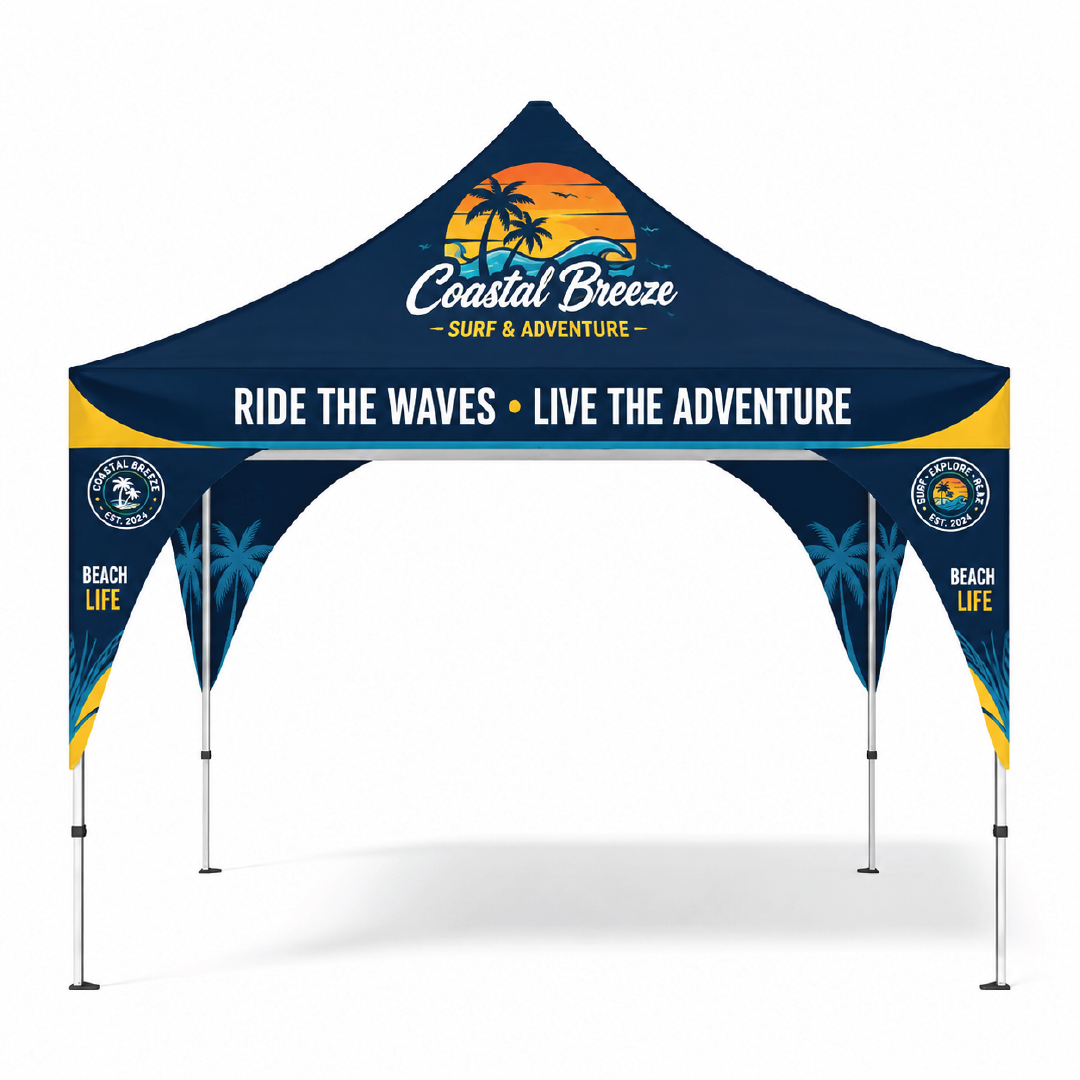
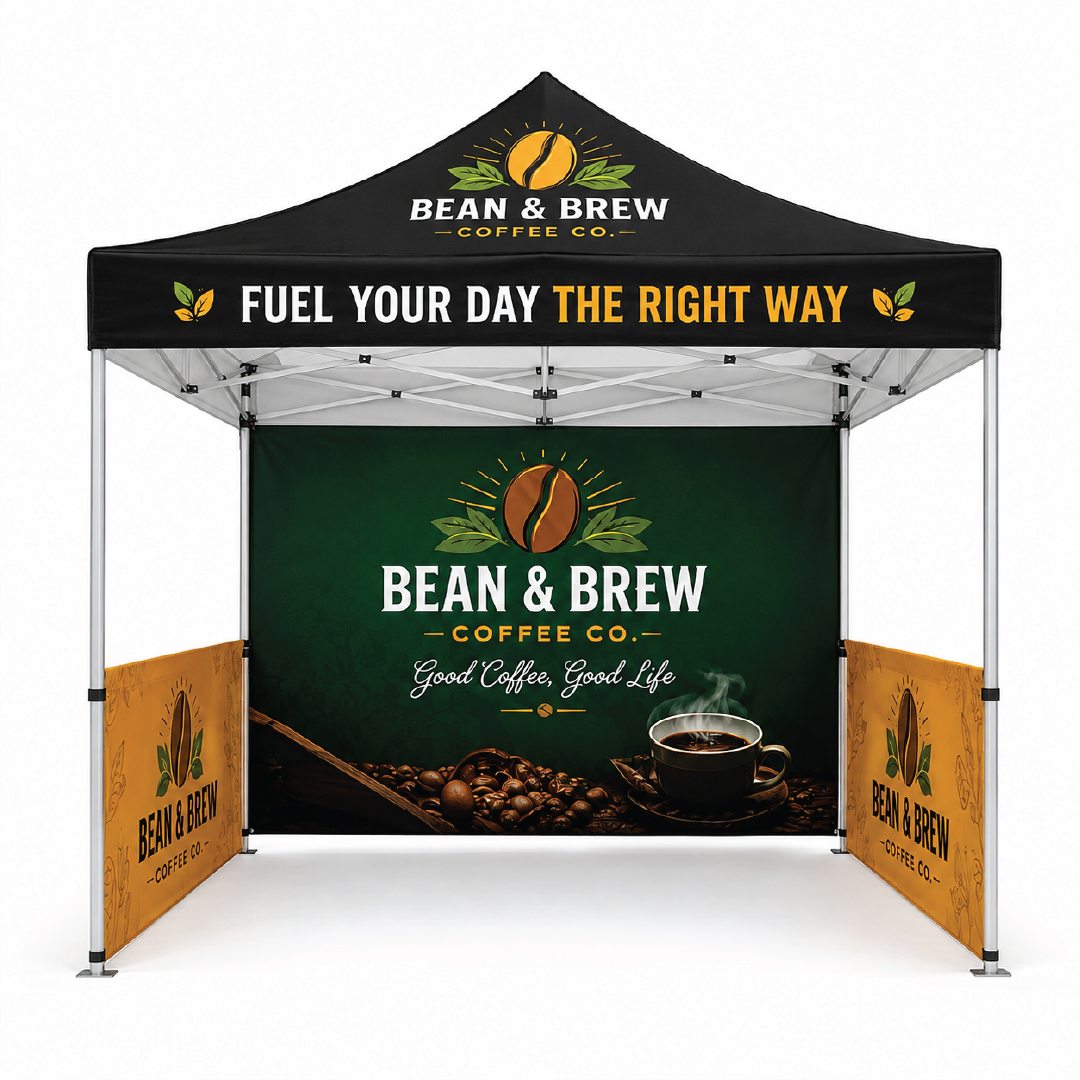
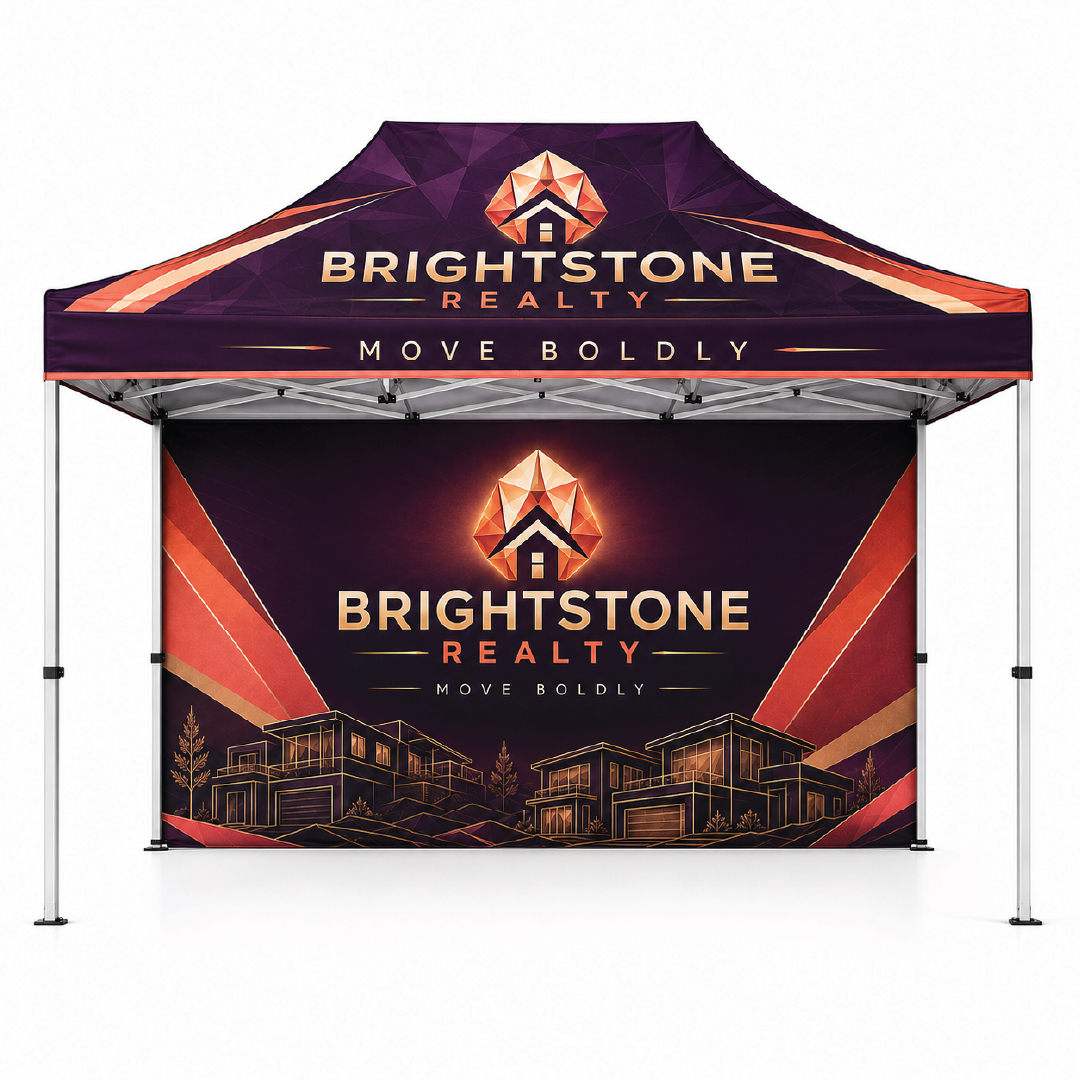
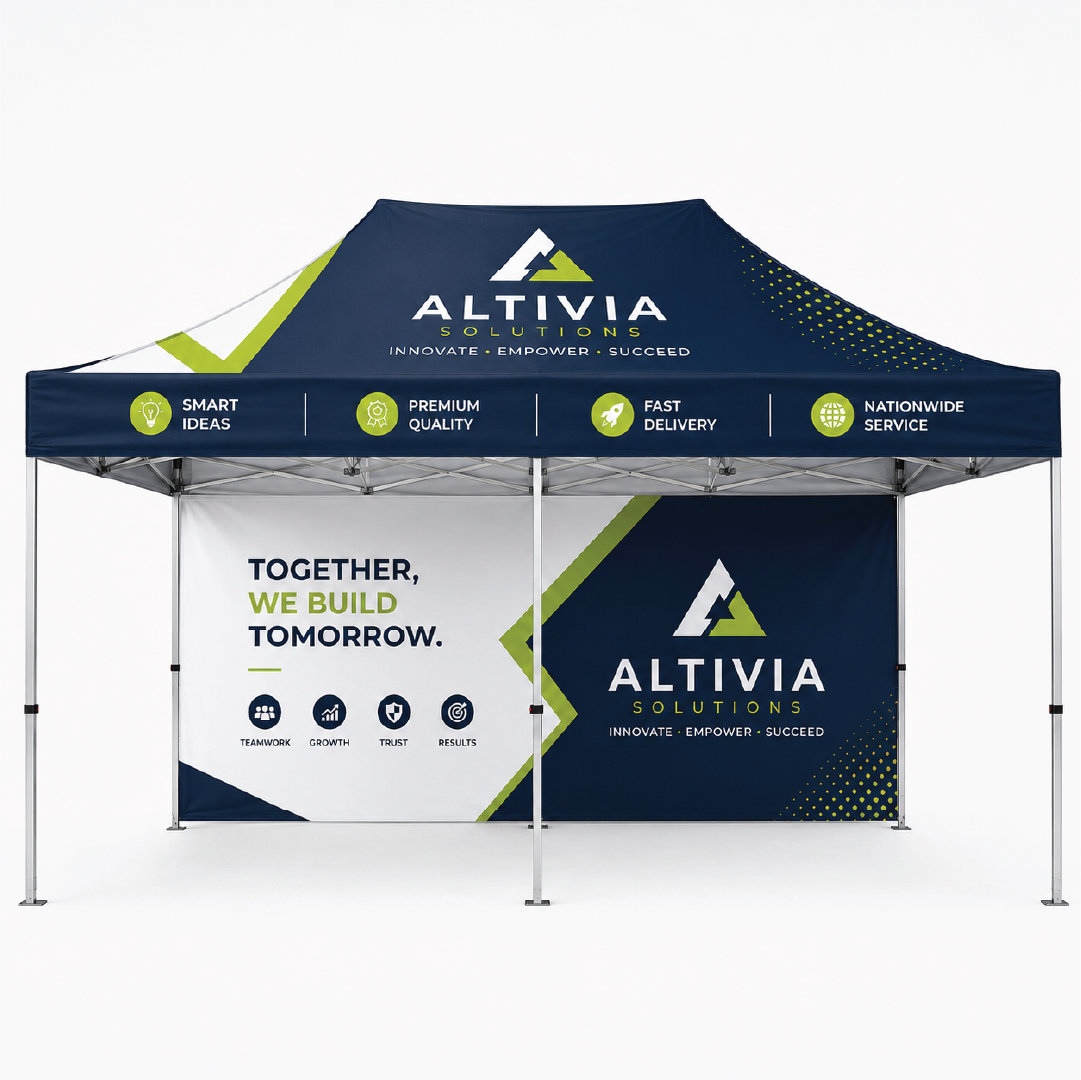
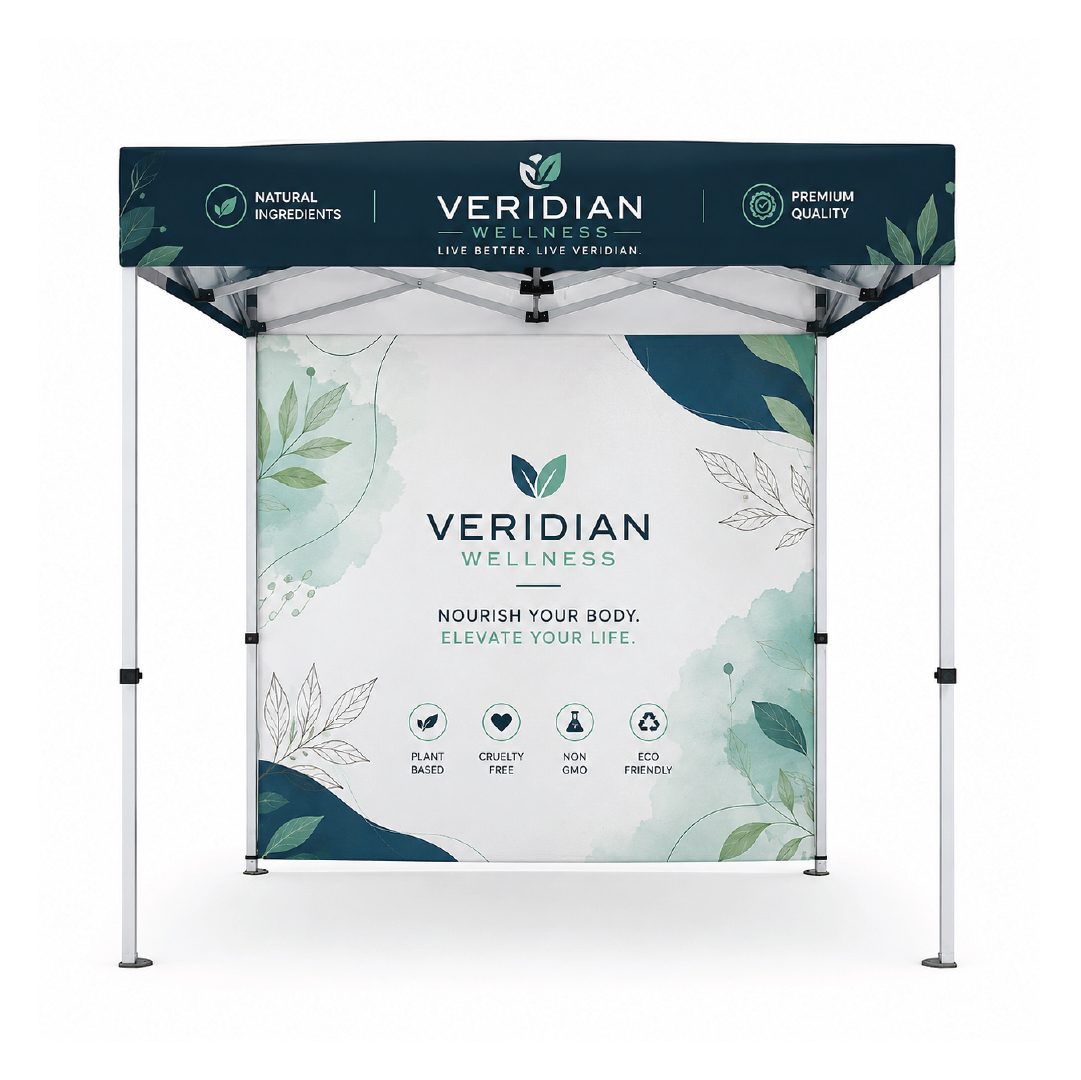
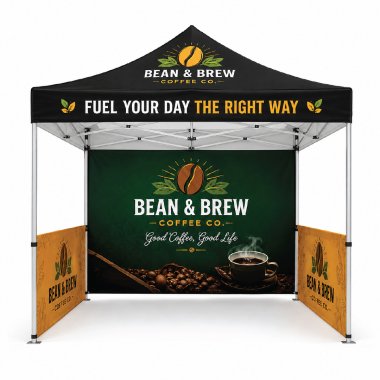
A custom canopy is often one of the largest visible pieces of a temporary booth. That makes graphic quality important, but Arkansas's climate means the printed surface has to coexist with heat, moisture, and repeated handling.
A practical setup can use:
Keeping some flexibility in the wall configuration can be particularly useful. Arkansas weather can change within the same day, so a setup that allows the operator to modify its enclosure according to wind, sun, and rain conditions can be more practical than a permanently enclosed configuration.
Rather than beginning with a size and then adding features, buyers can work backward from the operating requirements.
| Specification area | Arkansas-focused choice |
|---|---|
| Primary fabric | Commercial-grade polyester or purpose-built canopy textile |
| Typical heavy-use option | 600D polyester is a common commercial specification |
| Coating | PU coating or another documented weather-resistant treatment |
| Printing | Dye-sublimation for full-color fabric graphics |
| Frame | Commercial aluminum or heavy-duty steel depending on transport and strength priorities |
| Leg profile | Hexagonal commercial profiles can be considered where offered |
| Roof | Tensioned construction with ventilation where appropriate |
| Sidewalls | Detachable configurations for changing sun, wind and rain conditions |
| Ballast | Venue-approved weights sized to the canopy footprint |
| Fire documentation | Certification appropriate to the venue and applicable local requirements |
| Storage | Durable wheeled bag plus a drying routine before packing |
| Lighting | Integrated or managed electrical lighting where permitted |
The result is a canopy specification built around actual Arkansas conditions instead of a generic outdoor tent checklist. The state's combination of summer heat, humidity, and severe thunderstorms makes the relationship between fabric, frame, anchoring, and operating practices especially important.
A few questions can eliminate expensive surprises later:
Do not assume that a generic weight recommendation will satisfy the market or municipality. Fayetteville Farmers Market's 40 lb per leg requirement demonstrates how specific local rules can be.
For an Arkansas buyer, the strongest custom canopy is therefore not simply the heaviest frame or the thickest fabric. It is the configuration that brings weather protection, structural design, branding, portability, and venue requirements together without adding features that do not serve the actual setup.