Free Shipping on Orders $99+
Use Code FLAT15 & Get 15% Off On All Orders
Choose your store
Prices, currency, and delivery follow the store you select.
Prices, currency, and delivery follow the store you select.
Colorado outdoor events can place unusual demands on a temporary display. Strong sun, changing weather, open spaces, uneven terrain, and wind exposure can all affect how a canopy should be selected and secured. A structure that looks impressive in a product photograph still has to perform when it is transported to the venue, assembled on site, anchored to the ground, and used for several hours.
The visual side matters just as much. A canopy may serve as a branded meeting point, product display, information booth, promotional installation, market setup, or event backdrop. The roof and walls create valuable graphic space, while the frame determines how easily the entire structure can be transported and reused.
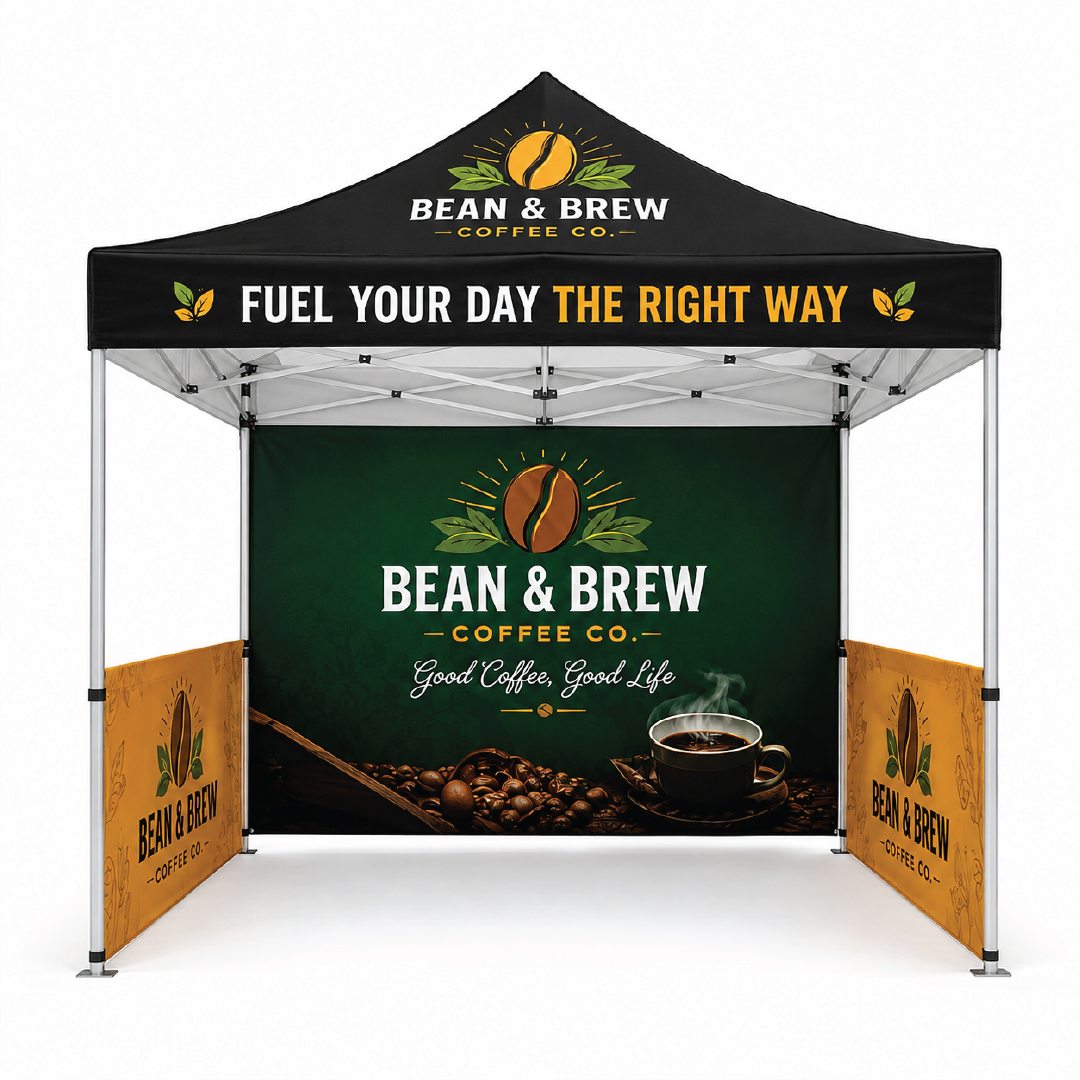
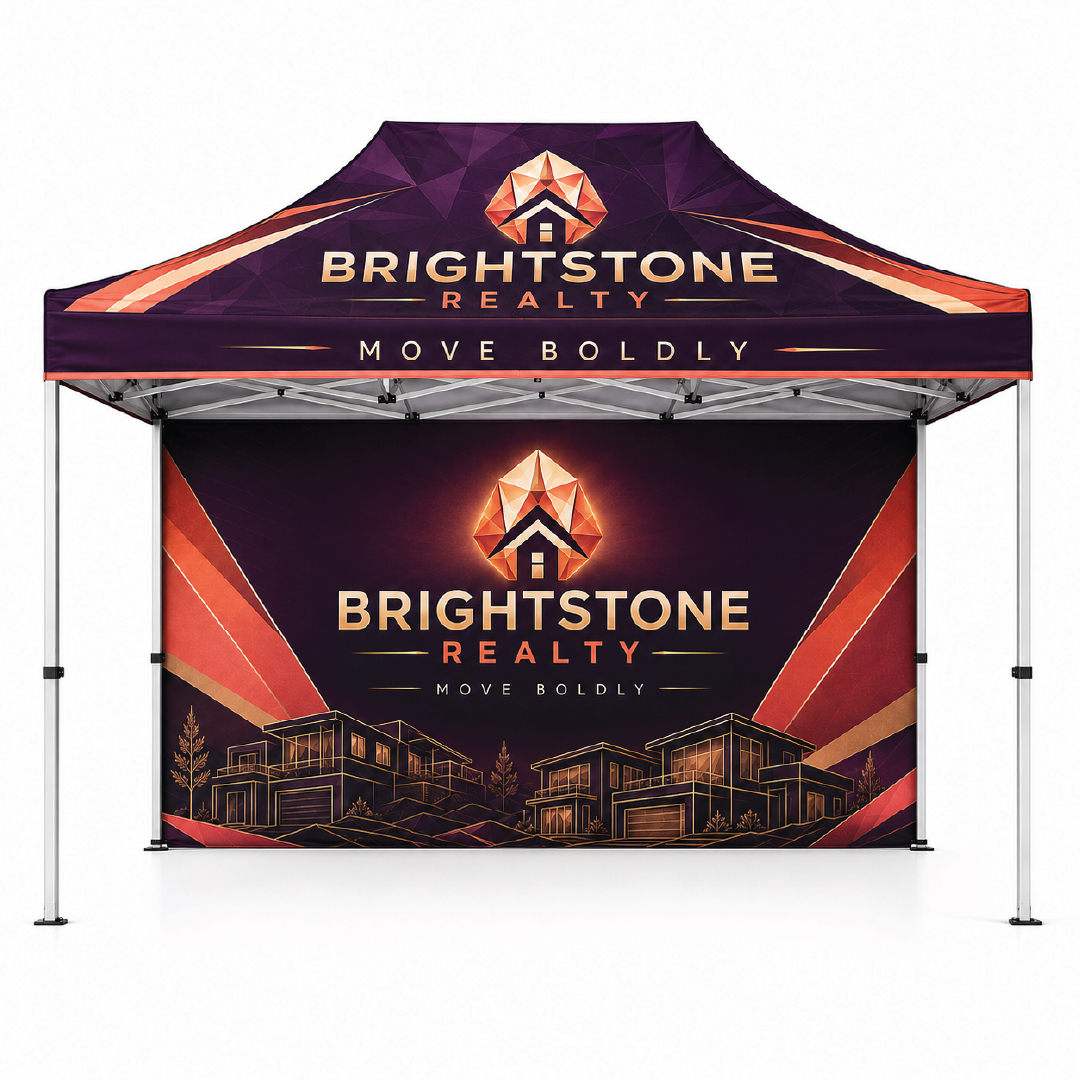
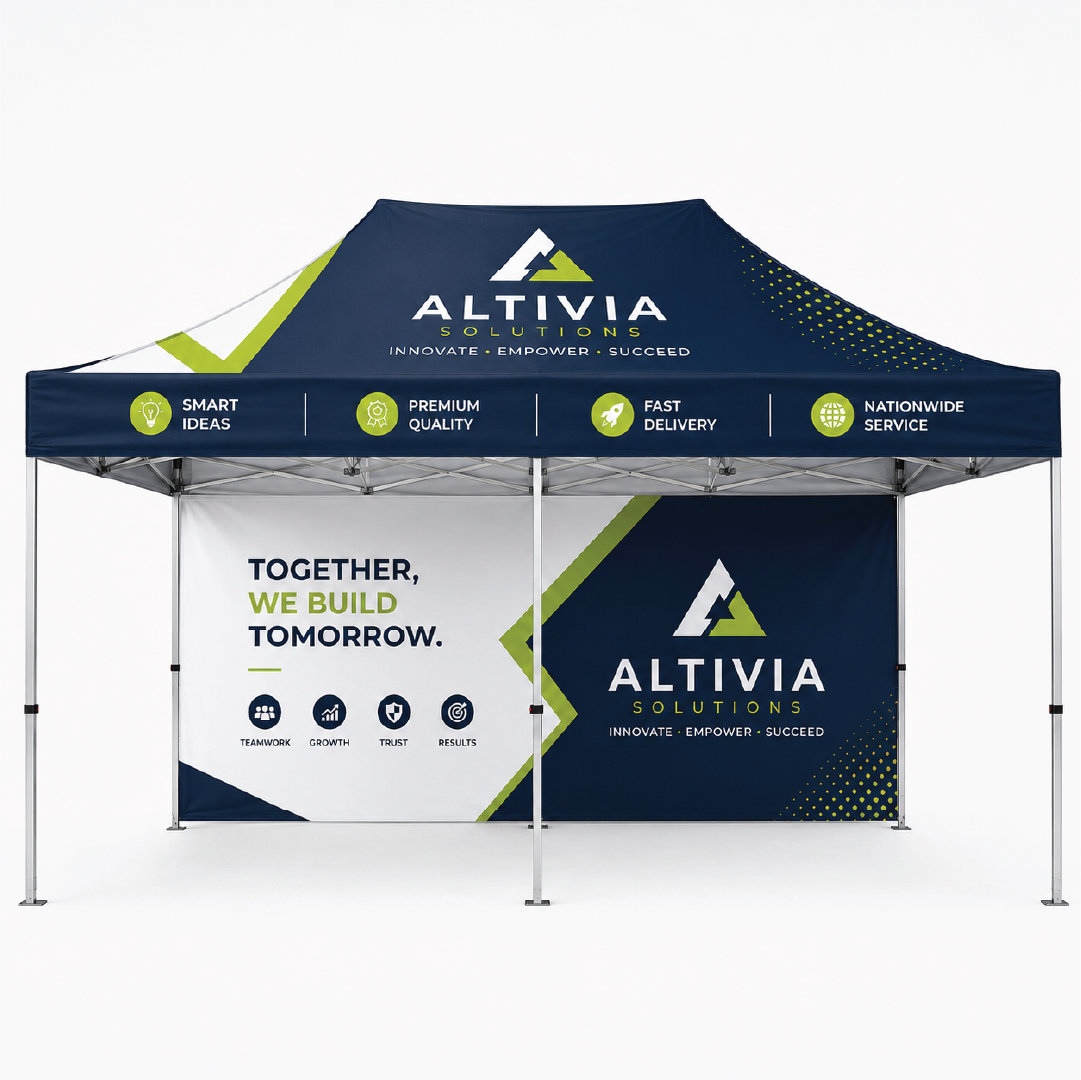
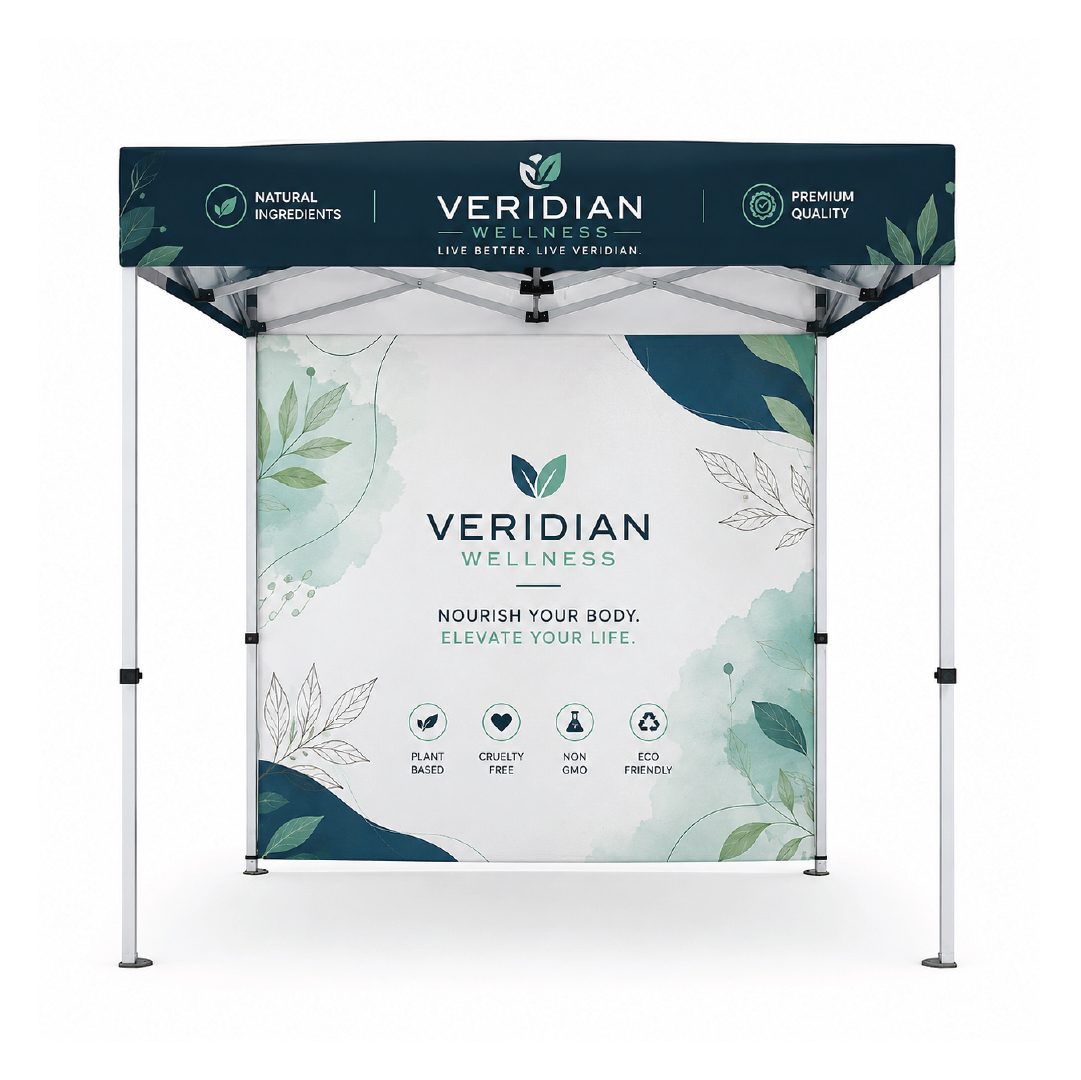
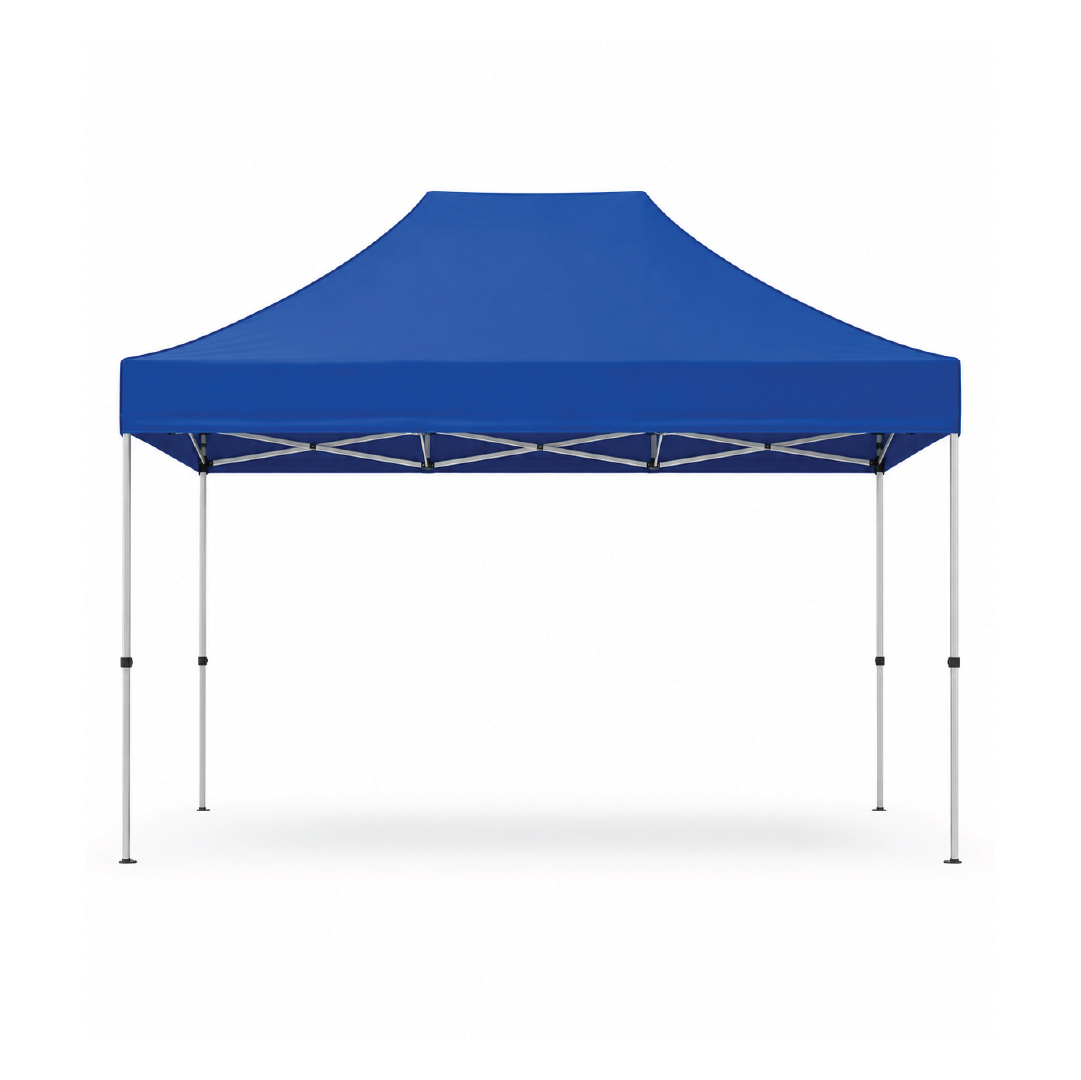
Printing Limitless offers custom canopy tents in multiple sizes with aluminum frames, printed polyester fabric, configurable walls, toppers, flags, and other display accessories. The right combination depends on the space, weather exposure, event rules, and the experience you want visitors to have around the canopy.
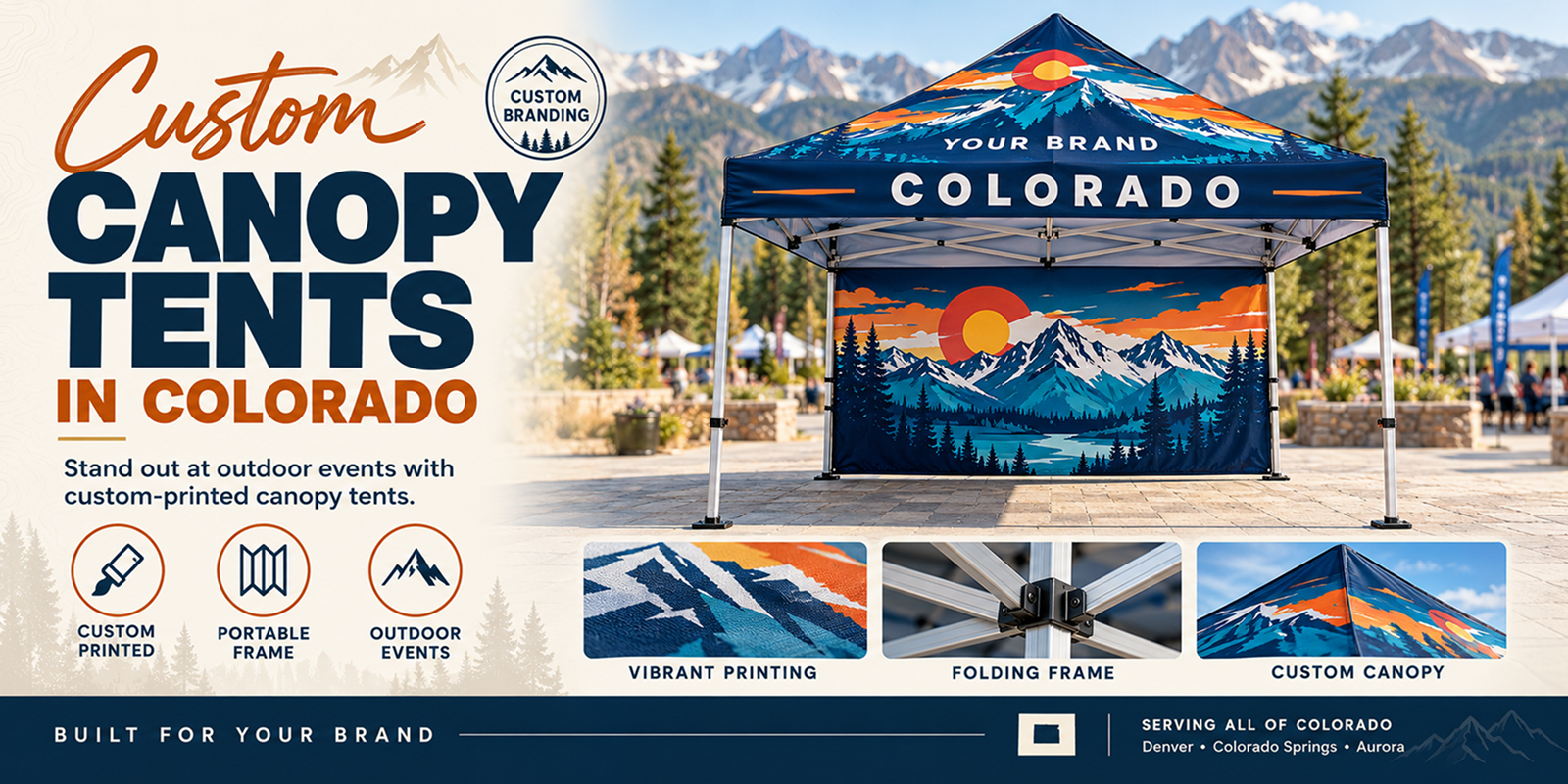
Outdoor conditions can change considerably across Colorado. A display positioned in Denver has a different surrounding environment than one used in Boulder, Colorado Springs, Fort Collins, Pueblo, or a mountain community.
Sun exposure is one consideration. Wind is another. An open event site can leave a canopy exposed to gusts that would be less noticeable in a sheltered location. Temperature changes, dry conditions, and sudden weather shifts also make setup planning important.
That does not mean every Colorado canopy requires a specialized structure. It means the purchase should account for the location instead of treating the canopy as a purely decorative product.
| Colorado condition | What it can influence |
|---|---|
| Strong sun exposure | Fabric selection and graphic durability |
| Open outdoor location | Anchoring and wind planning |
| Uneven or natural terrain | Frame positioning and stability |
| Frequent event travel | Frame weight and transport |
| Changing weather | Wall configuration and setup decisions |
| Busy event environment | Visibility and graphic hierarchy |
A well-planned branded canopy tent should remain practical when the environment changes.
The roof of a canopy creates a large surface for moving air to act against. Open sides reduce some resistance, but they do not eliminate the forces created by wind. The frame therefore needs a proper anchoring system rather than relying on its own weight.
Soft ground can allow stakes and tie-downs when the venue permits them. Hard surfaces require ballast or another approved method of securing the legs. The amount of ballast should follow the manufacturer's guidance and the event's requirements rather than relying on one universal weight figure.
Boulder provides a useful example of how specific local rules can be. Its parks guidance says weights are required for vendor booths and tents unless written approval has been obtained for stakes, and it recommends at least 40 pounds on each corner of a 10 x 10 tent and twice that amount for a 10x20 tent. That recommendation should not be treated as a statewide Colorado standard. It illustrates why the event location needs to be checked before the anchoring equipment is selected.
A canopy that is beautifully printed but inadequately secured creates an avoidable problem.
The frame has a direct effect on how the canopy gets to the event and what happens after the event ends. Aluminum is widely used for portable canopy structures because it provides a lighter alternative to steel while offering useful corrosion resistance. Steel can provide greater mass and rigidity, but that additional weight can make repeated transportation and handling more demanding.
Printing Limitless uses aluminum frames with adjustable legs across its custom canopy products. Its 10x20 canopy also includes a wheeled travel bag option, giving larger displays a more manageable transportation setup.
| Frame consideration | Aluminum | Steel |
|---|---|---|
| Weight | Lighter | Heavier |
| Transport | Easier to move repeatedly | Requires more handling |
| Corrosion resistance | Naturally resistant to rust | Protective coating helps prevent corrosion |
| Portability | Well suited to mobile displays | Better suited where mobility is less important |
| Event use | Useful for recurring setups | Useful where additional frame mass is desirable |
The frame should also be evaluated through its joints, truss construction, telescopic legs, brackets, and adjustment mechanism. A portable structure is exposed to repeated assembly cycles, so construction quality matters alongside the material itself.
Leg configuration is easy to overlook because most of the attention goes to the printed fabric. It still affects the usable footprint.
Straight leg structures keep the support points aligned with the roof footprint, allowing the designated space to be used efficiently. Slanted legs flare outward toward the ground, creating a broader base while reducing the area directly beneath the upper canopy.
Commercial frames can also differ in tubing shape and size. Larger hexagonal or octagonal profiles can provide greater rigidity than lighter basic tubing, while reinforced truss systems distribute forces across multiple structural members.
These differences become particularly relevant when the canopy is assembled and dismantled repeatedly. The structure needs to remain easy enough to handle while providing the rigidity expected of a commercial event display.
The canopy fabric has two jobs at once. It carries the visual identity and acts as the protective membrane over the display area.
Denier is one useful indicator when comparing polyester fabrics because it describes the linear mass of the yarn. Commercial canopy fabrics commonly use heavier constructions than lightweight consumer shelter products. Printing Limitless lists 600D acrylic-coated polyester on its custom canopy products, with an 8 oz graphic weight.
The coating also matters. Acrylic and other protective coatings can improve resistance to moisture and help the fabric perform as an outdoor covering. Printing Limitless describes its custom canopy fabric as waterproof and uses a protective coating that requires gentle cleaning rather than machine washing or strong detergents.
Colorado's sun exposure makes fabric quality especially relevant to displays that will be used repeatedly outdoors. A canopy is exposed to sunlight for extended periods, so the fabric and printing process should be considered together rather than selecting graphics independently of the textile.
The printing method affects how the final graphic behaves on the fabric. Dye sublimation transfers color into polyester fibers using heat. Instead of creating a separate thick layer sitting on top of the material, the dye becomes integrated into the fabric during the printing process. This makes the method well suited to large fabric graphics that need to be folded, transported, and repeatedly installed.
Printing Limitless uses dye sublimation printing on its custom canopy products and supports custom graphics across different roof and wall configurations. That opens up several ways to organize the branding.
The strongest design usually gives each surface a clear role instead of covering every available area with information.
Local requirements deserve attention before the canopy is ordered, particularly when an event takes place on public property or uses a larger temporary structure.
Boulder provides one of the clearest examples. Its temporary event guidance requires flame certification for tents and establishes permit thresholds based on tent configuration. Tents with walls exceeding 400 square feet and open-sided tents exceeding 700 square feet require additional permitting and inspections.
Boulder's parks guidance also addresses anchoring, stating that weights are required for vendor booths and tents unless written approval has been obtained for stakes.
Fort Collins has its own requirements. Its special event materials state that tents greater than 400 square feet require a tent permit and that a flame retardant certificate is required for each permitted tent.
Colorado does not have one universal canopy setup rule that replaces venue-specific instructions. Before production, confirm the requirements attached to the actual event.
A useful venue check:
| Question | What to confirm |
|---|---|
| Can the canopy be staked? | Ground anchoring permission |
| Are weights required? | Minimum ballast and attachment method |
| Are walls restricted? | Permitted configuration |
| Does the structure require a permit? | Size and location thresholds |
| Is flame documentation required? | Fabric certification or documentation |
| Are there clearance rules? | Distance from paths, structures, and other booths |
| Is an inspection required? | Pre-event or on-site inspection process |
This review is particularly important when a canopy is being ordered specifically for a major public event.
The Colorado State Fair in Pueblo offers a useful example of how an outdoor display can be evaluated as part of the overall event experience.
Its 2026 commercial exhibitor application includes outdoor spaces such as 20x20 and 20x10 areas, while noting that some outdoor locations can have larger minimum requirements. The application also states that total space requirements need to account for awnings, tie-downs, overhangs, trailer hitches, and operating room.
That detail changes how a canopy should be measured. The footprint is not necessarily limited to the dimensions printed on the product name. Accessories and structural elements can occupy additional space.
The State Fair also says its commercial vendor selection is juried and looks for clean, professional, aesthetically pleasing displays that are easy to navigate.
That makes the canopy part of a larger presentation rather than an isolated shelter. Graphic hierarchy, customer access, product placement, and the relationship between the canopy and the surrounding booth all contribute to the final appearance.
Printing Limitless offers several custom canopy sizes, including 6 x 6, 10 x 10, 10 x 15, and 10 x 20 configurations. Choosing among them becomes easier when the activity taking place underneath is defined first.
| Setup requirement | Size direction |
|---|---|
| Small footprint or compact display | 6x6 |
| General event presentation | 10x10 |
| Additional room for displays | 10x15 |
| Larger branded environment | 10x20 |
A compact canopy can be useful when space is tightly controlled. A longer structure creates room for larger displays, staff movement, multiple tables, demonstrations, or broader graphic coverage.
The 10x20 model is designed for larger setups and uses an aluminum frame with adjustable legs. A wheeled travel bag is also offered for easier movement between locations.
The correct size is the one that works within the assigned footprint without making the display unnecessarily difficult to transport, anchor, or navigate.
A canopy with four open sides creates a very different environment than one with a large printed rear wall.
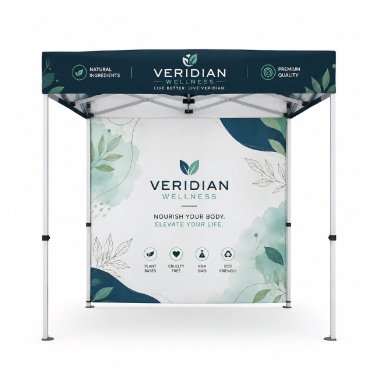
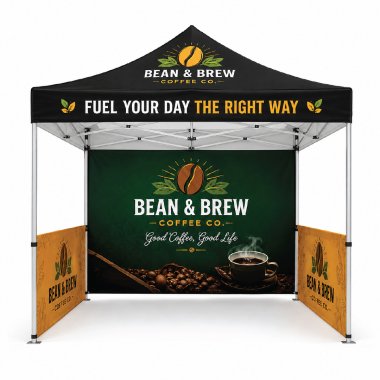
Open configurations allow people to see directly into the display. A rear wall can establish a visual focal point. Side panels can provide additional branding or help define the space. Partial panels can create separation without closing the booth completely.
Printing Limitless offers different front, rear, and side wall configurations, along with single-sided and double-sided printing options on its canopy products. Clear PVC panels are also offered on selected configurations. Consider the wall arrangement alongside the direction people will approach the display.
| Desired effect | Configuration to consider |
|---|---|
| Open and accessible | Minimal wall coverage |
| Strong branded backdrop | Printed rear wall |
| Greater visual enclosure | Multiple walls |
| Defined presentation area | Partial wall arrangement |
| Visibility through a panel | Clear PVC option |
Wall selection can therefore influence both branding and how comfortably people move around the canopy.
Bright outdoor conditions can make weak graphic choices even more noticeable.
Small text becomes harder to read when people are viewing the canopy at a distance. Low contrast combinations can disappear against bright surroundings. Dense artwork can become visually difficult to process when the canopy is competing with other event displays.
A stronger approach uses large brand elements, clear contrast, limited messaging, and intentional placement. The roof can carry the main identity. A rear wall can introduce a larger visual or campaign message. Side panels can reinforce the same design system without repeating every word.
Printing Limitless also offers Pantone color matching on its custom canopy products, which can help maintain greater consistency when brand colors are important to the design.
A canopy can be expanded without turning the display into a collection of unnecessary add-ons.
A topper can reinforce recognition above the roofline. A flag can provide a vertical visual marker in a crowded event environment. Sandbags can support an approved anchoring arrangement. Clear panels can provide separation while preserving visibility.
Printing Limitless lists these options across its canopy range, including toppers, flag attachments, sandbags, and wheeled travel bags on selected products.
The best configuration is usually built around a simple question: What problem does each addition solve? That keeps the final display practical rather than overloaded.
A reusable canopy has greater value when the design can move between different types of events without looking out of place.
A market may require an open layout. A trade show-style outdoor activation may need a stronger branded backdrop. A community event can call for a welcoming configuration with clear access. A promotional campaign may use the same core structure with additional flags or messaging.
The frame, fabric, and graphics remain consistent while the arrangement changes around the venue. That flexibility is especially useful when events take place across Denver, Boulder, Colorado Springs, Fort Collins, Pueblo, and other Colorado communities with different footprints and site conditions.
Outdoor equipment often suffers during storage rather than during the event itself.
Damp fabric should not be packed away for long periods. Printing Limitless recommends cleaning its canopy fabric with water, a soft sponge, and mild non-detergent soap, followed by complete drying before storage. Machine washing and strong detergents are not recommended because of the protective coating.
The frame deserves a quick inspection after each use. Check the legs, trusses, connectors, brackets, and adjustment points for damage or deformation. Anchoring equipment should also be checked before the next event rather than assuming it is ready for immediate reuse.
That routine can extend the useful life of a portable canopy tent and reduce unpleasant surprises during the next setup.
A good canopy purchase becomes easier when structural decisions are made before the artwork.
1. Confirm the venue
Check the footprint, surface, placement restrictions, access, and local requirements.
2. Establish the anchoring method
Determine whether stakes, ballast, or another approved system will be required.
3. Select the frame
Consider portability, repeated setup, frame construction, adjustment, and storage.
4. Choose the size
Match the footprint to the activity, displays, staff movement, and surrounding space.
5. Decide on walls
Determine where openness, enclosure, visibility, and additional graphic space matter.
6. Build the graphics
Create a visual hierarchy that works across the roof, valances, and walls.
7. Add accessories
Choose flags, toppers, sandbags, travel bags, or other additions that have a practical purpose.
8. Review the final setup
Check the complete configuration against the venue requirements before production.
This order keeps the physical structure and the branding strategy connected throughout the purchase.
A Colorado canopy needs to look good, but appearance is only one part of the decision. The frame has to travel well, the fabric has to support repeated outdoor use, the anchoring system has to suit the site, and the graphics have to remain effective within the event environment.
Printing Limitless offers custom printed canopy tents in multiple sizes with aluminum frames, dye sublimation graphics, wall configurations, toppers, flags, sandbags, and travel options across its canopy range.
Events around Denver, Boulder, Colorado Springs, Fort Collins, Pueblo, and other Colorado locations can have different rules and physical conditions. Checking those details first creates a stronger foundation for selecting the canopy, configuring the structure, and developing the final branded display.