Free Shipping on Orders $99+
Use Code FLAT15 & Get 15% Off On All Orders
Choose your store
Prices, currency, and delivery follow the store you select.
Prices, currency, and delivery follow the store you select.
Connecticut can give an outdoor setup several different conditions in the same event season. A morning near Long Island Sound can begin with damp coastal air, a summer afternoon can bring intense sun, and an exposed town green can become considerably windier as a weather front moves through.
The location matters too. A canopy in Stamford or Norwalk may face coastal exposure and paved surfaces, while an event in Hartford or Middletown can present open lawns, changing seasonal conditions, and a completely different anchoring situation. Head toward Mystic and the surrounding shoreline communities, and marine moisture becomes another consideration.
That makes the canopy structure part of the planning rather than something selected after the booth has already been designed. The frame, fabric, anchoring method, footprint, walls, and graphics all need to work together.
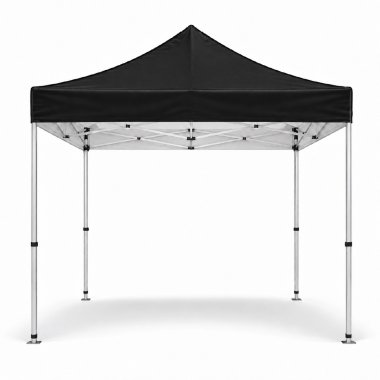
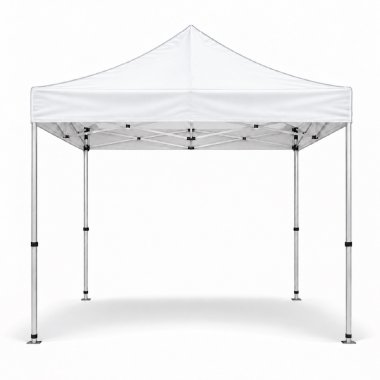
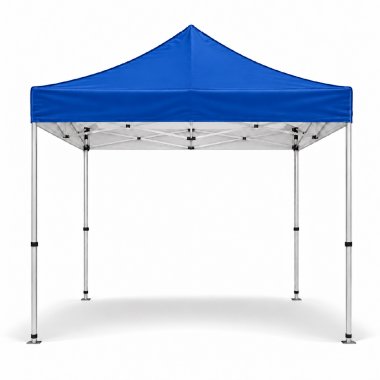
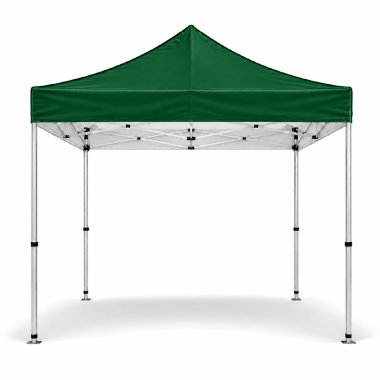
For vendors, exhibitors, promotional teams, and organizations attending recurring events, custom canopy tents provide the flexibility to build that setup around Connecticut's different locations.
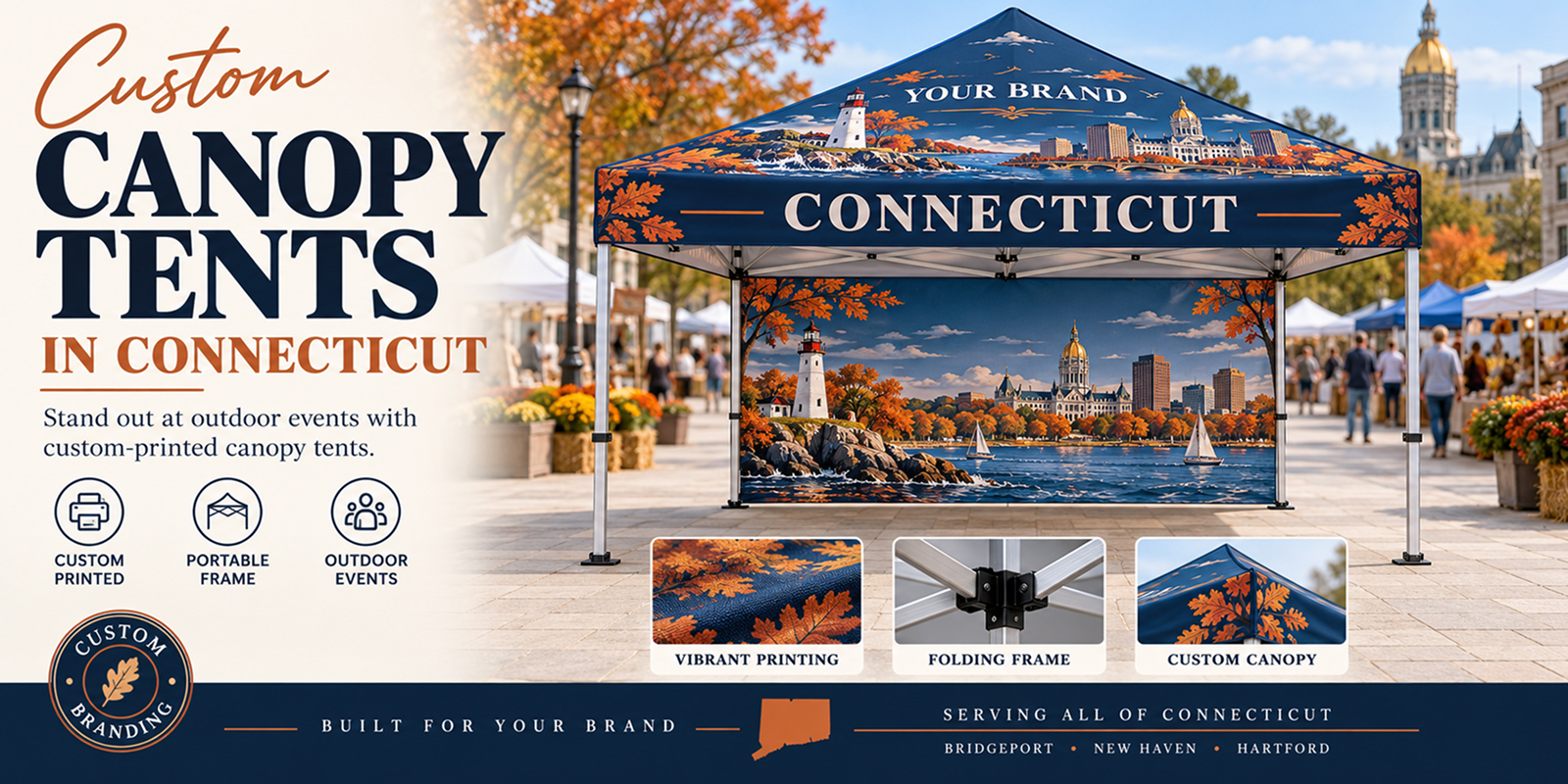
A canopy used throughout Connecticut may move between farmers' markets, town festivals, outdoor promotions, agricultural events, fairs, university gatherings, and commercial activations. The surroundings can be surprisingly different.
A coastal location can expose metal components to humid marine air. A downtown event may place the canopy on concrete where ground stakes cannot be used. A grassy event space may permit a different anchoring method but still have organizer-specific weight requirements.
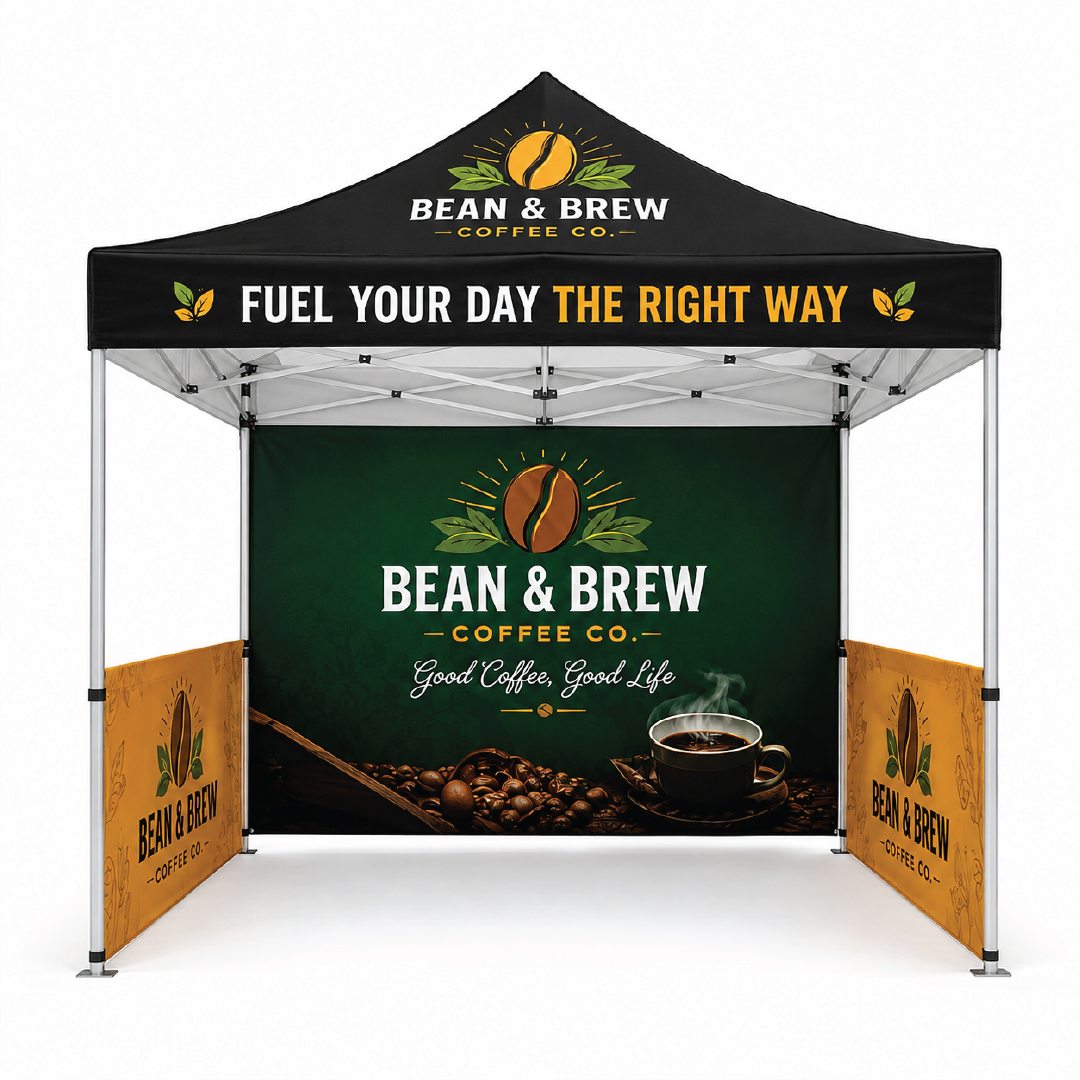
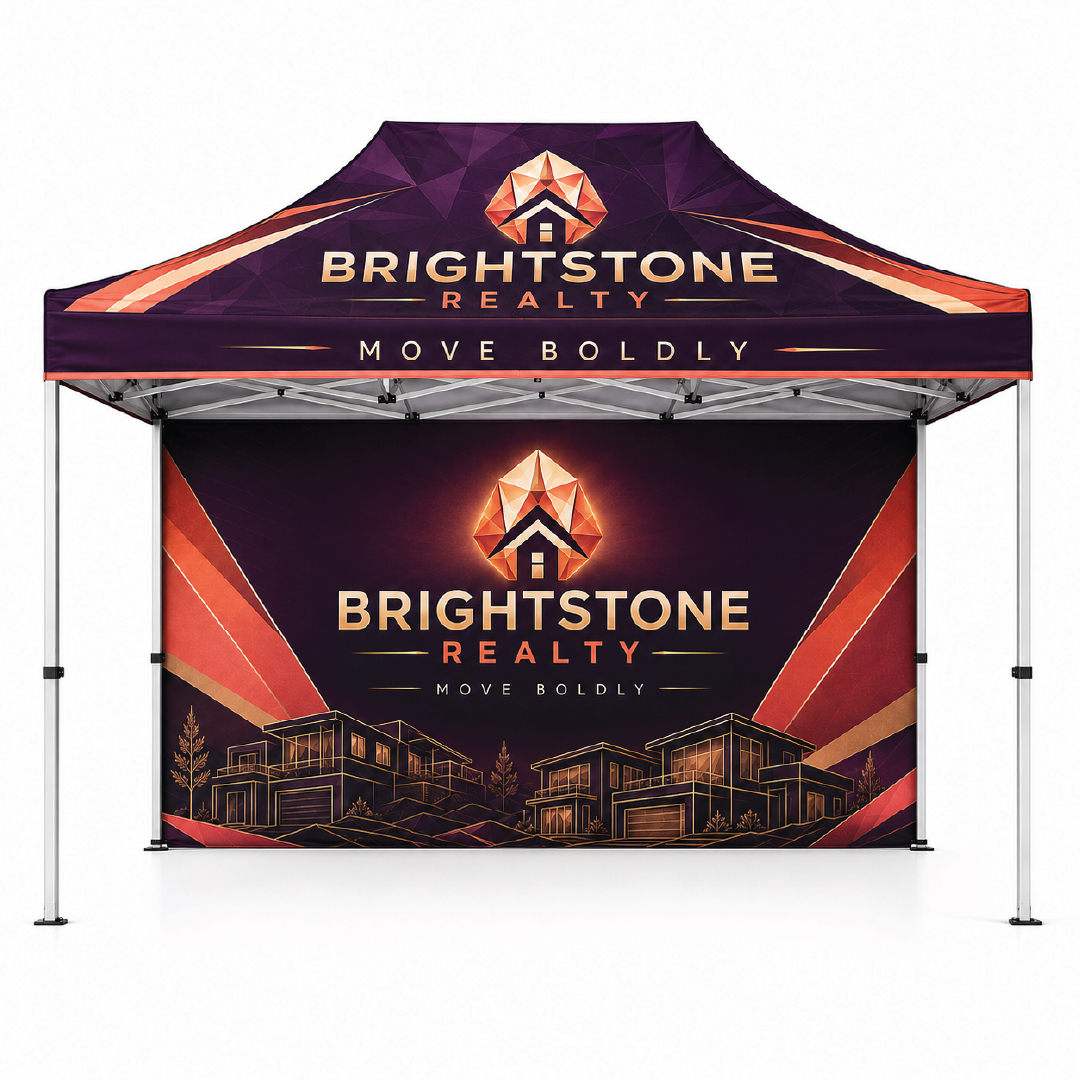
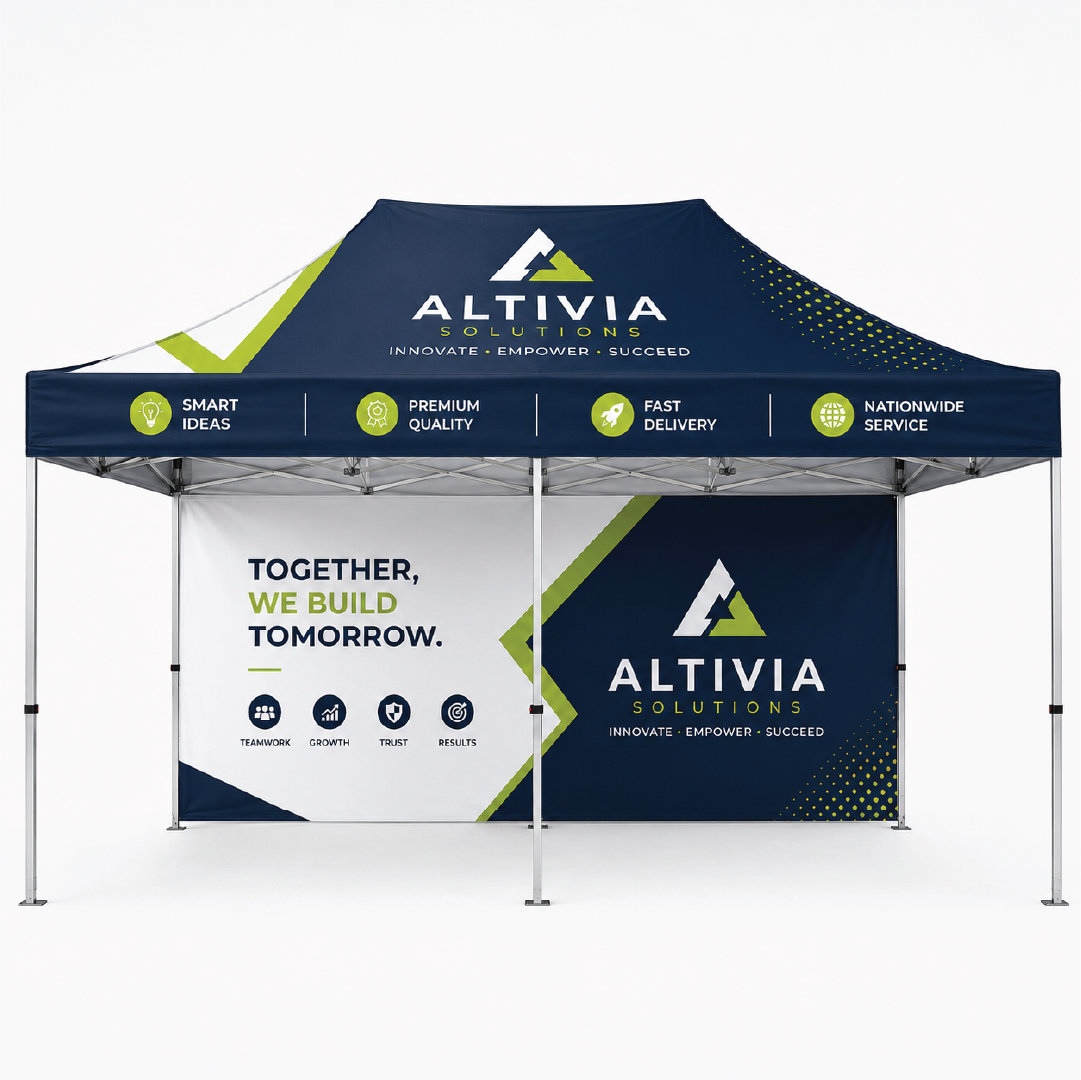
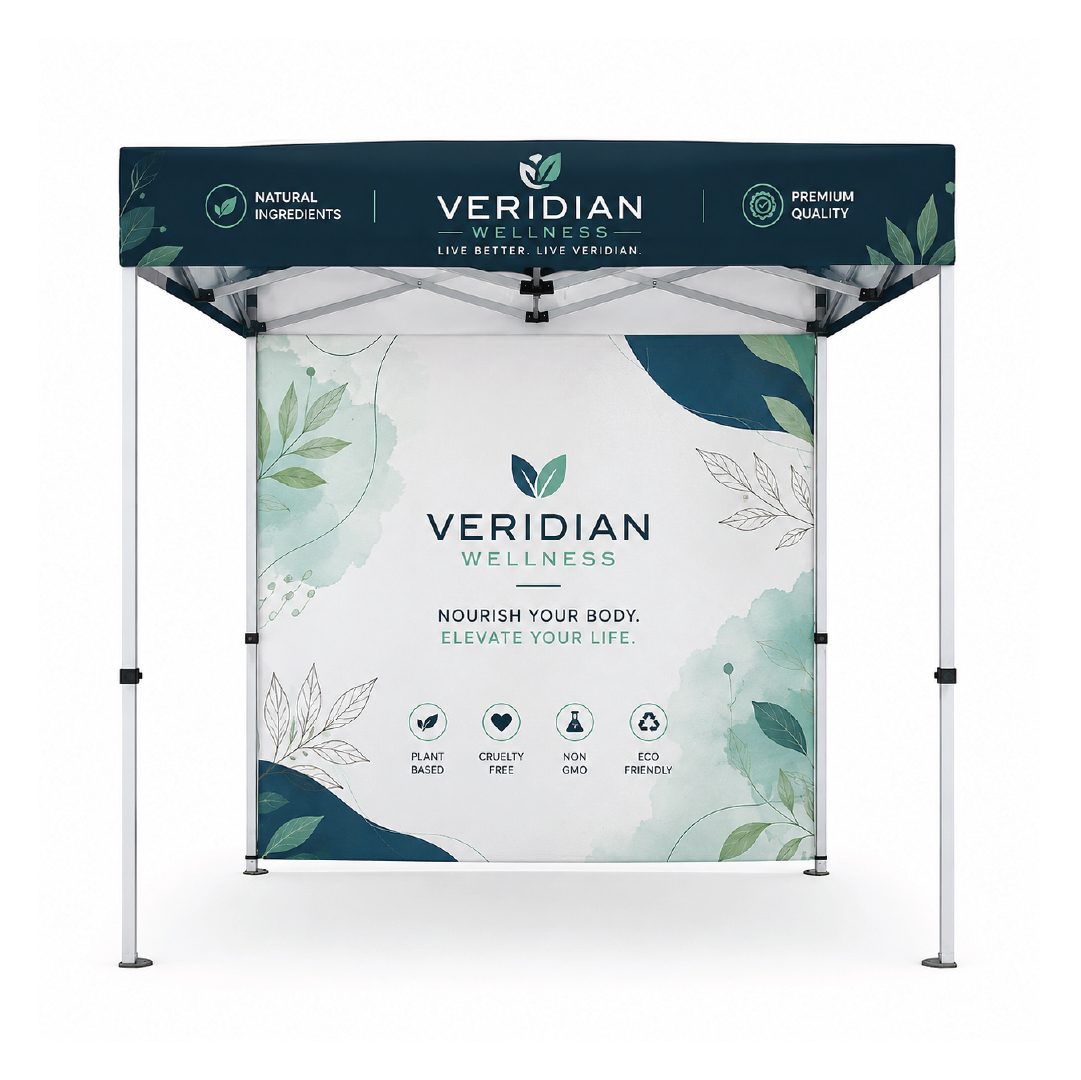
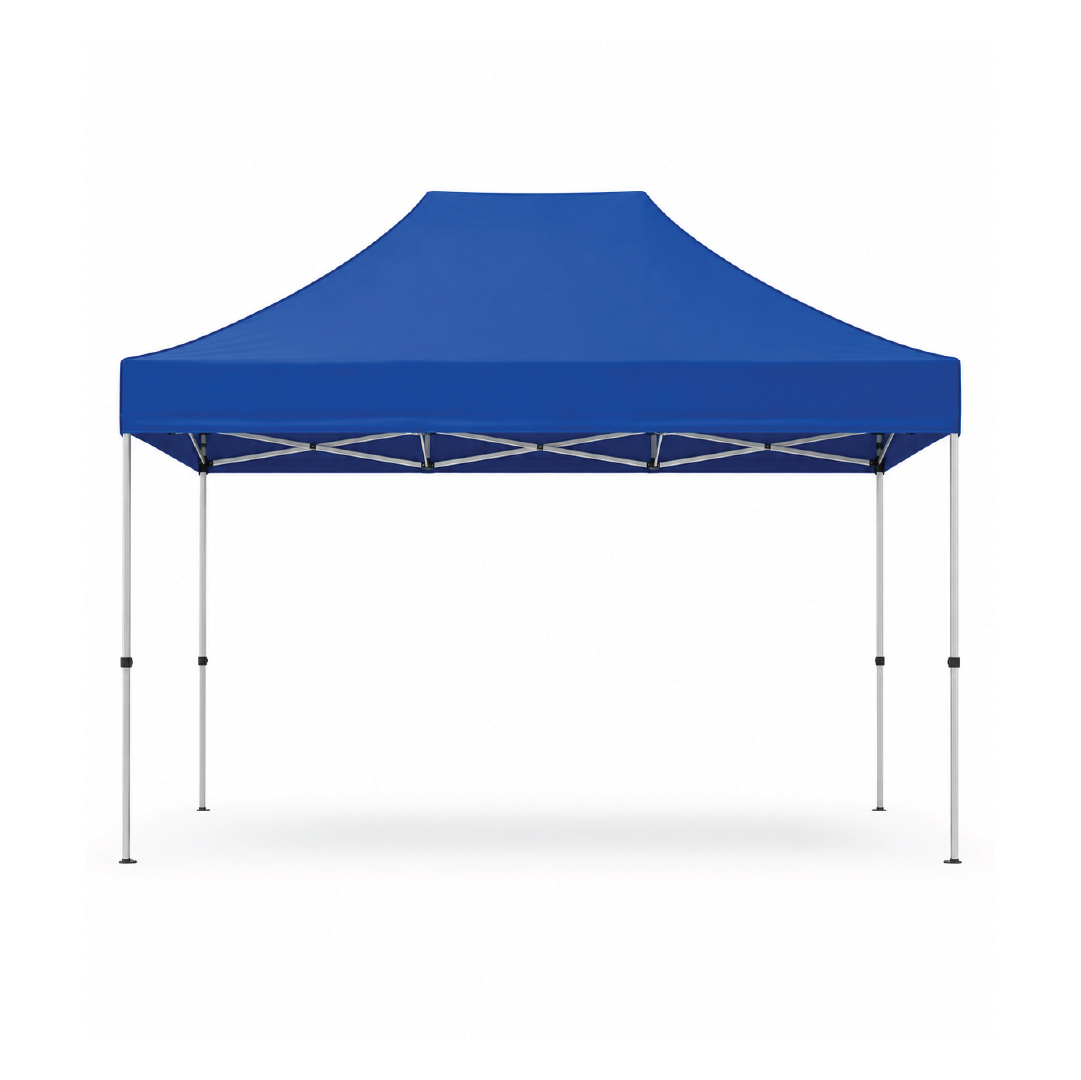
The available footprint changes the equation as well. Printing Limitless offers 6x6, 10x10, 10x15, and 10x20 custom canopy tents, allowing the structure to be selected around the assigned space rather than forcing every event into the same footprint.
A 10x10 can keep a compact market setup manageable. A 10x15 can create additional room for displays and visitor interaction.
A 10x20 can support a larger presentation when the venue provides enough space and the additional floor area has a clear operational purpose.
The largest option is not automatically the most useful. The canopy still needs room for people to enter, move around, and interact with the display.
Salt-laden air and persistent humidity can accelerate corrosion on exposed steel components, particularly when coatings become scratched through repeated setup and transport.
That makes anodized aluminum canopy frames a practical option for coastal Connecticut locations. Aluminum does not rust in the same way conventional steel does, making it well suited to portable structures that may be repeatedly exposed to damp outdoor conditions.
For recurring commercial use, a 40 mm to 50 mm hexagonal aluminum leg profile can provide a more substantial structural design than lightweight consumer frames. A straight leg configuration also maintains a consistent footprint, which is useful when the canopy has to remain within a marked booth area.
The frame should also have dependable telescoping adjustment and locking points. These components are used every time the canopy is installed, so their construction matters just as much as the appearance of the finished structure.
A stronger frame does not eliminate the need for proper anchoring. It simply gives the canopy a better structural foundation to work with.
Connecticut's outdoor season can involve prolonged rain, mist, and damp conditions rather than a single brief shower. A 600D polyester canopy fabric with a suitable protective coating provides a stronger starting point for recurring outdoor use. An internal PU coating can improve water resistance, while properly finished or taped seams help reduce the chance of moisture entering through stitching points. This becomes particularly useful when the same canopy is transported between events throughout the season.
Roof tension is equally important. A properly assembled canopy should keep the fabric stretched across the frame rather than allowing deep low points to form where rain can collect. If the frame allows independent telescoping adjustment, a slight height difference can be used to encourage runoff during heavy rain, provided the manufacturer's setup instructions permit that configuration. The aim is to keep water moving rather than allowing a heavy pocket to remain on the roof.
Rain is only one side of Connecticut's outdoor conditions. Summer events can expose the canopy to prolonged direct sunlight, especially at open agricultural grounds, town greens, parking areas, and festival sites without surrounding shade.
A fabric with strong outdoor performance and UV protection can help preserve the canopy through repeated seasonal exposure. A UV 50+ specification can be considered when comparing fabric options intended for frequent outdoor use.
Lighter roof colors such as white, cream, or light grey can also create a brighter canopy interior and reduce the visual heaviness of a fully enclosed structure. The fabric treatment should extend beyond the roof itself. Connecticut's damp mornings and humid conditions make mold and mildew resistance useful when the canopy is repeatedly packed, transported, and stored.
The fabric should still be fully dried before extended storage. Protective treatments cannot compensate for repeatedly storing wet material.
An unanchored canopy can act like a sail when wind moves underneath or across the roof. The frame, roof, walls, and ballast therefore need to be considered together.
A straight leg frame gives the structure a stable rectangular footprint. A commercial aluminum profile provides the structural framework. The roof should remain properly tensioned, while wall placement should account for airflow rather than automatically enclosing every side.
Most importantly, the canopy needs an anchoring system suited to the venue. There is no single 40-pound-per-leg requirement that should be presented as a statewide Connecticut standard. Individual markets, municipalities, venues, and event organizers can specify their own ballast requirements. The event's written requirements should always take priority.
Connecticut venues can provide very different surfaces.
| Event surface | Important consideration |
|---|---|
| Grass or soil | Confirm that staking is permitted and check site restrictions |
| Asphalt | Verify whether the organizer permits stakes or requires ballast |
| Concrete | Prepare an approved ballast system because conventional staking is generally impractical |
| Coastal or exposed site | Give additional attention to wind exposure and wall configuration |
| Public event space | Follow the organizer's stated weight and securing requirements |
For ballast-based setups, sandbags or purpose-built weight plates can be secured directly to the canopy legs using appropriate straps or clamps.
Avoid assuming that concrete blocks, loose bricks, water containers, or improvised objects will satisfy an event's safety requirements. Some venues specifically prohibit them, while others prescribe their own approved systems.
The practical step is simple: confirm the required ballast before arriving at the event.
Connecticut regulates temporary tents and membrane structures through its State Fire Safety Code, while municipalities and individual venues can impose additional requirements.
Under the applicable Chapter 31 provisions, tents and membrane structures exceeding 400 square feet are subject to approval requirements, with exceptions applying to certain open-sided structures when specified size, separation, and clearance conditions are satisfied.
That distinction becomes important when comparing a compact 10x10 canopy with a much larger temporary installation.
The code also addresses structural stability, anchorage, weather conditions, flame propagation, exits, separation, and other safety considerations. Larger temporary structures may require supporting information covering design loads, support reactions, installation details, and stability measures.
Local rules can add another layer. Wethersfield, for example, publishes tent regulations covering specified tent sizes and situations involving electrical power, heating, or cooling equipment. The safest planning approach is therefore to check the actual municipality and event organizer instead of treating one Connecticut requirement as universal.
Fire certification is easy to overlook when most of the buying decision focuses on size, graphics, and fabric appearance. Connecticut's fire safety provisions reference NFPA 701 testing for tents, membrane structures, sidewalls, drops, tarpaulins, and related coverings. That makes manufacturer documentation important when a venue requires proof of flame performance.
Keep the relevant certification with the canopy equipment rather than storing it separately. If the event involves inspection or permit review, having the documentation available can prevent unnecessary delays.
The same consideration applies to the walls. A sidewall is still a fabric component of the temporary structure, so its fire performance should be confirmed when the venue requires certification.
Connecticut's coastal humidity and morning dew can create a surprisingly damp environment underneath an outdoor structure. That matters when the booth contains paper packaging, printed materials, electrical equipment, or other moisture-sensitive items.
Opening the canopy sides during initial setup can help air circulate through the space before the booth becomes fully enclosed. This is particularly useful when the ground itself is still damp after overnight dew.
The point is not to follow a rigid 45-minute rule at every Connecticut event. Conditions vary considerably. Instead, allow the space to ventilate during setup and avoid sealing a damp environment around moisture-sensitive equipment.
Once the booth is operating, wall placement can be adjusted around visitor traffic, wind exposure, and the need for airflow.
Repeated setup can create another problem that has little to do with Connecticut's weather. When canopy fabric repeatedly rubs against exposed frame joints or metal brackets, the movement can gradually wear the textile. This becomes particularly relevant when the structure is installed and dismantled frequently.
A simple preventative measure is to inspect the frame contact points before pulling the fabric over the structure. Marine felt tape or another suitable protective material can be placed over sharp or abrasive contact areas where the manufacturer permits it. The canopy should also be inspected periodically for small areas of abrasion rather than waiting for a visible tear.
That kind of maintenance is especially useful when the same printed canopy travels between events throughout the season.
The walls should support how the space is being used.
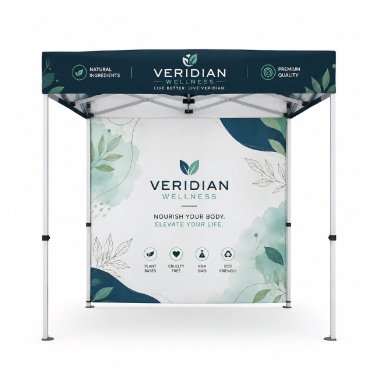
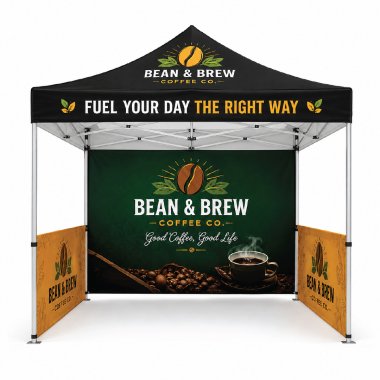
A rear wall can create a strong branded backdrop while leaving the front open for visitors. Sidewalls can provide additional branding or help define the booth when neighboring displays are close together.
A more open configuration can improve circulation during busy markets, while additional wall coverage can create a more defined presentation when the surrounding environment is visually crowded.
The important point is to avoid selecting every wall simply because the option exists.
For a compact 10x10 space, excessive enclosure can make the booth feel tight. A larger 10x20 footprint can accommodate a more developed presentation if the event layout allows it.
Printing Limitless offers flexible wall configurations for custom canopy tents, making it possible to build the display around the actual booth rather than using one fixed arrangement.
A canopy is often visible before a visitor reaches the booth.
That makes the upper portion of the structure valuable for brand recognition. A logo, business name, or short message can establish identity at a distance, while the walls can carry supporting imagery or product information.
The artwork should account for how the canopy will actually be viewed.
A large amount of small text may disappear when visitors see the structure from across a market. Strong brand elements, clear contrast, and simple visual hierarchy tend to communicate faster.
Dye sublimation printing is well suited to fabric canopy graphics because the design becomes part of the textile. This allows detailed, full-color artwork across the canopy roof and wall components without turning the structure into a collection of separate graphic panels.
For recurring Connecticut events, keeping the core brand identity consistent while adjusting selected graphics can make the same canopy useful across different event formats.
A canopy used repeatedly needs to work beyond the event itself.
It has to move between storage, vehicle, setup area, booth, and back again. A wheeled travel bag can make larger canopy components easier to transport, particularly when the event space is some distance from the unloading area.
The frame, roof, walls, straps, ballast, and accessories should also be stored as one organized system.
After a wet Connecticut event, the fabric should be dried completely before long-term storage. Frame joints and adjustment points should be checked for dirt and debris before the structure is packed away.
These small habits become important when the same branded canopy tent is being installed several times throughout the season.
Before ordering custom canopy tents, confirm the following:
| Decision | What to check |
|---|---|
| Location | Coastal, inland, town center, fairground or market |
| Booth size | Assigned footprint and surrounding clearance |
| Surface | Grass, soil, asphalt or concrete |
| Frame | Aluminum construction and commercial leg profile |
| Fabric | 500D to 600D outdoor fabric, coating and seam construction |
| Sun exposure | UV protection and roof color |
| Moisture | Mold and mildew resistance plus storage requirements |
| Anchoring | Venue-approved stakes or ballast |
| Fire safety | Required flame performance documentation |
| Walls | Open front, rear wall, sidewalls or selected combination |
| Graphics | Logo visibility, viewing distance and wall artwork |
| Transport | Travel bag and organized component storage |
This gives the buyer a practical sequence: venue first, structure second, graphics third.
Connecticut's event environment rewards a canopy that can adapt.
A setup near the coast may need greater attention to moisture and corrosion. A summer event may place greater emphasis on UV exposure and airflow. A paved downtown event can require a completely different anchoring approach than a market held on grass.
The canopy itself can remain recognizable while the configuration changes around those conditions.
With custom canopy tents, durable outdoor fabric, aluminum framing, dye sublimation graphics, flexible wall options, and suitable anchoring equipment, the same branded structure can support a varied Connecticut event schedule.
Before ordering, confirm the assigned footprint, ground surface, anchoring requirements, fire documentation, and any municipal permit conditions. Connecticut's fire safety provisions place specific attention on structural stability, anchorage, flame performance, and approval requirements for applicable temporary structures.
That preparation helps turn the canopy into a dependable event asset rather than simply another piece of temporary equipment.