Free Shipping on Orders $99+
Use Code FLAT15 & Get 15% Off On All Orders
Choose your store
Prices, currency, and delivery follow the store you select.
Prices, currency, and delivery follow the store you select.
An Idaho event can put a canopy on grass one weekend and a paved public space the next. A market in Boise, an outdoor gathering in Idaho Falls, or an event in Ketchum can each introduce different expectations around anchoring, spacing, permits, and fire access.
That makes the buying decision less about finding a canopy that simply looks good and more about choosing one that can arrive at the venue ready to work. The frame, fabric, ballast, footprint, and documentation all deserve attention before the order is finalized.
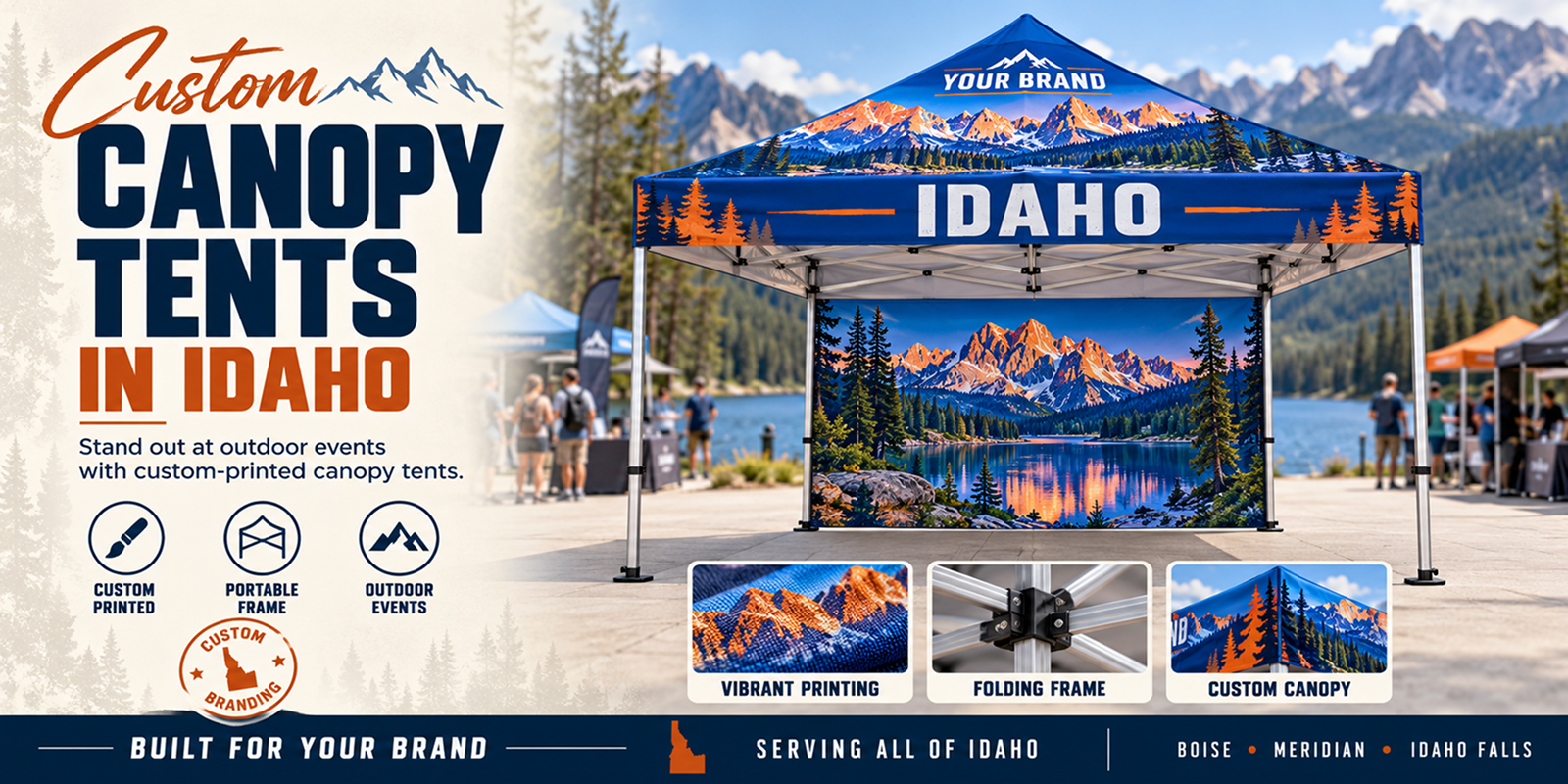
The same 10x10 canopy can behave very differently depending on where it is installed. A grassy market area may allow a different anchoring approach than a paved downtown plaza, while a public park can have its own restrictions on stakes, access, and structure placement.
Boise is a useful example. Its park use policy requires canopies to be weighted instead of staked to avoid damaging irrigation, electrical, and water lines. It also states that a Boise Fire Department permit is required for tents, canopies, and awnings over 200 square feet in its park setting.
That means the surface beneath the canopy should be considered before choosing the anchoring equipment. A buyer who expects to stake a canopy and later discovers that the venue prohibits ground penetration may need a completely different setup.
| Site condition | Planning question |
|---|---|
| Grass or soil | Are stakes permitted at the venue? |
| Paved surface | What ballast system is accepted? |
| Public park | Are there restrictions on staking or structure placement? |
| Dense event layout | How much clearance must remain around the canopy? |
| Large canopy | Does the footprint trigger additional review? |
| Event with electrical equipment | Are additional fire requirements involved? |
An outdoor canopy is exposed to forces that do not remain constant. Wind can push against the roof and walls, while repeated setup and breakdown places stress on joints, legs, and connection points.
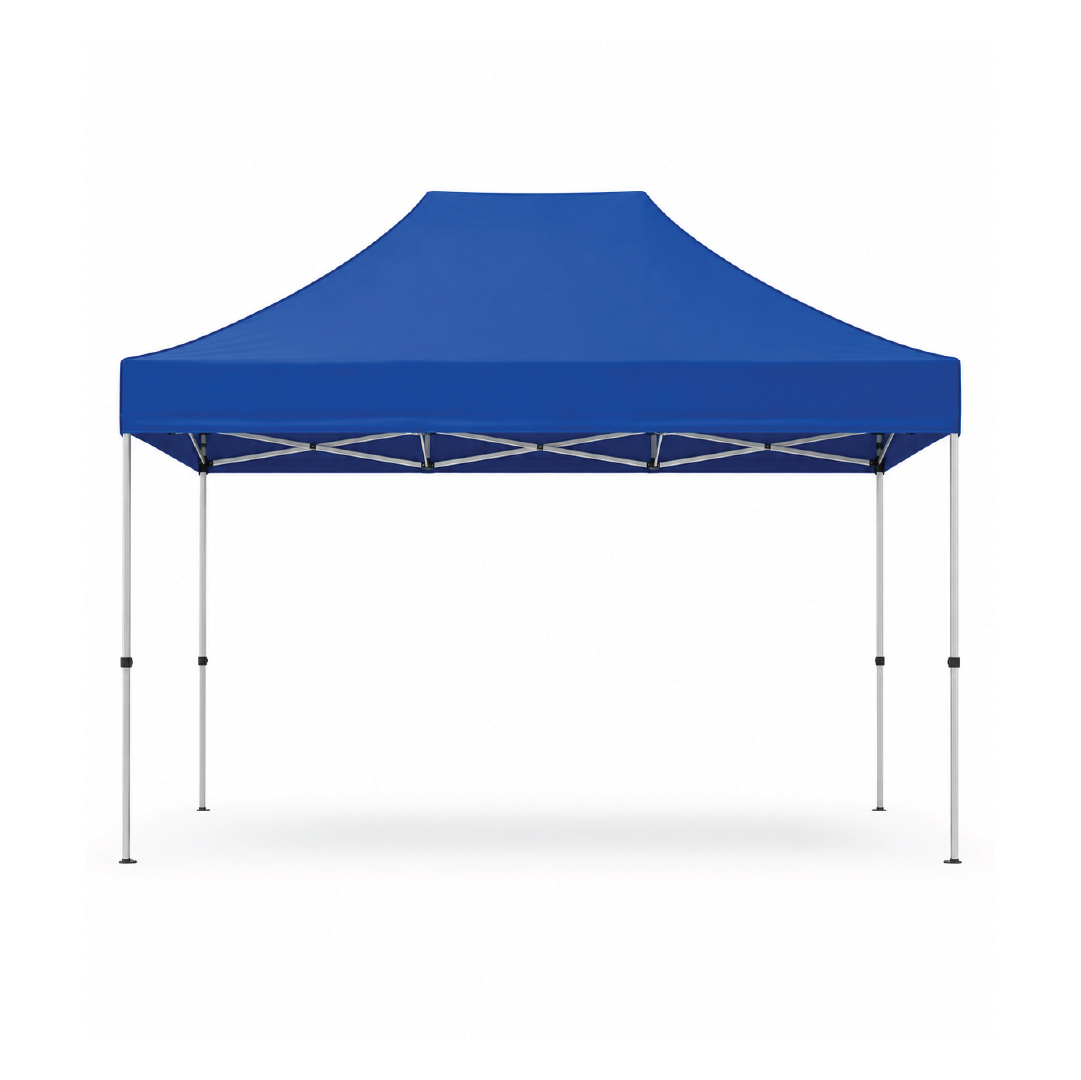
A commercial aluminum frame is a sensible starting point for recurring event use. A substantial hexagonal leg profile can provide a more rigid structure than thin consumer framing, while cast aluminum corner connections can provide stronger load transfer through the frame.
The frame should also be evaluated as a complete system. Strong legs do little if the corner joints are weak, and a substantial frame still needs a suitable anchoring method once it reaches an exposed outdoor site.
Printing Limitless canopy configurations use aluminum pop-up frames with telescopic legs and adjustable height. Selected setups also provide options such as sandbags, wheeled travel bags, flag holders, and other accessories that can support a more complete event setup.
Ballast should sit directly within the structural plan rather than being treated as an accessory added at the last minute. The weight needs to remain connected securely to the frame so the canopy can resist movement without creating loose obstacles around the display.
There is no single Idaho-wide ballast figure that should be presented as a universal rule. Venue requirements vary. Emmett Farmers Market, for example, allows canopies only when they are weighted and states that stakes cannot be put into the ground under city orders. Its published rules suggest 15 to 20 pounds per corner for that specific market.
Ketchum takes a different approach. Its current special event guidelines state that tent stakes are not allowed in city parks and all tents must be weighted. That same document also imposes specific separation and permitting requirements for temporary structures.
The practical lesson is to confirm the venue's ballast requirement before ordering. A 24-pound setup may satisfy one event organizer while another location may require substantially more.
Idaho does not have one simple event setup rule that can be applied identically to every city. Ketchum's special event guidance demonstrates how detailed local requirements can become.
The city states that temporary structures are subject to inspection for compliance with building and International Fire Code requirements. Tents exceeding 200 square feet require advance Fire Department permitting unless they are open on all sides. The city also requires tents, canopies, and temporary membrane structures to remain 20 feet away from lot lines, buildings, other temporary structures, parked vehicles, and internal combustion engines.
The same guidance addresses flame propagation, cooking, open flames, and event layouts. Tents must meet NFPA 701 flame propagation performance criteria, while tents holding 50 or more occupants require a detailed site and floor plan covering items such as exits, seating, heating, and electrical equipment.
That is a useful reminder that canopy selection and event planning cannot always be separated.
Boise's special event process also treats temporary structures as part of the wider event footprint. The city's current event application states that some tents, canopies, and temporary membrane structures require permits, while its event materials separately address generators and electrical equipment. Generators must be separated from temporary structures, tents, and canopies by at least 20 feet and protected from public contact by fencing, an enclosure, or another approved method.
Boise's event application also asks organizers to account for the event footprint, emergency ingress and egress routes, contingency planning, and temporary structures.
This matters when the canopy is part of a larger branded setup. Tables, displays, generators, storage, signs, and visitor circulation all occupy the same site, so the canopy footprint should be established before the rest of the layout is finalized.
Idaho's elevation and strong sunlight make fabric performance worth considering for recurring outdoor use. A canopy that spends repeated days outdoors needs material capable of retaining its appearance and physical performance under extended exposure.
A 500D or 600D polyester construction is a sensible commercial range to investigate, particularly when paired with a suitable protective coating and UV treatment. Printing Limitless uses 600D acrylic-coated polyester on selected custom canopy configurations, providing a substantial fabric option for outdoor displays.
The coating also has another practical role. Outdoor fabric needs to manage occasional rain while maintaining the printed surface and overall appearance, making the construction of the fabric and seams important when the canopy will be used repeatedly.
A canopy does not need to be treated as a shelter for extreme weather, but it should still be capable of handling ordinary outdoor exposure. The fabric, coating, stitching, and roof shape all contribute to how water behaves across the structure.
Water-resistant coated polyester is useful for this type of application. Heat-sealed or properly finished seams can further reduce the chance of water entering through stitching points, although no portable canopy should be treated as a guarantee against pooling or prolonged severe weather.
The setup also matters. Keeping the roof properly tensioned helps prevent loose areas where water can collect, while using the canopy within its intended configuration reduces unnecessary stress on the fabric and frame.
Fire documentation becomes particularly important when the canopy is being used at an event subject to inspection. Buyers should ask what certification the venue requires and confirm that the supplied fabric carries the appropriate labeling or documentation.
Ketchum's current event guidelines specifically require tent materials to meet NFPA 701 flame propagation performance criteria.
That makes it useful to keep the manufacturer's certification information with the event paperwork rather than discovering a documentation problem during setup. Requirements can vary by jurisdiction, so the venue or local fire authority should remain the final reference.
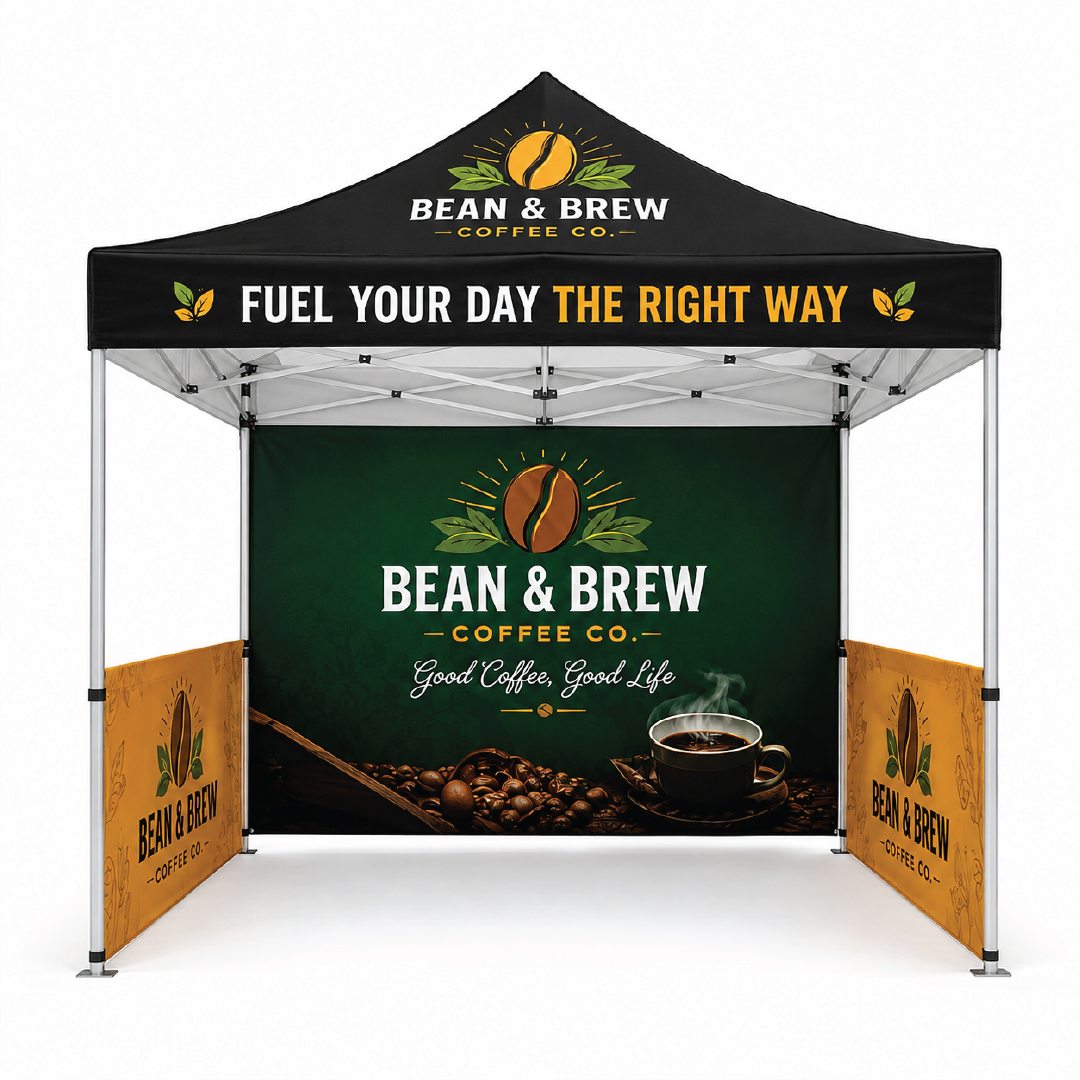
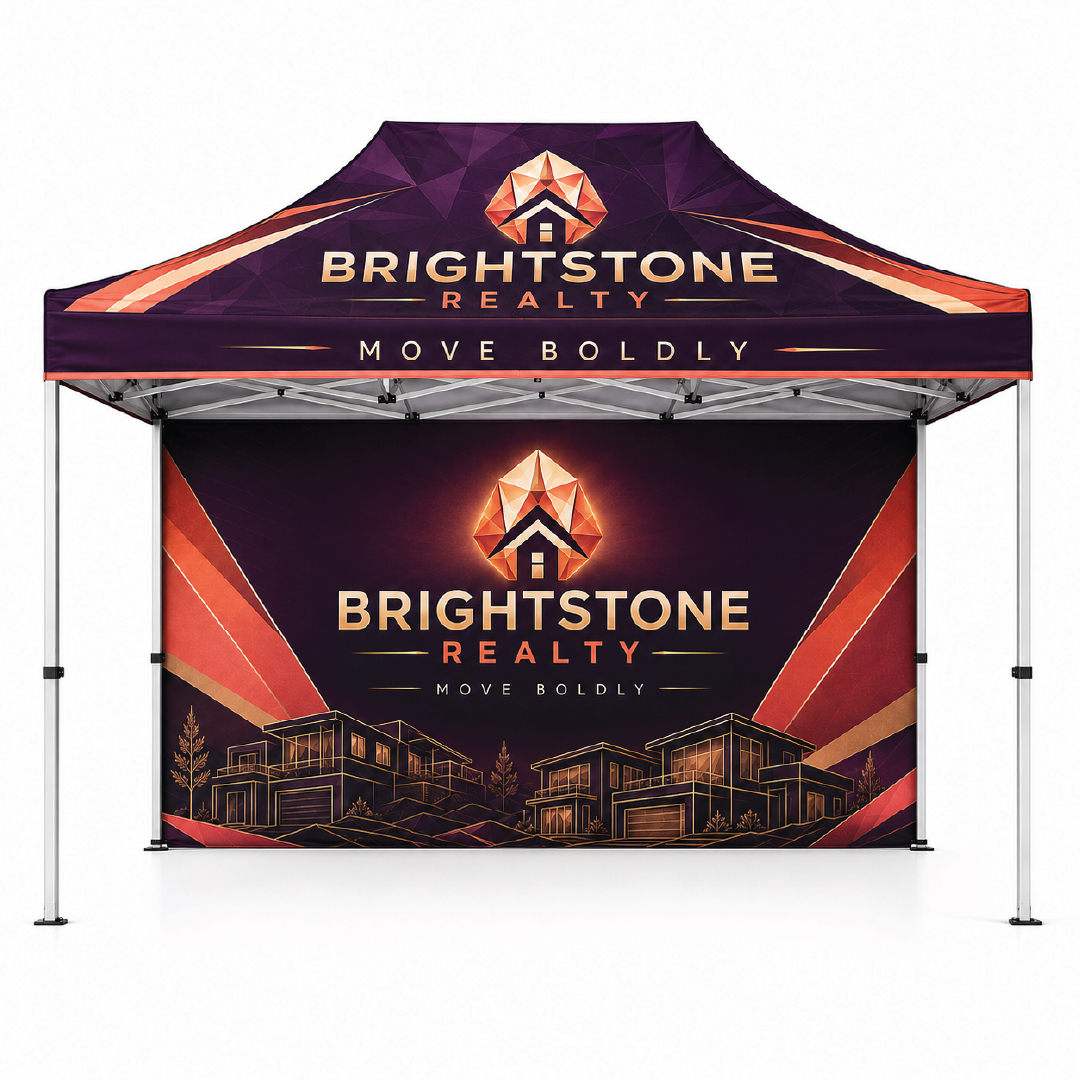
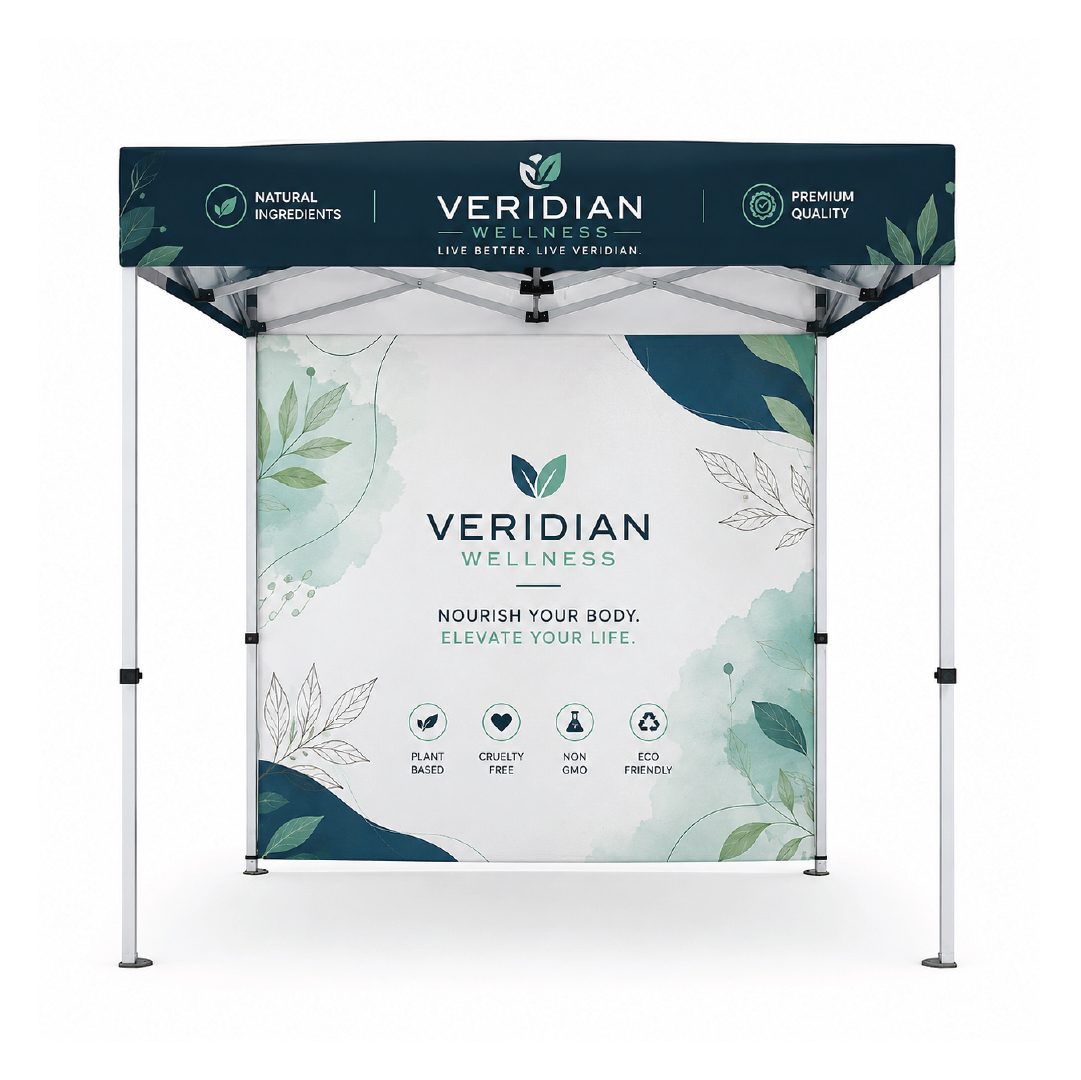
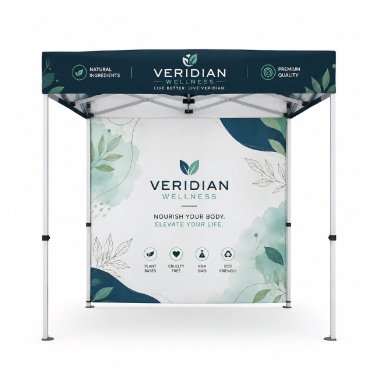
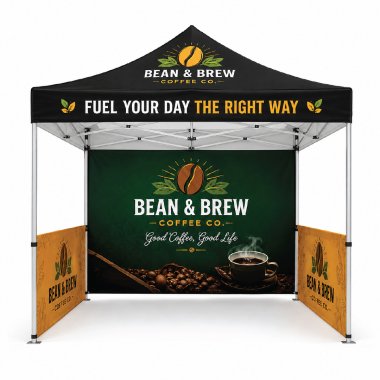
A canopy can create a defined branded space without turning into a closed box. Open sides can keep the entrance visible, while selective walls can establish a backdrop or give the display a stronger visual boundary.
That distinction becomes useful at Idaho markets and outdoor events where people move continuously between displays. A wall positioned behind the primary display can give the brand a clear visual anchor without blocking the main customer approach.
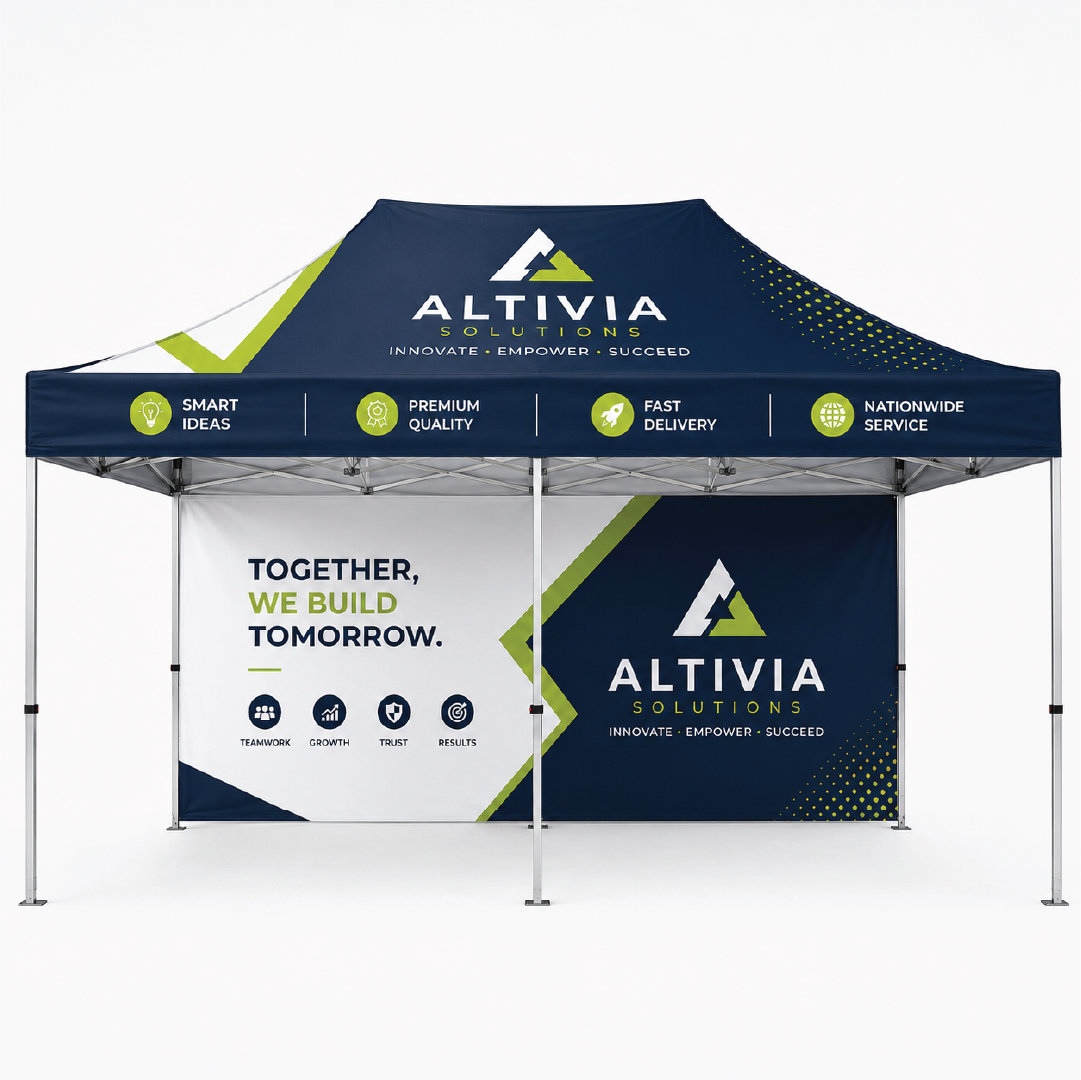
For a larger 10 x 20 configuration, the additional footprint can support a deeper display, but it also makes the surrounding clearance and anchoring plan more important. A larger canopy should be evaluated as part of the complete site rather than simply as a bigger version of a 10 x10.
A custom canopy should remain recognizable before someone reaches the booth. A clear brand name, logo, and visual identity can help visitors identify the display across an open event area.
Dye sublimation printing allows detailed full-color graphics to be integrated across the fabric. That gives the canopy a consistent appearance across the roof and selected walls without relying on temporary signs attached after setup.
The artwork should also account for the physical structure. Logos positioned close to seams, corners, or areas that become visually interrupted by frame components may lose some of their impact. Reviewing the artwork against the actual canopy layout before production can prevent those issues.
The right canopy size depends on how much space the display actually needs and what the venue allows.
| Canopy size | Where it can make sense |
|---|---|
| 6x6 | Compact displays and locations with tight footprints |
| 10x10 | General market and event setups |
| 10x15 | Displays needing additional depth |
| 10x20 | Larger branded areas with multiple display elements |
A 10x10 can be easier to position within a market grid, while a 10x20 can create enough room for products, demonstrations, seating, or a more developed display. Larger structures should prompt an earlier check of permits, spacing, ballast, and fire access.
A recurring event setup becomes easier when the canopy arrives with the right equipment already planned. That includes the ballast, transport method, wall configuration, artwork, and required documentation.
Boise's event application specifically separates temporary structure and fire considerations from other event requirements, while Ketchum requires advance review for certain larger temporary structures.
For a business attending several events across Idaho, this can also mean keeping a dedicated event kit together. The canopy, ballast, storage bag, graphics, certification information, and setup accessories can then move together rather than being assembled differently for every event.
For buyers comparing commercial canopy options, the following combination provides a useful starting point:
Before purchasing a custom canopy tent in Idaho, confirm the following with the event organizer or venue:
The best canopy decision for an Idaho event starts before the canopy is unpacked. The surface, available anchoring method, event footprint, local fire requirements, and intended display all influence what should be ordered.
That makes a custom canopy tent in Idaho useful when the configuration is selected around the actual event rather than treated as a generic portable shelter. With the right frame, fabric, ballast, graphics, and documentation prepared in advance, the setup can be ready for the practical demands of events in Boise, Idaho Falls, Ketchum, and communities across the state.