Free Shipping on Orders $99+
Use Code FLAT15 & Get 15% Off On All Orders
Choose your store
Prices, currency, and delivery follow the store you select.
Prices, currency, and delivery follow the store you select.
A canopy at an Indiana market or festival has a practical job to perform before anyone notices the graphics. It has to fit the assigned space, remain properly secured, give staff enough room to work, and meet the requirements set by the event or venue.
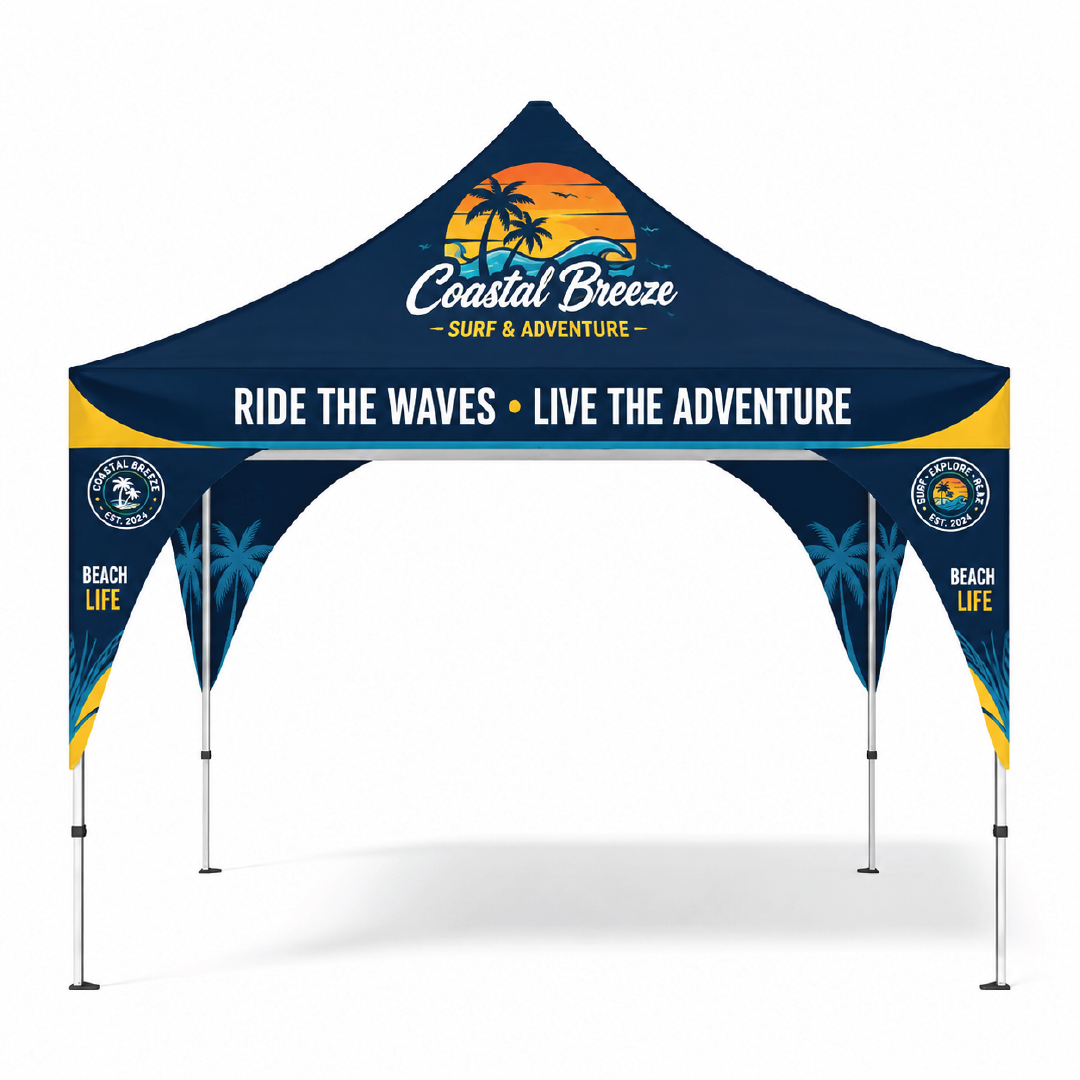
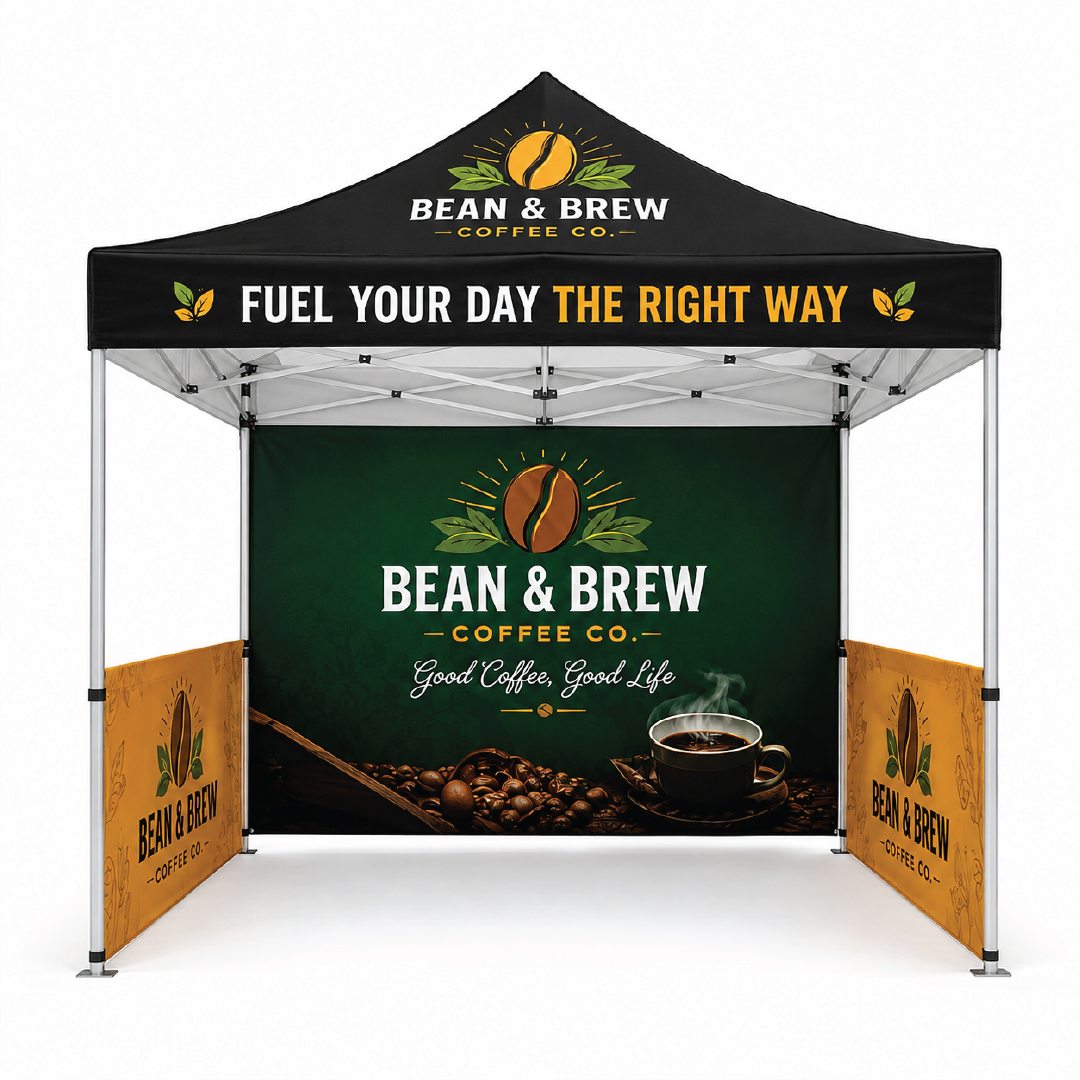
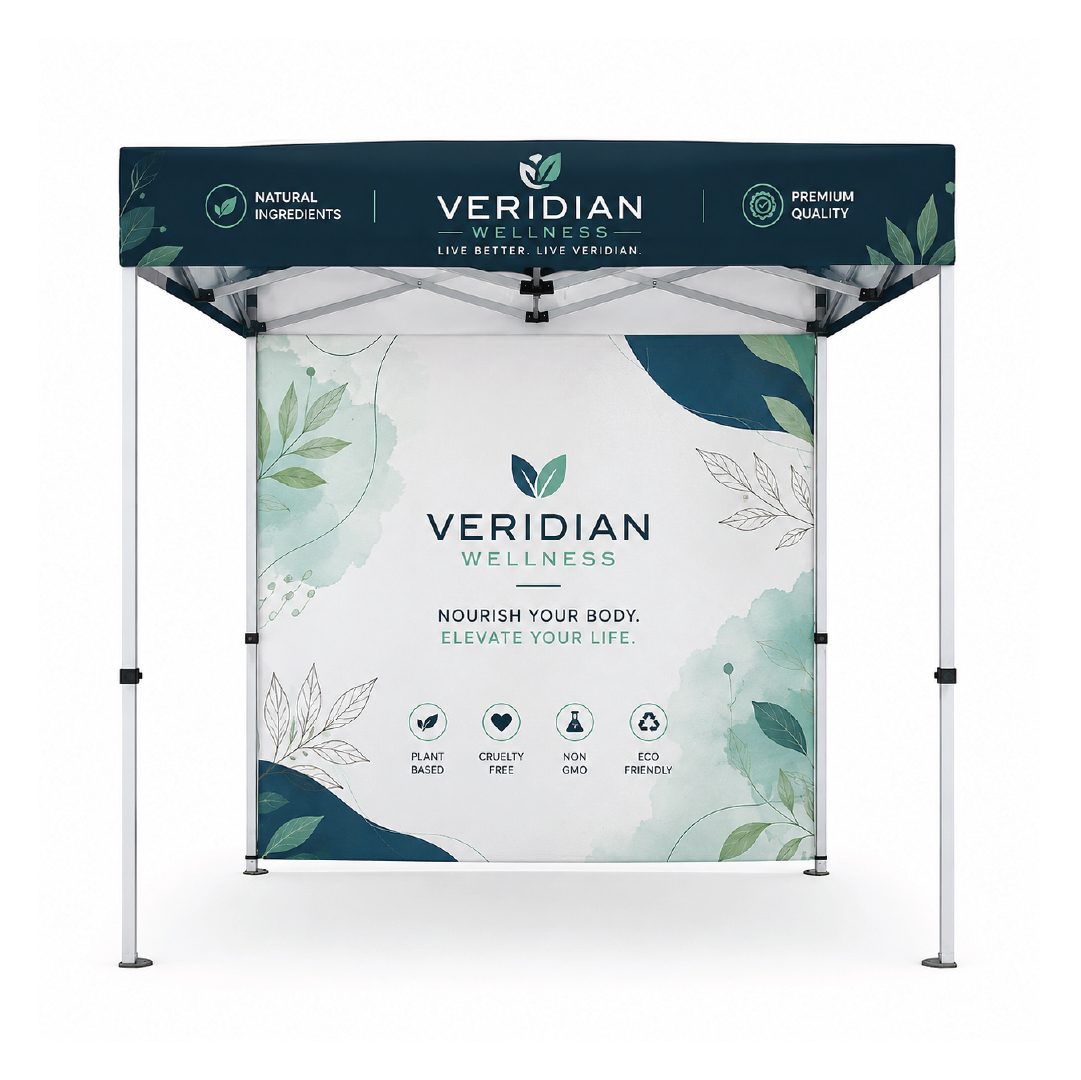
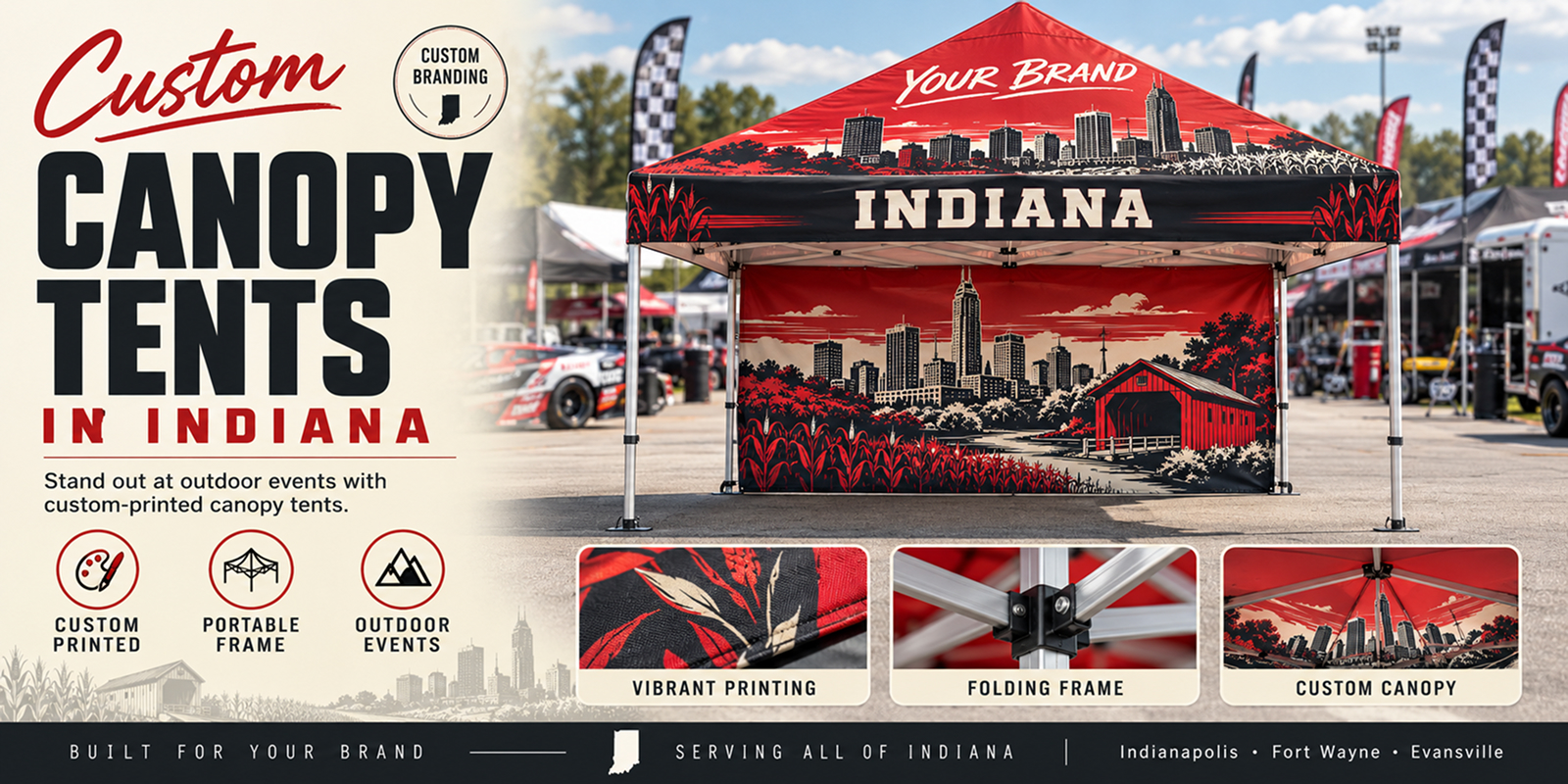
The branding comes next, but it still matters. A well-designed custom canopy tent can turn a standard vendor footprint into a recognizable business space that customers can identify across a busy market, fair, promotional event, or outdoor gathering. For Indiana businesses that attend recurring events, custom canopy tents can provide a repeatable setup that combines portability, visual branding, usable space, and event-specific functionality.
Canopy requirements are not necessarily the same at every Indiana event. The 2026 Statehouse Market in Indianapolis provides a useful example. Vendors using tents or canopies must keep them safely anchored throughout setup, market hours, and breakdown. Its requirements specify 20 to 40 pounds per leg for a 10 x 10 canopy and at least 50 pounds per leg for a 10 x 20 canopy. The weight must be securely attached to the tent leg rather than simply placed beside it.
That creates a useful purchasing checklist for Indiana vendors:
| Event consideration | Why it matters |
|---|---|
| Assigned footprint | Determines the canopy size you can use |
| Anchoring method | Some venues restrict or specify how tents are secured |
| Weight capacity | Requirements can vary by canopy size and venue |
| Fabric certification | Certain public events may require fire-related documentation |
| Wall configuration | Affects access, enclosure, and booth operation |
| Display rules | Organizers may limit activities to the assigned space |
| Food requirements | Temporary food operations can involve additional approvals |
Canopy tent selection should happen alongside event planning rather than after the booth has already been booked.
Customization does not have to mean covering every available surface with graphics. The more useful approach is to decide how the booth should function first, then select the canopy components that support it.
A product seller may need an open front and accessible sides. A service provider may want a more defined consultation environment. A food business can require additional protection around its operating area. A promotional team may prioritize a strong visual identity that can be recognized before people reach the booth.
Printing Limitless offers configurable wall choices, toppers, flag attachments, clear PVC panel options, sandbags, and multiple canopy sizes. The 10 x 10 custom model also allows businesses to select an aluminum frame, eco-friendly fabric, recycled flame retardant fabric, and different accessory combinations. This makes the customization process less about adding features and more about building a canopy that supports the actual event activity.
The frame affects how the canopy travels, opens, adjusts, and performs during repeated use. Printing Limitless uses aluminum pop-up frames with telescopic height adjustment on its custom canopy products. The 10 x 10 model weighs approximately 37.48 pounds for the stand and adjusts between 101 and 135 inches in height.
For businesses attending several Indiana events, that combination can be useful because the structure needs to be handled repeatedly.
Frame choice at a glance
| Frame type | Useful consideration |
|---|---|
| Aluminum | Lighter for transportation and repeated event setup |
| Powder-coated steel | Heavier structure suited to buyers who prioritize weight |
| Hexagonal commercial profiles | Designed to provide additional structural rigidity |
| Adjustable frame | Allows the canopy height to be adapted to the setup |
Aluminum is particularly relevant for mobile marketing because transportation becomes part of the operating cost of the display. A structure that is difficult to move can quickly become inconvenient when the business attends events in Indianapolis one weekend and Fort Wayne or Bloomington the next.
This is one area where Indiana provides unusually useful guidance for canopy buyers. The Statehouse Market requires weights to be attached to each tent leg and does not accept loose weights sitting beside the structure. Its 2026 requirements call for 20 to 40 pounds per leg for a 10 x 10 canopy and at least 50 pounds per leg for a 10 x 20 canopy.
Whitestown Farmers Market takes a similar safety-focused approach, requiring at least 40 pounds per leg for tents and canopies and stating that covers must remain secured throughout the market. That makes anchoring worth considering when comparing pop-up canopy tents.
Before an Indiana event, confirm:
The correct requirement comes from the venue or event organizer. Do not assume that a weight specification accepted at one market automatically applies elsewhere.
A canopy used at a public event may need to meet specific fire safety requirements, particularly when it forms part of a larger temporary event setup. Event organizers can also ask vendors to provide documentation for the tent fabric or its fire-resistant properties before approving the booth.
This is worth checking before you finalize your custom canopy tent. Ask the organizer what certification or documentation is required, especially if the event involves cooking equipment, multiple temporary structures, or a larger public gathering.
Printing Limitless offers a recycled flame-retardant fabric option on its 10 x 10 custom canopy, giving Indiana vendors an option to consider when an event specifies fire-related fabric requirements. The applicable certification should always be confirmed for the specific canopy and fabric configuration being ordered.
The Indiana State Fair's 2026 vendor information provides an interesting insight into how booth presentation is considered during vendor selection. Its application review includes the attractiveness of the booth or trailer, stand design and structure, alongside product or service type, sanitation requirements, and physical constraints.
That changes the role of a branded canopy tent. It is not simply a roof above the vendor space. The structure contributes to the first impression of the business. A useful booth design should establish visual consistency through:
The Indiana State Fair also asks applicants to provide photos for each trailer, stand, or booth as part of its vendor application process. For businesses applying to competitive events, the physical presentation of the booth can therefore deserve attention before the event application is submitted.
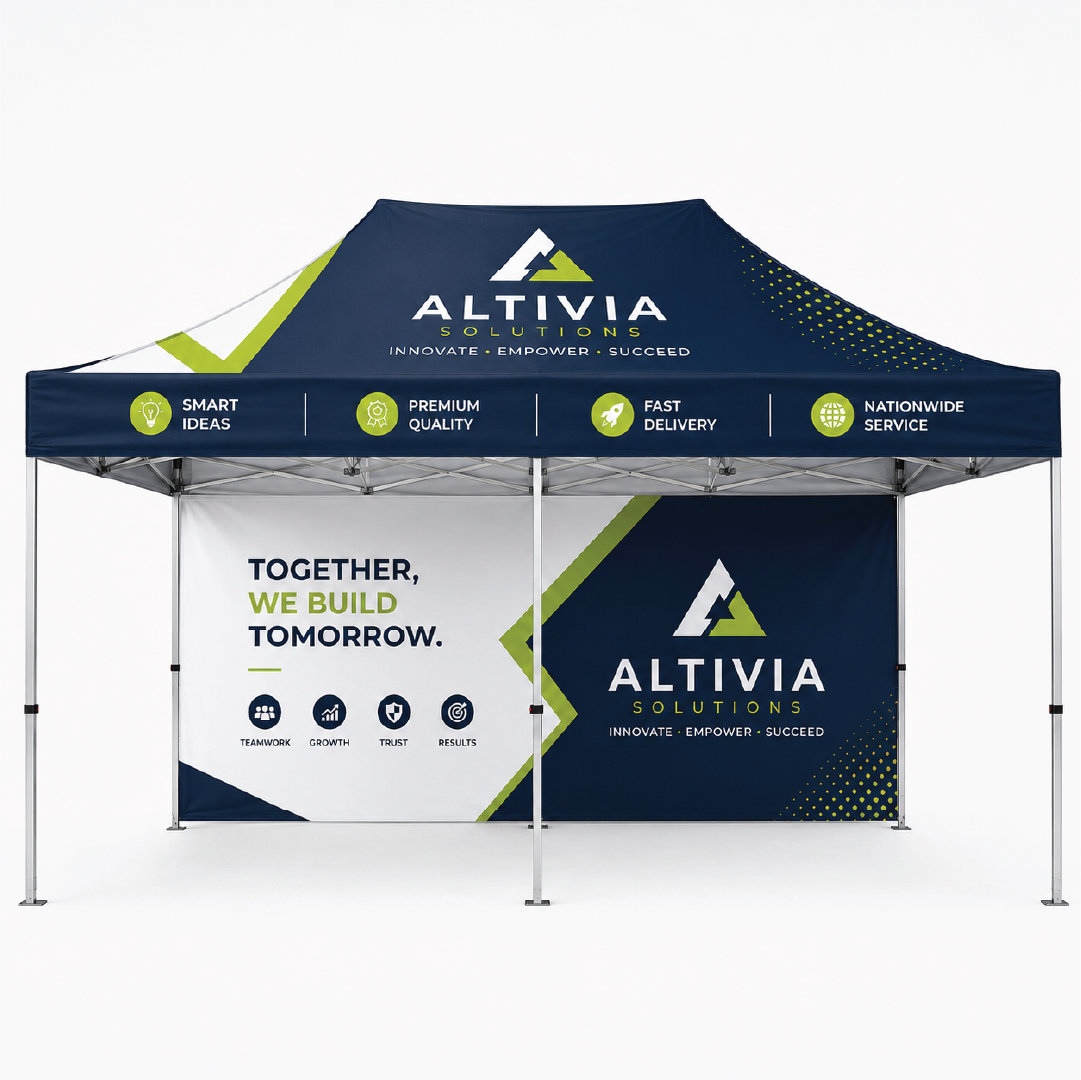
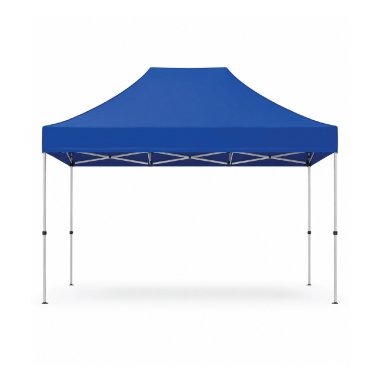
Not every Indiana event gives a vendor the same footprint. A 10 x 10 canopy remains a practical format for many vendor spaces. The 10 x 20 option provides twice the floor area and can support larger product displays, additional staff, demonstrations, hospitality, or a more substantial branded environment.
Printing Limitless currently offers several canopy sizes, including 6 x 6, 10 x 10, 10 x 15, and 10 x 20 configurations.
| Canopy size | Consider it when |
|---|---|
| 6x6 | The available footprint is compact |
| 10x10 | You need a conventional vendor footprint |
| 10x15 | You want additional display room without moving to a full 10x20 |
| 10x20 | The booth requires substantial product, staff, or interaction space |
The assigned space should determine the decision. A larger canopy is useful only when the event permits the footprint, and the additional area serves a real purpose.
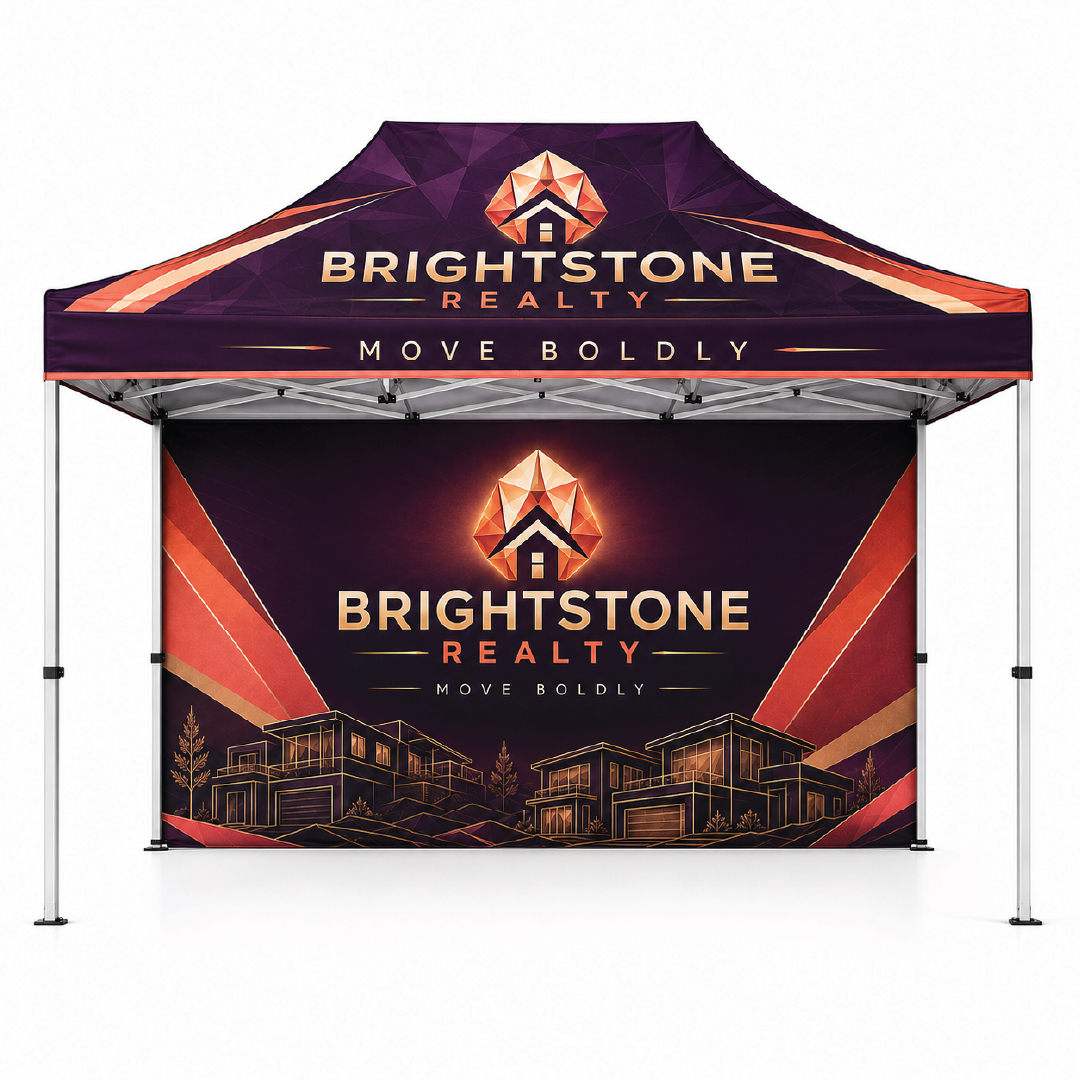
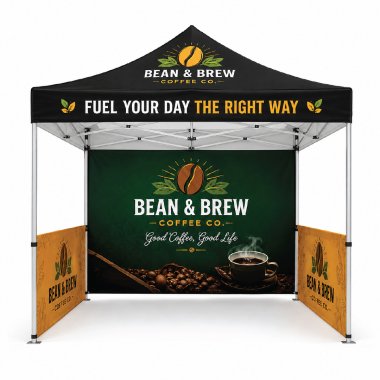
A custom printed canopy tent can carry considerably more information than a company name. The artwork can establish the visual language of the entire booth. Strong color blocking can help a brand remain recognizable in a crowded market. Large-scale imagery can support a product launch. A concise message can tell visitors what the business does before they reach the table.
Printing Limitless uses dye sublimation printing on its custom canopy products and supports artwork formats including PDF, SVG, AI, EPS, TIFF, PSD, PNG, JPG, and others. The 10x10 product also offers Pantone color matching as an option.
A useful artwork planning sequence
1. Establish the brand:
Logo, approved colors, typography, and primary visual elements.
2. Define the message:
Decide what a person should understand within a few seconds of seeing the booth.
3. Match graphics to panels:
Keep important information positioned where it will remain visible within the selected configuration.
4. Check viewing distance:
Large outdoor spaces require graphics that remain legible beyond immediate table distance.
5. Approve the proof:
Review spelling, proportions, colors, and placement before production.
The result should feel like a physical extension of the company's existing branding rather than a separate promotional object.
Indianapolis has several types of outdoor spaces where commercial activity can require planning. Indy Parks states that private vendor sales in parks require a permit. It also requires permits for the sale of food, beverages, or merchandise during park activities, while organized public events can require a special event permit application.
For a business using a custom canopy tent in Indianapolis, this means the canopy is one part of the event plan. Vendor permissions, site rules, insurance, food documentation, and other requirements can apply separately.
The Statehouse Market adds another layer of practical detail. Its 2026 vendor process requires documentation such as insurance, and applicable food vendors must complete Indiana Department of Health requirements. Checking those requirements early can prevent a beautifully designed canopy from becoming the least prepared part of the booth.
A canopy used for food sales has to accommodate the practical side of serving customers as well as the visual side of the booth. Protection over preparation and serving areas, space for equipment, handwashing access, sanitation, and safe storage can all affect how the canopy should be configured. Temporary food vendors may also need permits, advance approvals, or event-specific documentation before setting up.
The wall configuration deserves particular attention. Depending on the type of food operation and venue requirements, enclosed or partially enclosed sides may provide useful protection against weather, insects, and outdoor debris. Cooking equipment can introduce additional considerations around placement, ventilation, fire safety, and separation.
| Planning area | What to verify |
|---|---|
| Coverage | Adequate overhead protection for the operation |
| Walls | Required protection based on the food activity |
| Equipment | Placement of cooking and service equipment |
| Hygiene | Handwashing and sanitation provisions |
| Fire safety | Rules concerning cooking and temporary structures |
| Permits | Local and event-specific food requirements |
The canopy should support compliance rather than be selected independently of the food setup.
A portable canopy tent earns its value when it can support multiple events without requiring a complete redesign each time. The same branded structure can appear at a farmers market in Indianapolis, a festival in Fort Wayne, a community event in Bloomington, or a business promotion elsewhere in Indiana. Product selection and table arrangement can change while the canopy maintains the company's visual identity.
Printing Limitless custom canopies use aluminum pop-up frames and offer accessories such as sandbags, toppers, flag attachments, and selected clear PVC panels. The 10x20 model also includes a wheeled travel bag option for transportation.
For recurring event use, maintenance matters as well. Printing Limitless recommends cleaning the coated fabric with warm water, a soft sponge, and mild, non-detergent soap, followed by complete drying before storage. A simple storage routine helps protect the printed fabric and keeps the setup ready for the next event.
Indiana events can differ considerably, so a short pre-order review can save unnecessary changes later.
Event details
Canopy details
Branding details
This preparation turns the canopy purchase into part of a complete event system rather than an isolated printing order.
Indiana's markets, fairs, festivals, sporting events, promotional gatherings, and community programs create different demands for temporary branded spaces. A successful canopy needs to respond to those demands while remaining recognizable as part of the business.
Custom canopy tents in Indiana can provide that combination through adaptable sizing, aluminum pop-up frames, printed graphics, wall configurations, and accessories selected around the event.
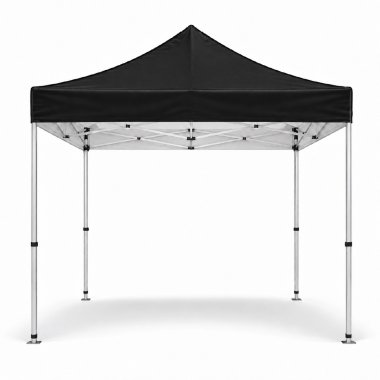
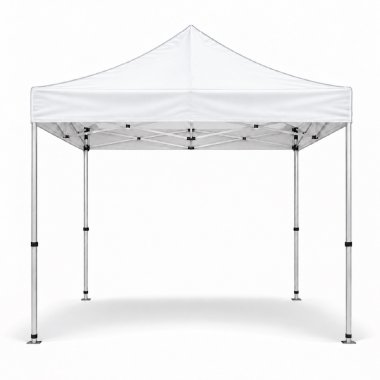
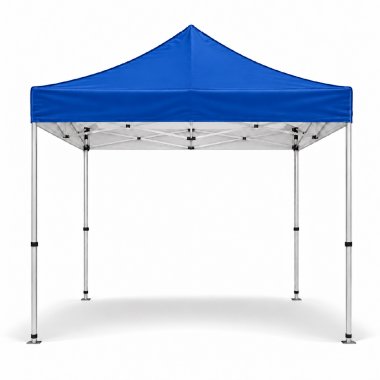
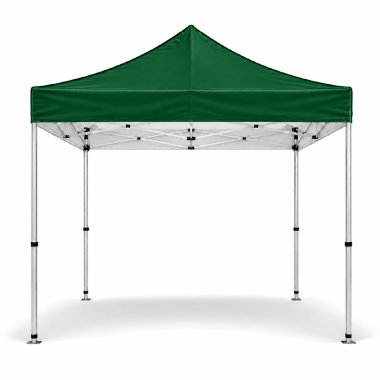
Printing Limitless offers 6 x 6, 10 x 10, 10 x 15, and 10 x 20 custom canopy options, along with solid color alternatives and accessories for branding, visibility, transportation, and stability. The right setup comes down to the event footprint, operating requirements, branding priorities, and venue rules. Once those are established, the canopy becomes a practical piece of the brand's outdoor presence that can return to the event circuit again and again.