Free Shipping on Orders $99+
Use Code FLAT15 & Get 15% Off On All Orders
Choose your store
Prices, currency, and delivery follow the store you select.
Prices, currency, and delivery follow the store you select.
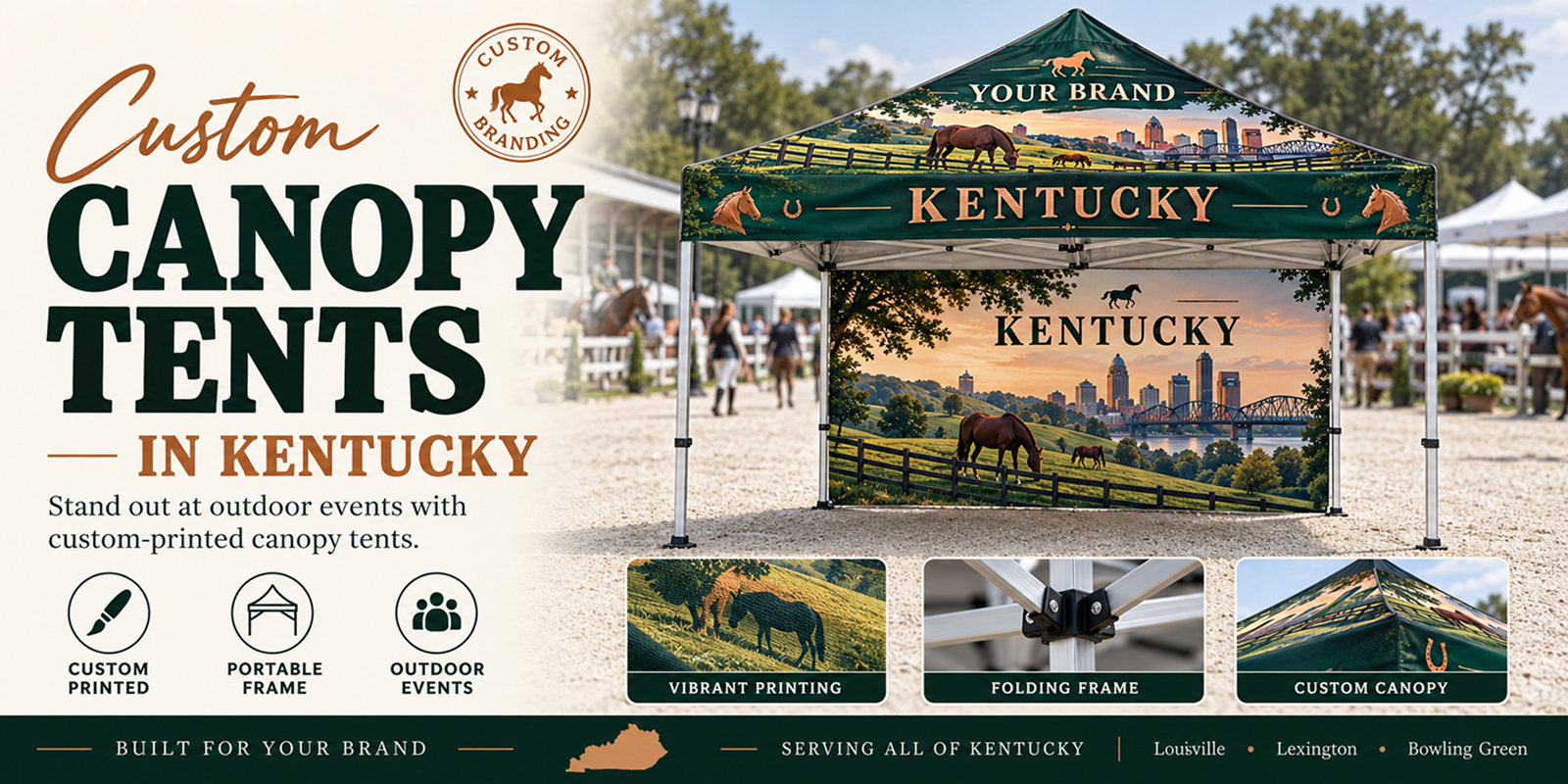
Kentucky outdoor events can move quickly between comfortable conditions and difficult setup environments. A sunny morning in Lexington can give way to a storm later in the day, while Louisville summer events can combine high humidity with intense heat. Fall brings another consideration as temperatures drop and outdoor markets continue into cooler evenings.
That makes canopy selection a practical decision involving the frame, fabric, footprint, anchoring method, graphics, and event requirements. A canopy needs to perform as a temporary outdoor structure while still giving the display a professional appearance.
The right setup also depends on where the canopy will be used. A market space in Louisville may have different permitting requirements than a private property event in Lexington. A large fair installation may require documentation that a small outdoor promotion does not.
Kentucky sits within the broader Ohio Valley weather pattern, where severe thunderstorms can bring damaging wind and heavy rainfall. National Weather Service forecasts for the region regularly identify damaging wind gusts and heavy rain among the primary hazards during severe storm periods.
Tip for Commercial Vendors: To maximize the lifespan of your investment, always select your custom tent based on the specific event conditions it will face. Remember, pop-up canopies are high-performance temporary structures, not permanent installations.
| Kentucky condition | Canopy consideration |
|---|---|
| Sudden thunderstorms | Use a properly secured frame and follow venue wind procedures |
| High summer humidity | Select fabrics and hardware intended for repeated outdoor use |
| Heavy rainfall | Use a roof that sheds water effectively and avoid allowing water to pool |
| Strong sun exposure | Use durable printed fabric and plan graphics around long outdoor use |
| Freezing temperatures | Store the canopy completely dry and avoid leaving temporary structures exposed to accumulating snow |
A canopy should also be taken down when event organizers or weather authorities require evacuation or suspension of outdoor activity. No commercial pop-up canopy should be treated as a shelter during severe weather.
A commercial canopy frame has to handle more than the weight of its fabric. Repeated opening, closing, height adjustment, transportation, and outdoor installation all place demands on the joints and moving components.
Aluminum is a practical choice for portable canopy structures because it provides a useful combination of strength and manageable weight. Printing Limitless uses aluminum frames with adjustable telescopic legs on its custom canopy range. The 10 x 10 model, for example, uses an aluminum frame with adjustable layers and telescopic legs.
The frame should also be inspected at every event. Pay attention to:
A frame that becomes difficult to open or close should not be forced into position. Repeated stress at a damaged joint can create a larger structural problem during a later installation.
Kentucky's summer conditions can create a difficult combination of heat, humidity, direct sunlight, and sudden rain. Fabric therefore needs to support both the practical and visual sides of the display.
Printing Limitless offers custom canopy fabric using 600 denier acrylic-coated polyester with an 8 oz graphic weight, along with eco-friendly and recycled FR fabric options on selected configurations. Its custom canopy graphics use dye sublimation printing.
Dye sublimation is particularly useful for a branded canopy because the graphic becomes part of the fabric rather than functioning like a separate adhesive sign. That matters when the canopy is repeatedly folded, transported, installed, and exposed to outdoor conditions.
When comparing canopy options, look for:
Do not assume that every canopy sold for outdoor use has the same fabric construction or documentation. Ask for the actual material specification before ordering.
Louisville has specific requirements for temporary tents and structures. The city's tent permit guidance calls for a tent or temporary structure permit application, site map, certificate of flame resistance, and staking or anchoring diagram. The city also requires adequate aisle and exit clearance, with unobstructed exit aisles at least 44 inches wide.
Louisville Parks and Recreation separately identifies tents and canopies as features that can trigger event permitting. Its current guidance also states that large tents above 400 square feet require a tent permit. That distinction is important when planning a larger display.
A buyer should confirm the event requirements before ordering the canopy, especially if the setup will involve several connected spaces, substantial sidewalls, cooking equipment, electrical equipment, or a large footprint.
Do not assume that a requirement applying to a large temporary structure automatically applies to every 10 x 10 style canopy. Local event organizers and authorities can establish requirements specific to the property and event.
Kentucky events can take place on grass, compacted soil, pavement, concrete, or other prepared surfaces. The anchoring method needs to match the surface rather than being improvised at the venue.
On soil or grass, approved ground stakes may be possible if the event organizer allows them and underground utilities have been considered. On paved surfaces, ballast is generally the practical alternative.
Louisville's tent permit process specifically asks for a staking or anchoring diagram, which shows why anchoring should be planned before arrival rather than treated as an afterthought.
| Surface | Planning point |
|---|---|
| Grass | Confirm staking permission and underground utility restrictions |
| Soil | Select stakes suitable for the ground condition |
| Concrete | Plan a ballast-based anchoring system |
| Asphalt | Confirm what type of anchoring the venue permits |
| Public event space | Follow the organizer's approved anchoring method |
Avoid loose objects that can move independently of the frame. The purpose of ballast or staking is to connect the structure to the ground in a controlled way.
There is also no reliable Kentucky-wide rule that every canopy must carry exactly 40 pounds on every leg. Weight requirements can vary by venue, structure, surface, weather conditions, and event organizer. Use the event's documented requirement rather than applying a single number to every location.
A closed canopy can become uncomfortable quickly during a humid Kentucky summer. The answer is not simply to add every available wall. Wall placement should follow how the space will be used.
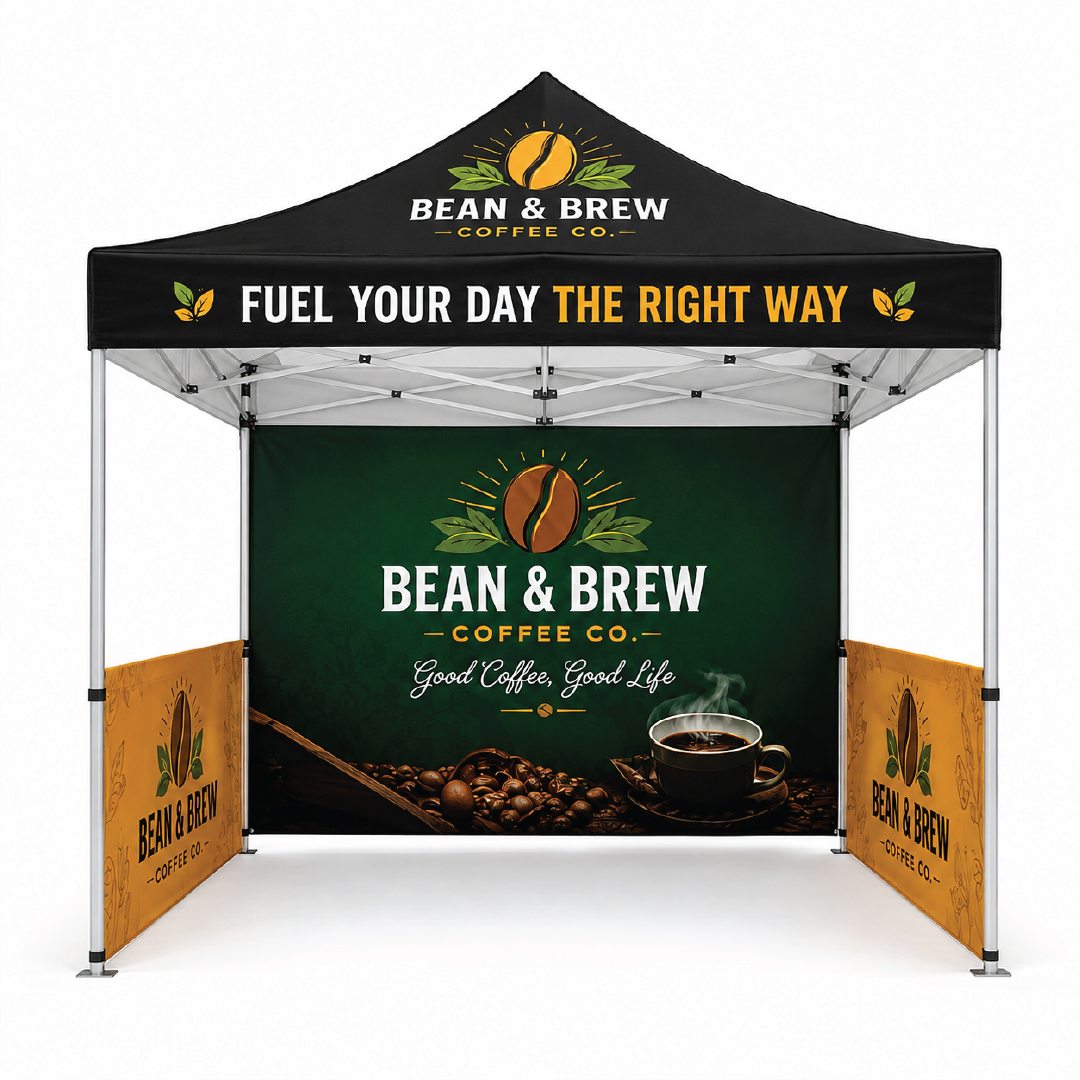
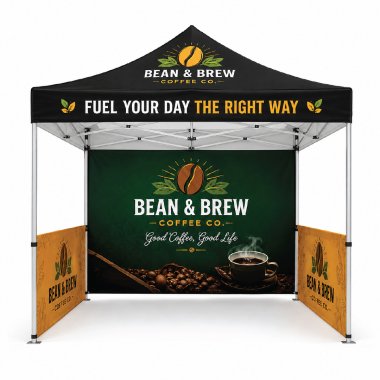
An open configuration can make it easier for visitors to approach from several directions. A rear wall can establish a strong branded backdrop while leaving the front open. Sidewalls can create a more defined display when products or demonstrations need a controlled viewing area.
Printing Limitless offers different wall configurations across its canopy products, including full panel options and selected clear PVC panel configurations. The important consideration is airflow. A fully enclosed canopy can retain heat and humidity, so wall placement should be planned alongside the expected visitor flow and operating conditions.
Canopy size should be based on what needs to happen underneath it.
A compact setup can work when the canopy primarily provides overhead coverage and a branded background. A larger footprint becomes useful when the space needs to accommodate product displays, visitor interaction, staff movement, storage, or several display elements.
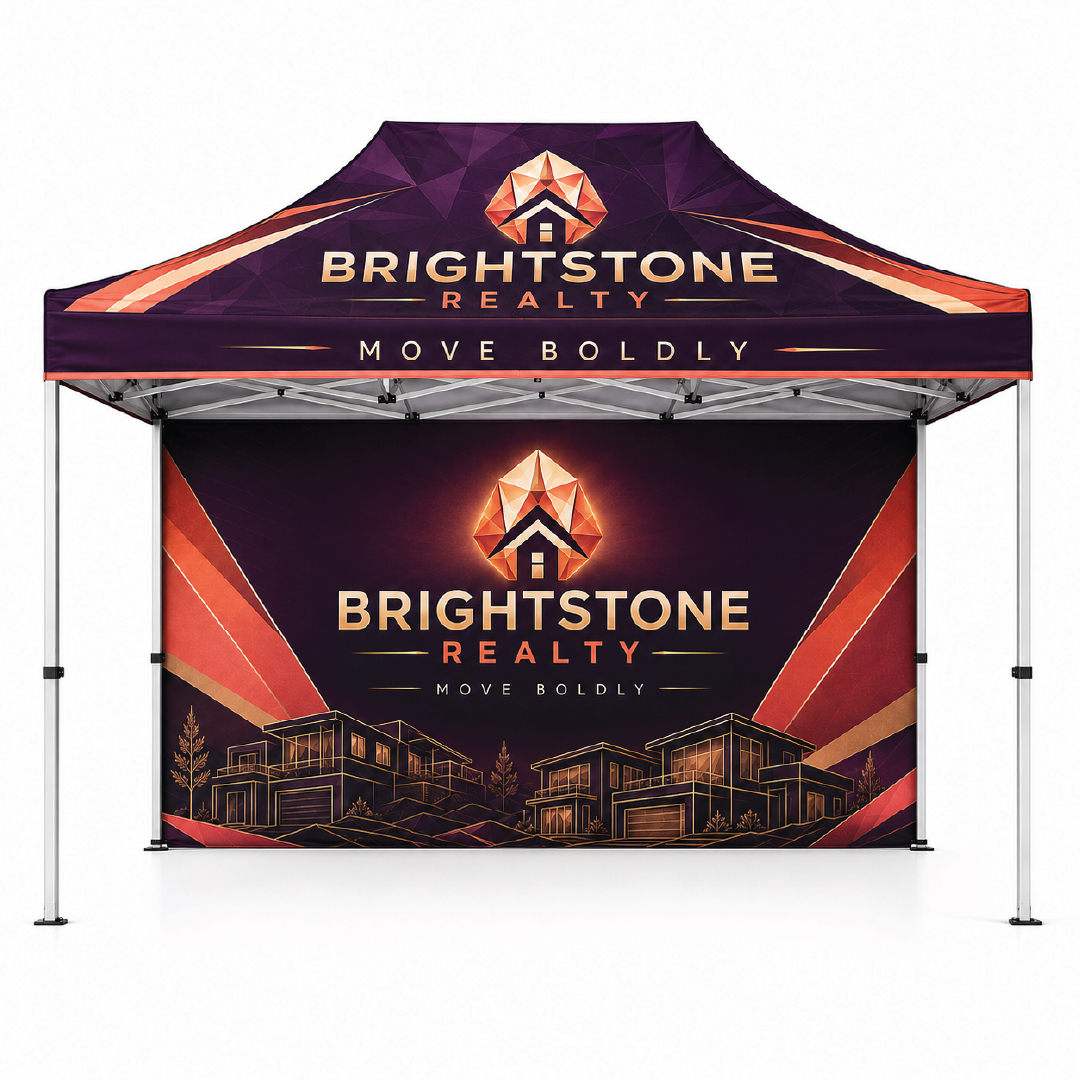
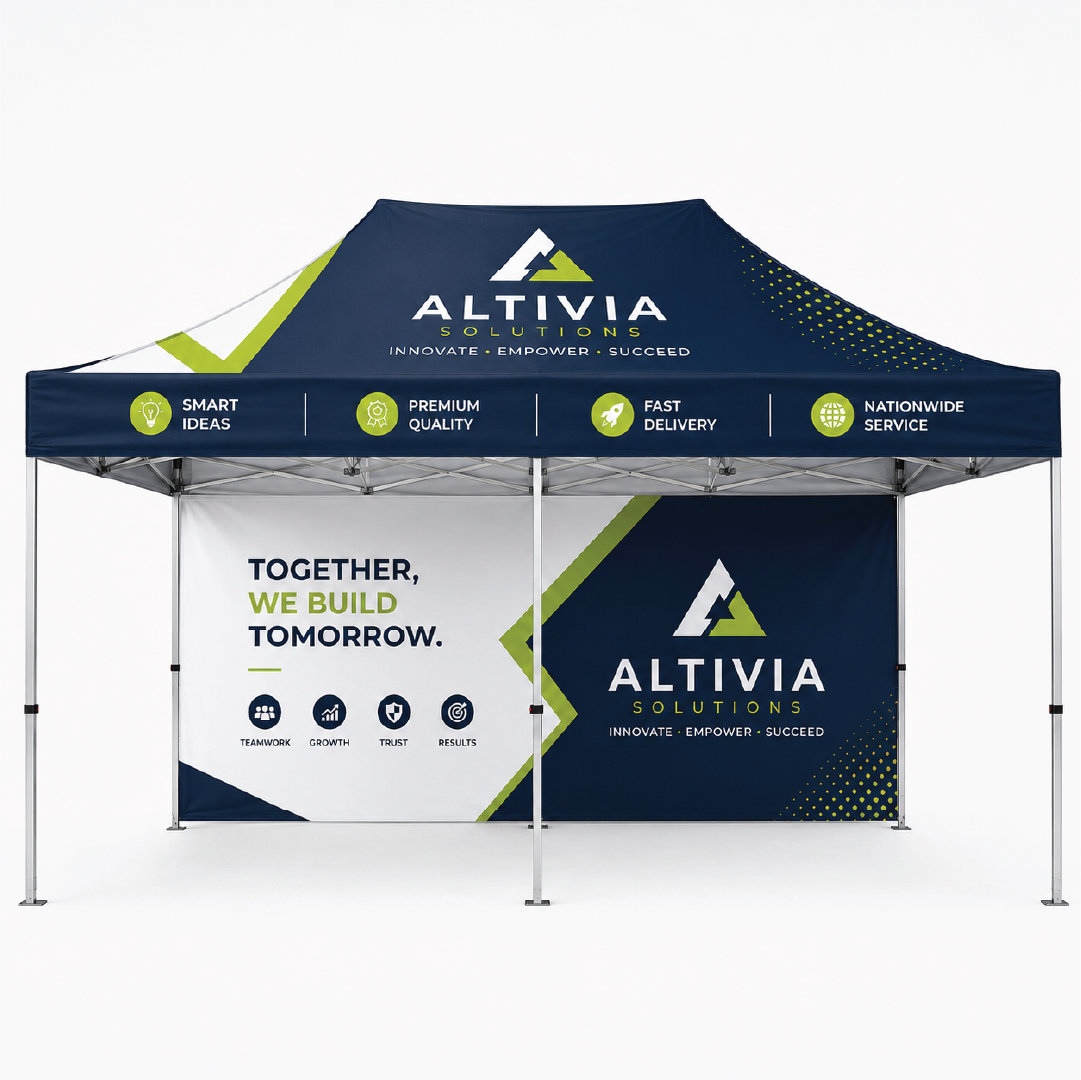
Printing Limitless offers multiple canopy configurations, including 6x6, 10x10, 10x15, and 10x20 options across its product range.
Before selecting a size, map the space on paper.
Ask four practical questions:
The last question can matter at organized events. The Kentucky State Fair, for example, hosts commercial vendors across indoor and outdoor areas at the Kentucky Exposition Center in Louisville, making advance vendor planning particularly important.
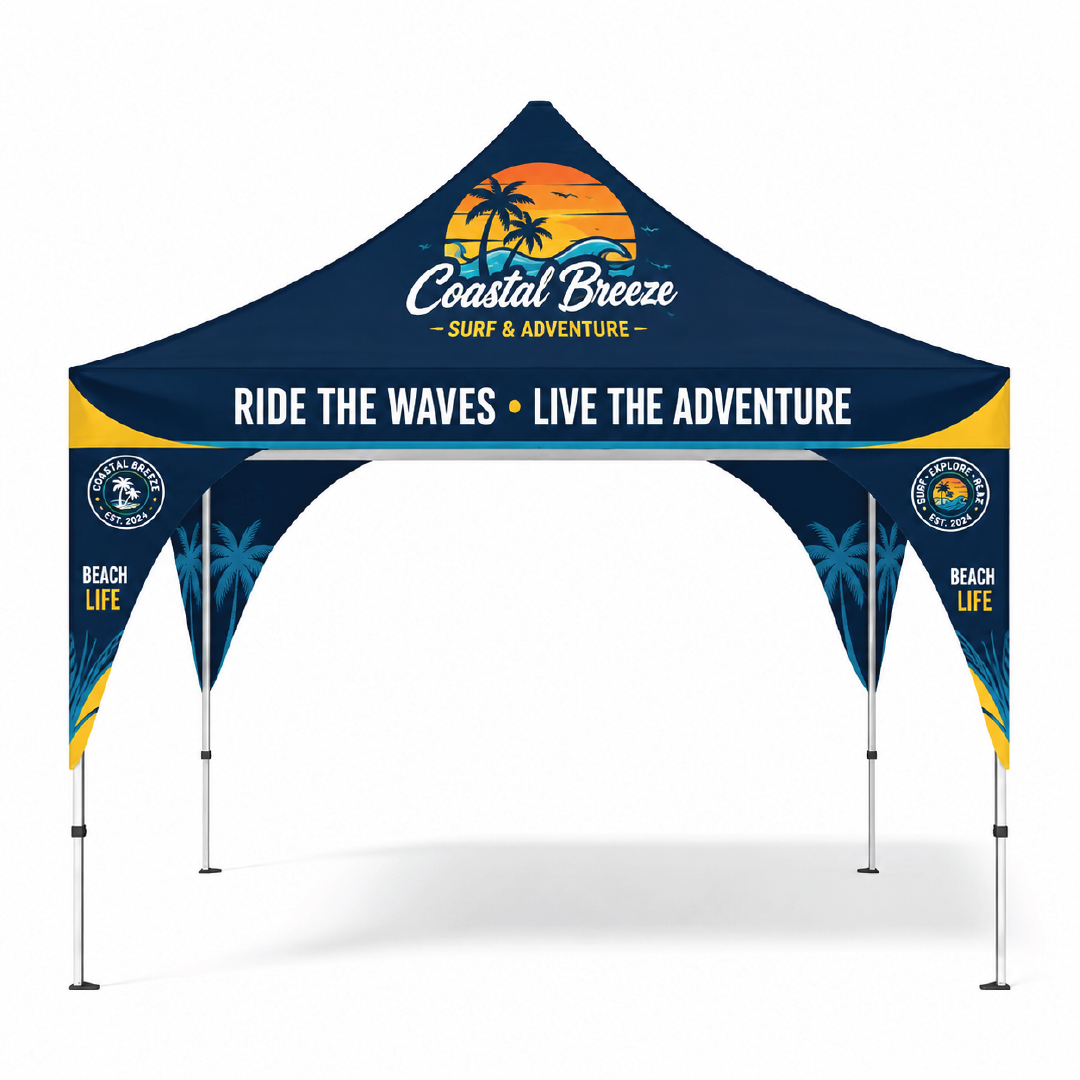
A canopy is a large visual surface, so the artwork should be designed around how people will actually encounter it.
The brand name should remain easy to recognize without forcing visitors to stand directly in front of the fabric. Secondary information should be limited to the details that help someone understand the offer quickly.
A useful hierarchy is:
Brand → primary message → supporting visual → action
Do not fill every section of fabric simply because the surface is available.
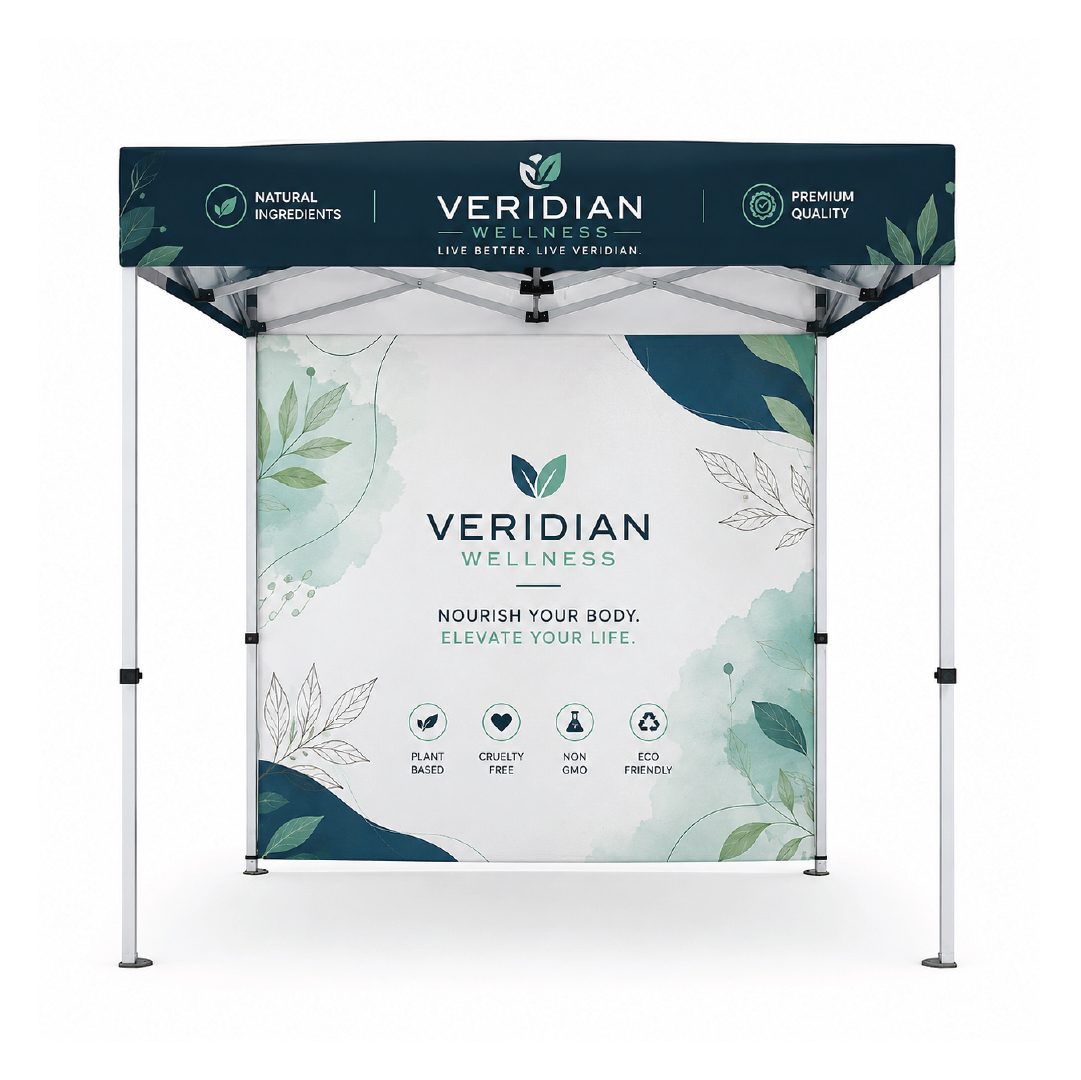
A clean roof graphic can establish visibility across an event space, while a rear or side panel can carry the information that needs closer viewing. Optional toppers and flag attachments can also extend the visual footprint above or beside the main canopy structure. Printing Limitless provides these customization options on selected canopy configurations.
The Kentucky State Fair provides a useful example of how different canopy environments can become.
The fair includes commercial vendors, concessionaires, indoor spaces, and large outdoor areas. Its current vendor information directs new commercial vendors through an application process, while the fair operates across substantial indoor and outdoor exhibition areas at the Kentucky Exposition Center.
That makes portability and setup planning important for vendors who participate in several events.
A canopy should be easy to transport, straightforward to assemble, and organized so the display can be recreated consistently. Printing Limitless offers an optional wheeled travel bag on selected canopy configurations, which can be useful when the structure moves between venues.
Kentucky does experience winter precipitation, but a portable event canopy should not be treated as a snow load structure simply because its fabric is water resistant.
Accumulating snow can place substantial weight on the roof and frame. If an event is interrupted by accumulating snow, freezing precipitation, or severe winter weather, follow the organizer's instructions and take the structure down when required.
The same principle applies to severe thunderstorms. A commercial canopy is designed for temporary outdoor display use, not as a refuge during hazardous weather.
Repeated setup creates wear at the places where fabric, frame, and hardware interact.
Inspect areas around:
Do not modify the frame with unapproved drilling, cutting, welding, or permanent hardware changes. An alteration that appears minor can affect how the frame carries load.
The supplied canopy fabric should also remain properly fitted. Loose fabric can flap excessively, while an incorrectly installed top can place unnecessary stress on attachment points.
A canopy purchase becomes easier when the order is planned around actual event dates rather than a single upcoming weekend.
Create a simple event calendar covering:
| Planning item | What to record |
|---|---|
| Event | Name and location |
| Surface | Grass, soil, asphalt, concrete |
| Footprint | Space allocated by organizer |
| Canopy size | Required coverage |
| Walls | Open, rear, side, or enclosed arrangement |
| Anchoring | Approved staking or ballast method |
| Documentation | Flame resistance or other required paperwork |
| Transport | Vehicle and storage requirements |
| Graphics | Final artwork and branding hierarchy |
This also exposes conflicts early. A canopy that works perfectly for a recurring outdoor market may need a different wall arrangement or anchoring approach at an expo or organized fair.
Before placing an order, confirm these points:
Structure
Fabric
Site
Branding
Operations
A Kentucky canopy needs to balance structure, fabric, branding, portability, and venue requirements. Severe storms make anchoring and weather awareness important, while humid summers place additional demands on materials and ventilation.
Local requirements add another layer. Louisville, for example, has documented tent permitting and anchoring requirements, while large organized events such as the Kentucky State Fair operate under their own vendor processes and site conditions.
Printing Limitless offers custom canopy configurations with aluminum framing, custom dye-sublimated graphics, multiple size options, wall configurations, toppers, flag attachments, and selected sustainable fabric choices.
The best setup starts with the actual Kentucky event environment. Once the footprint, surface, operating conditions, branding needs, and venue requirements are clear, the canopy can be configured around how it will really be used.