Free Shipping on Orders $99+
Use Code FLAT15 & Get 15% Off On All Orders
Choose your store
Prices, currency, and delivery follow the store you select.
Prices, currency, and delivery follow the store you select.
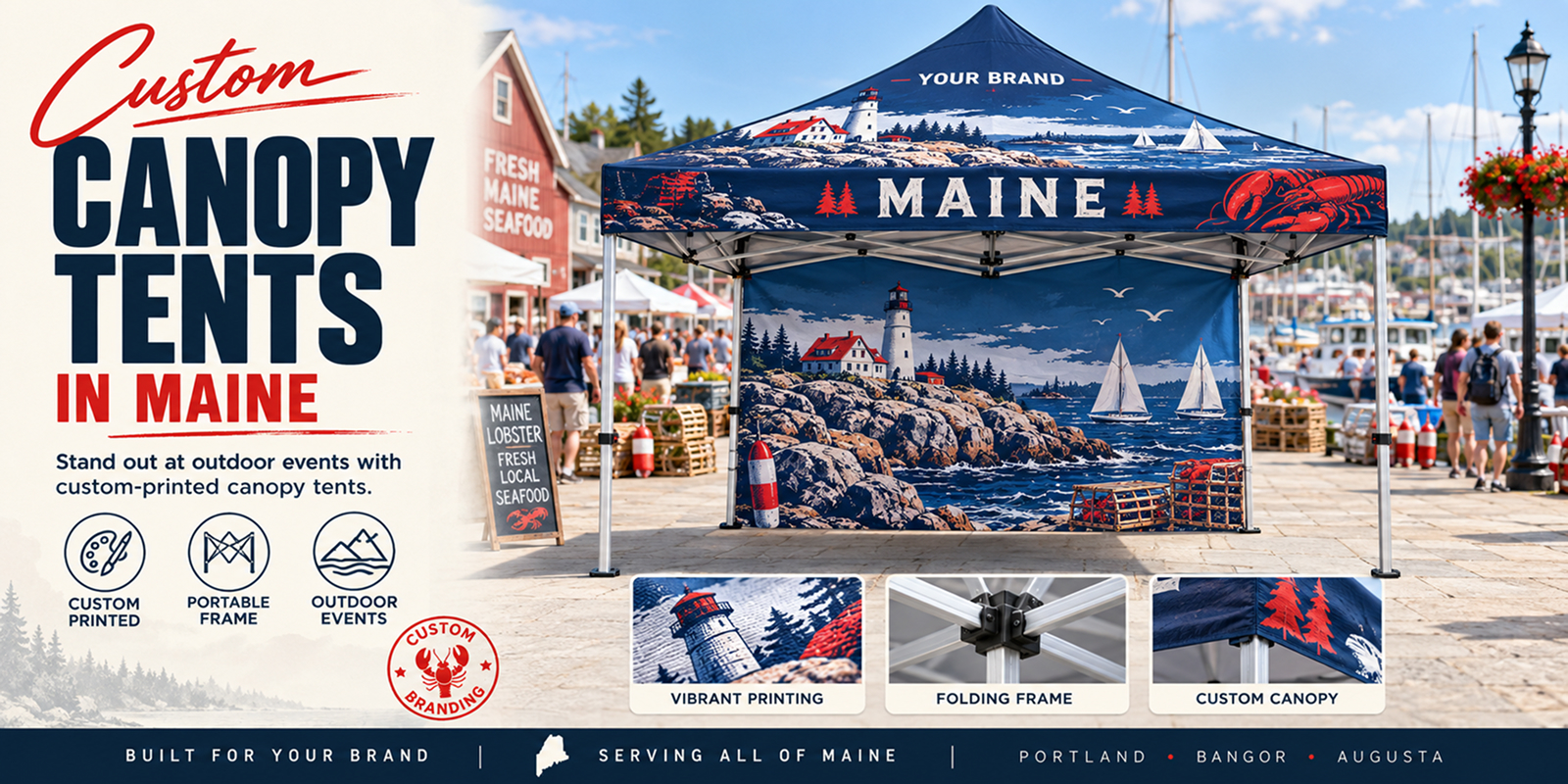
Maine gives outdoor displays a complicated operating environment. A canopy used near Portland Harbor deals with salt-laden air, while a setup at an inland fairground may be dealing with rocky ground, morning moisture, uneven terrain, or colder temperatures. A single canopy configuration therefore needs to account for hardware, fabric, anchoring, transport, storage, and display layout rather than treating the tent as simply a printed roof over a frame.
That makes product selection particularly important for businesses operating around Portland, Bangor, Bar Harbor, Lewiston, Augusta, and other Maine markets. The right configuration can make repeated setup easier while helping the canopy remain presentable across a longer outdoor-use cycle.
The surface you set up on can determine which accessories and frame adjustments become useful.
Maine's combination of rocky terrain, paved downtown spaces, grassy fairgrounds, and uneven historic areas means a single anchoring method does not work everywhere. A setup that works perfectly on a lawn may be unsuitable on a brick plaza where staking is prohibited.
| Maine setup condition | What can become difficult | What to consider |
|---|---|---|
| Rocky or compacted ground | Lightweight stakes can bend or fail to penetrate properly | Heavy-duty stakes or ballast |
| Grass and fairground surfaces | Wet soil can reduce footing stability | Secure leg weights and appropriate staking |
| Brick or paved areas | Ground penetration may be prohibited | Interlocking weights or sandbags |
| Sloped surfaces | Fixed-height legs can leave the frame uneven | Adjustable telescopic legs |
| Coastal locations | Salt residue can accumulate around joints | Aluminum framing and post-use cleaning |
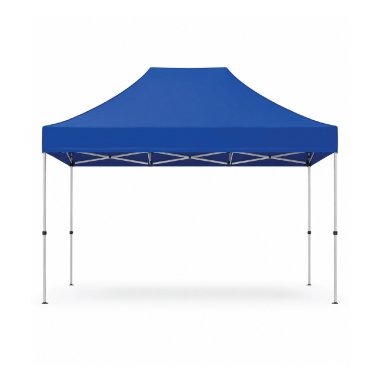
Printing Limitless canopy tents use aluminum frames with adjustable telescopic legs, giving the structure useful height adjustment when the surface is not perfectly level. The available frame has poles measuring approximately 1.57 inches in diameter, with adjustable height ranging from 101 to 135 inches.
That adjustment becomes particularly useful when a display has to sit on a slightly irregular surface without forcing the entire structure to remain at one fixed height.
A canopy near the Atlantic does not experience the same conditions as one operating several miles inland. Locations around Portland, Bar Harbor, and Kennebunkport can expose the frame to salt-laden moisture, making material selection and maintenance important considerations.
Printing Limitless uses aluminum framing, which provides a practical advantage for portable outdoor displays because the material avoids the conventional rust concerns associated with exposed steel.
The frame also follows a pop-up configuration, so the structure can be folded down between uses rather than remaining permanently assembled. That matters when a business travels between markets throughout Maine.
This maintenance routine is especially useful when the same canopy is being transported between Portland-area markets and inland Maine locations throughout the season.
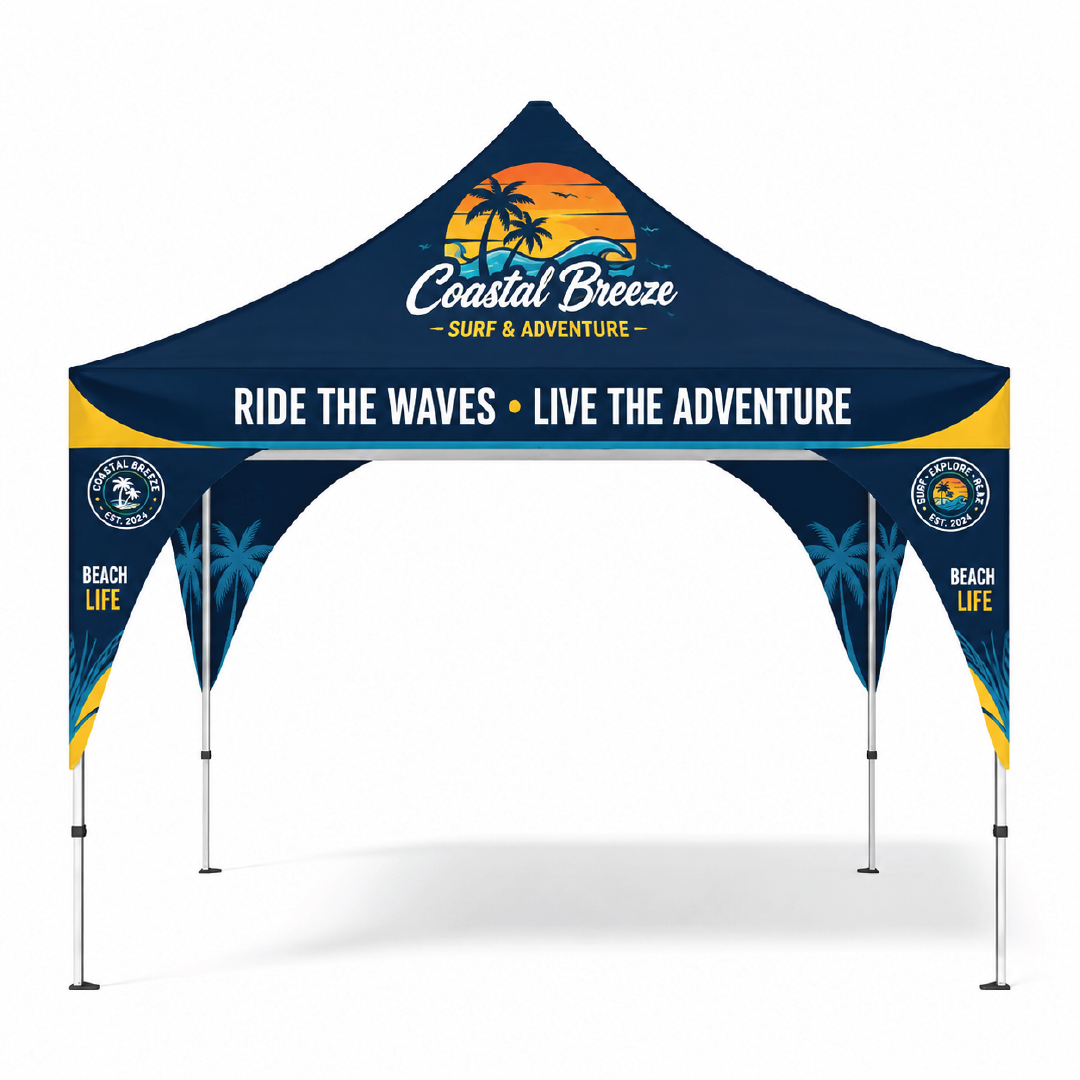
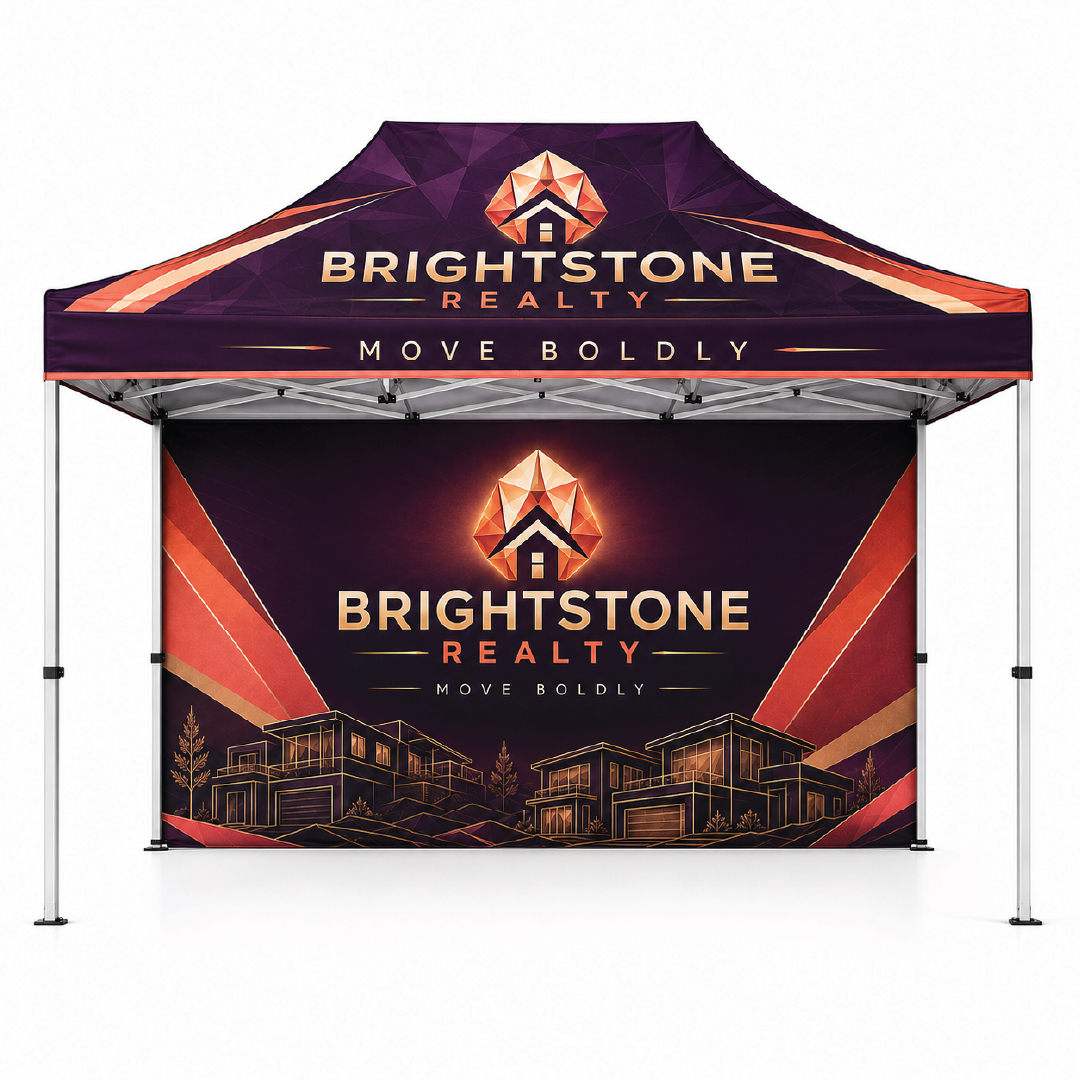
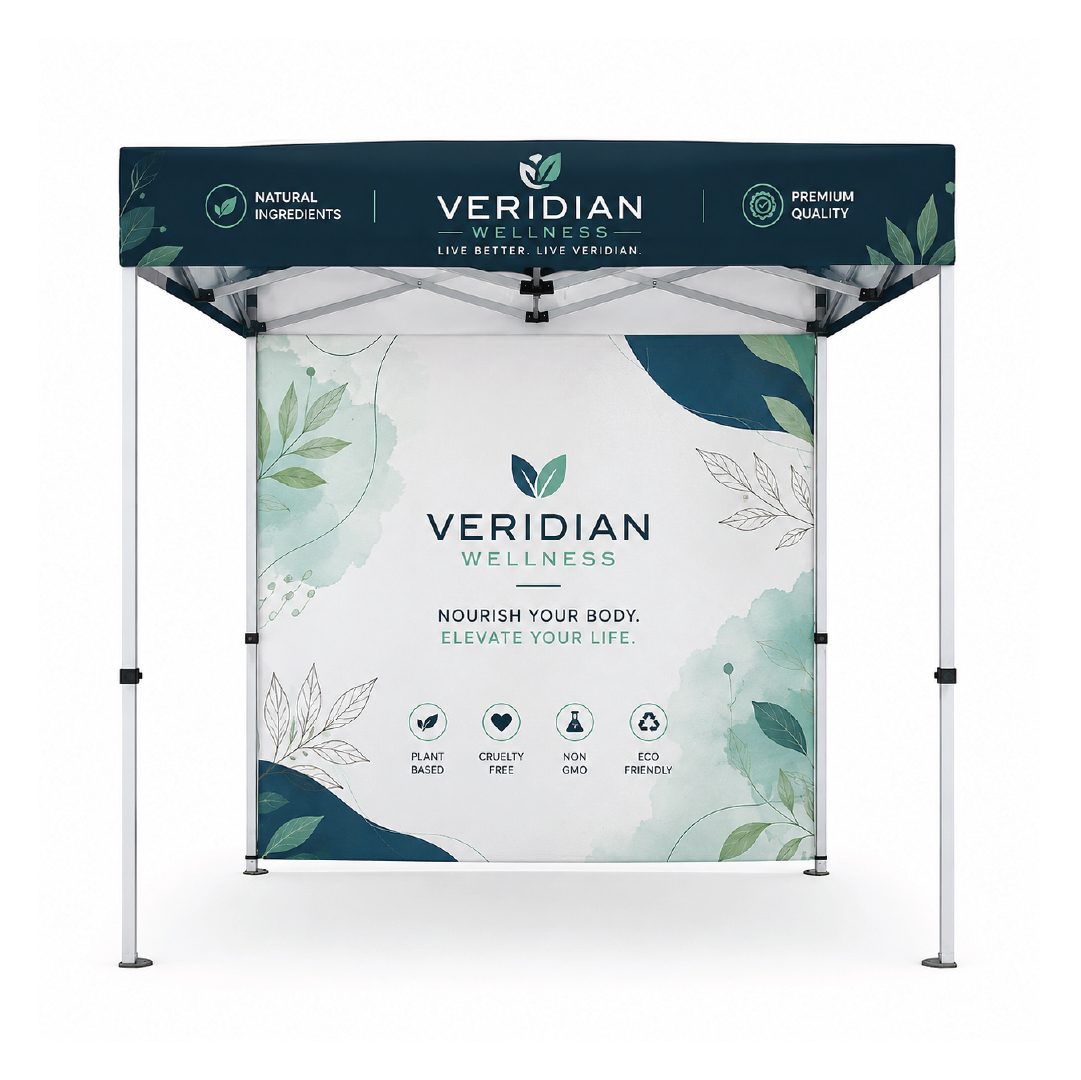
The canopy top has two jobs at once. It has to function as an outdoor covering while carrying a large portion of the visual identity of the display.
Printing Limitless offers canopy fabric based on 600D acrylic-coated polyester, with an 8 oz graphic weight, alongside a recycled FR fabric option. The custom tops use dye-sublimation printing, which places the graphic within the textile rather than creating a conventional surface-applied graphic.
For Maine businesses, this gives the canopy a useful combination of branding and repeated-use practicality.
A canopy used repeatedly has to deal with folding, transportation, setup, exposure, cleaning, and storage.
A heavier fabric construction can provide a more substantial graphic surface than lightweight promotional fabric, while the acrylic coating contributes to outdoor performance. Printing Limitless describes its canopy fabric as waterproof and UV-resistant, making it suitable for outdoor applications.
For Maine buyers, the more important question is not simply “Which fabric looks good?” but “How often will this fabric be packed, transported, exposed, cleaned, and packed again?”
That distinction matters for businesses participating in recurring markets rather than using a canopy once.
The canopy's outdoor life does not end when the market closes.
A damp top folded into a travel bag creates an enclosed environment where moisture can remain trapped against the fabric. Over repeated cycles, that can lead to unpleasant odors, staining, and mildew.
Printing Limitless recommends cleaning its canopy fabric with water, a soft sponge, and mild non-detergent soap. Machine washing and strong detergents are not recommended, and the fabric should be completely dry before storage.
| After use | Recommended practice |
|---|---|
| Remove visible dirt | Use water and a soft sponge |
| Clean stubborn areas | Use mild, non-detergent soap |
| Finish cleaning | Rinse away remaining soap |
| Before folding | Allow the entire fabric top to dry completely |
| Long-term storage | Keep the fabric dry and protected |
| Between coastal uses | Clean salt residue from the frame before storage |
This becomes especially relevant after rainy weekends, coastal deployments, and late-season markets when ambient moisture remains high.
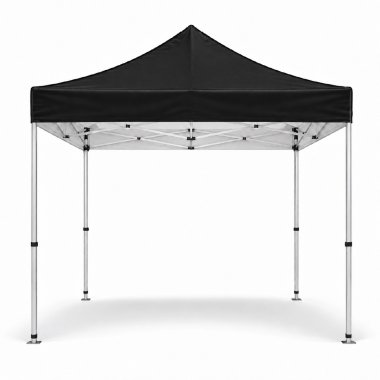
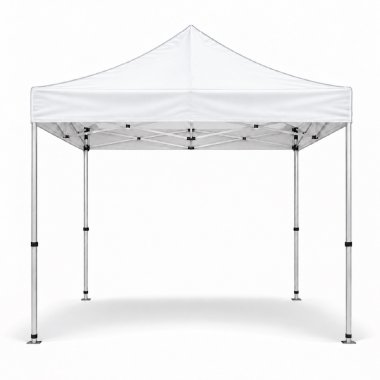
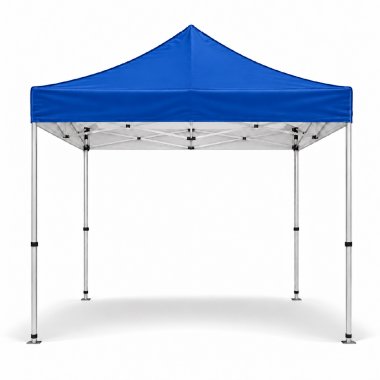
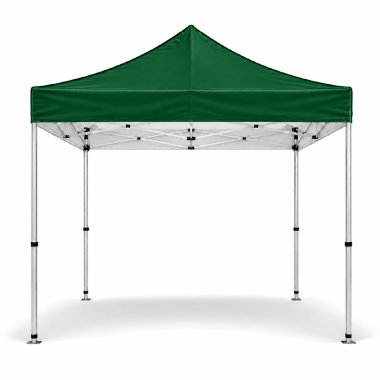
A 10 x 10 canopy is a useful starting point, but it is not the only configuration available through Printing Limitless.
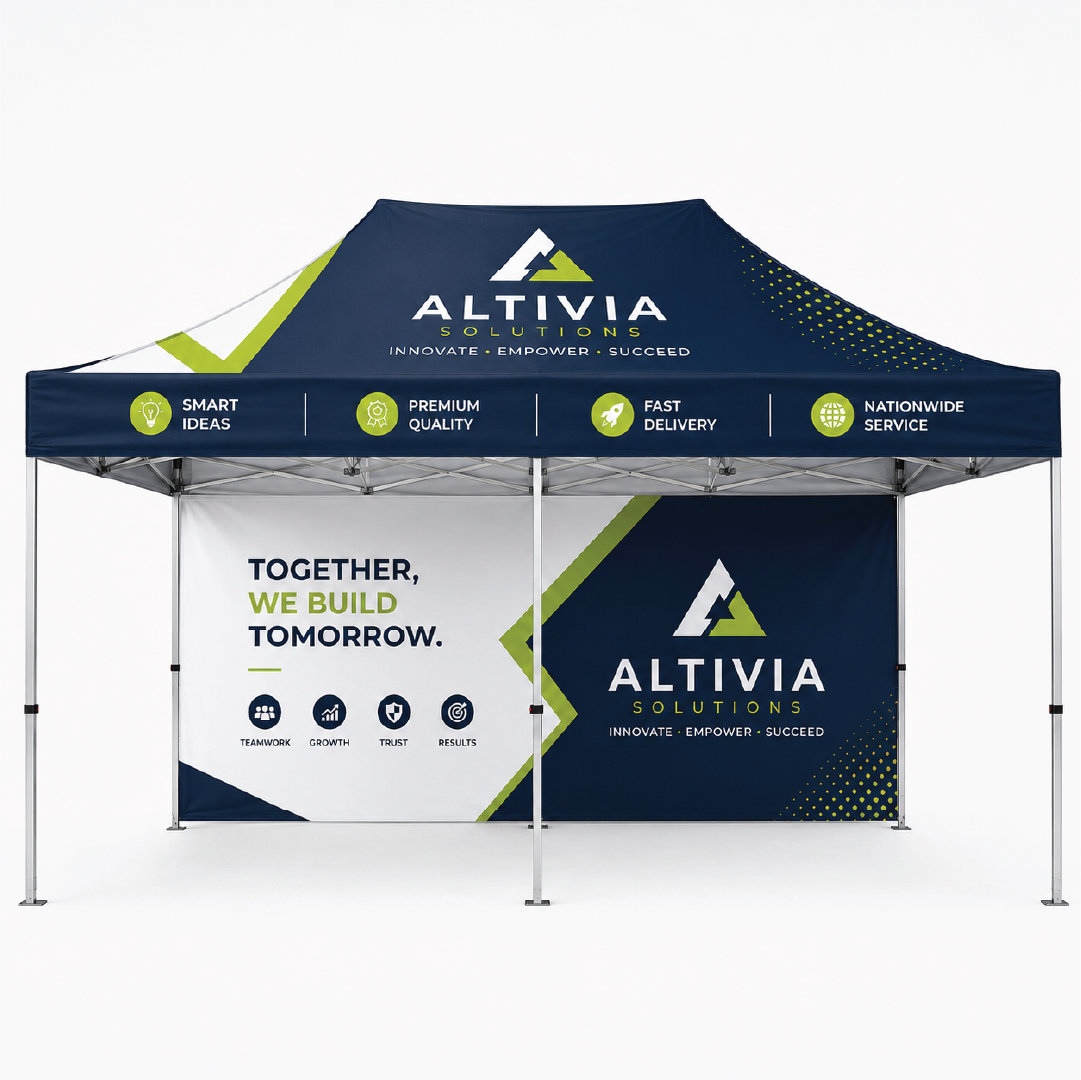
The current canopy range includes 6 x 6, 10 x 10, 10 x 15, and 10 x 20 custom canopy tents, along with a 10 x 10 custom beach canopy and solid-color canopy options.
That gives Maine businesses several ways to match their footprint to the space they actually receive.
| Canopy size | Useful when the priority is |
|---|---|
| 6 x 6 | A compact promotional footprint or smaller selling area |
| 10 x 10 | A balanced footprint for markets and standard vendor spaces |
| 10 x 15 | Additional room for products, demonstrations, or customer interaction |
| 10 x 20 | A larger branded footprint for broader displays and equipment |
The 10 x 10 remains a particularly practical format because it can provide a defined branded space without requiring the footprint of a larger structure. Printing Limitless also offers stand-only, graphic-only, and stand-and-graphic bundle configurations, allowing buyers to select the product arrangement that matches their current setup.
A canopy does not have to be completely open or completely enclosed.
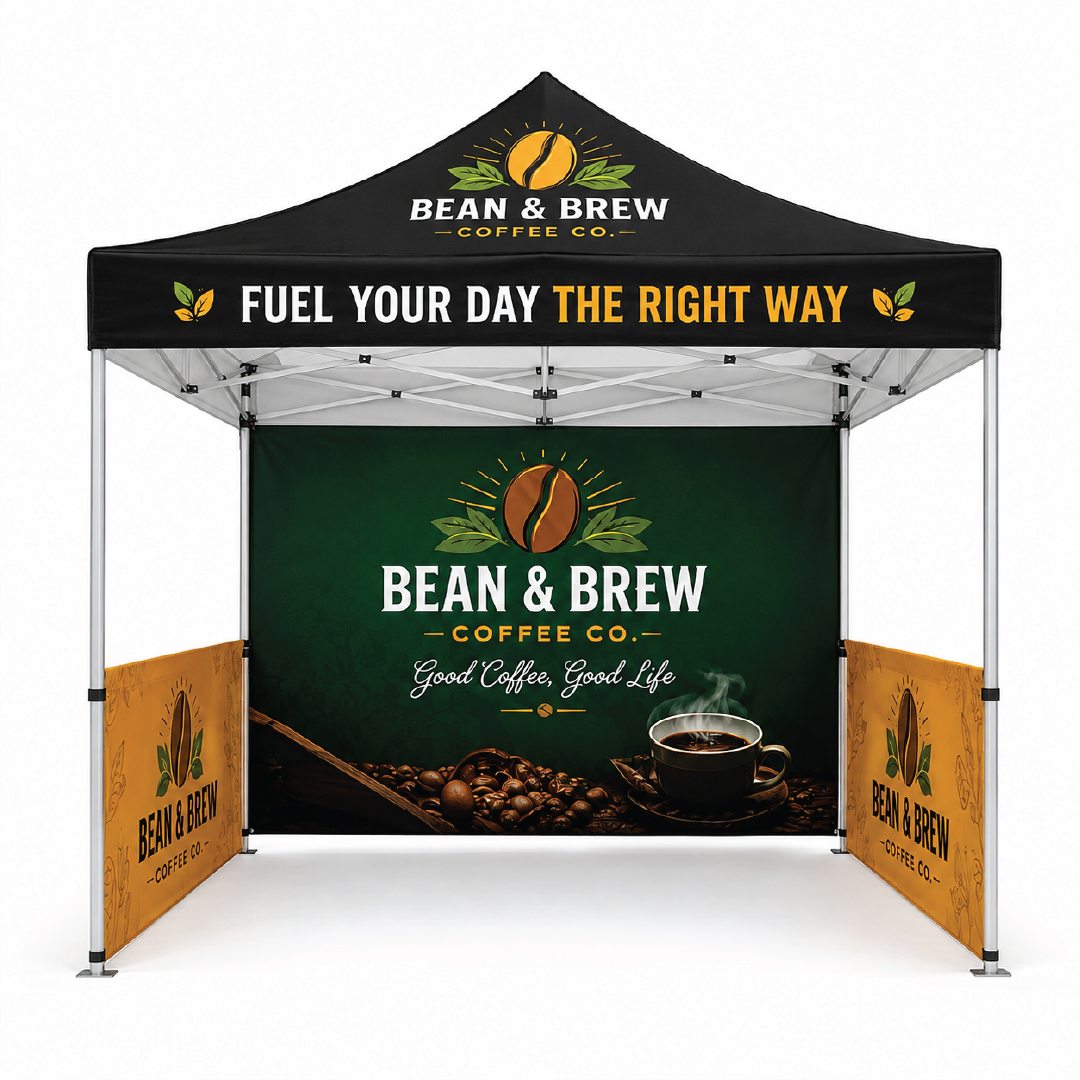
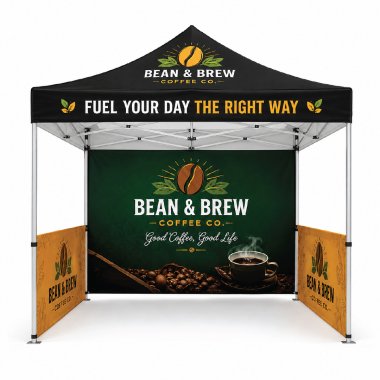
Printing Limitless provides multiple front, back, left, and right wall configurations, including half and full panels. Clear PVC panel options are also available for applications that need visibility through part of the enclosure.
That creates several practical configurations:
For a Maine market setup, this means the same frame can be configured differently for a summer outdoor market, a promotional activation, or a display requiring greater separation from surrounding activity.
The canopy does not have to carry the entire branding system by itself.
Printing Limitless offers accessories including topper attachments, sandbags, flag holders, and teardrop flags.
These additions can be useful when the objective is to create a recognizable display without filling every wall with graphics.
A simple configuration might use the canopy roof for primary branding, a topper for additional visibility, and a teardrop flag to extend the brand presence vertically. Another setup could use a full back wall as the main visual surface while leaving the entrance open.
The important point is that each component can serve a different display function instead of forcing the canopy itself to do everything.
Businesses do not always have production-ready artwork when they decide to order a canopy.
Printing Limitless supports artwork uploads in formats including AI, EPS, PDF, SVG, PSD, TIFF, PNG, and JPEG, while its designer workflow allows customers to provide design direction and references before final artwork approval.
The process can therefore accommodate different starting points:
The final design is reviewed before production begins, giving businesses an opportunity to check the artwork rather than discovering an issue after the canopy has been manufactured.
Fire requirements should be verified with the specific municipality, venue, or event organizer before deployment. Maine's current building-code framework is based on MUBEC, and enforcement can vary according to the community and applicable requirements.
Maine's State Fire Marshal guidance also identifies NFPA 701 as a relevant flame-resistance standard for fabrics and films used for decorative purposes in assembly settings.
For a canopy purchase, keep these items together:
Do not assume that one statewide square-footage rule automatically determines every Maine setup. The applicable authority and venue requirements should be checked before a large or unusual installation.
A canopy becomes a much better investment when it can move from one location to the next without becoming a logistical burden.
Printing Limitless frames use a pop-up design with adjustable telescopic legs, while an optional wheeled travel bag can make transportation easier. The 10 x 10 frame weighs approximately 17 kg according to the product specifications.
For businesses moving between Bangor, Portland, Augusta, and smaller regional markets, transport planning should therefore be considered alongside the initial canopy selection.
Before ordering, review:
| Purchase decision | Why it matters in Maine |
|---|---|
| Size | Determines how much space the setup occupies |
| Frame | Affects portability and repeated setup |
| Fabric | Determines outdoor performance and graphic finish |
| Walls | Controls presentation, access, and enclosure |
| Ballast | Supports stability where staking is unavailable |
| Travel bag | Makes repeated transportation easier |
| Artwork support | Helps when production-ready files are unavailable |
| Accessories | Extends the display beyond the canopy itself |
Before placing an order, work through the following rather than selecting a canopy based on appearance alone.
Site
Frame
Fabric
Display
Aftercare