Free Shipping on Orders $99+
Use Code FLAT15 & Get 15% Off On All Orders
Choose your store
Prices, currency, and delivery follow the store you select.
Prices, currency, and delivery follow the store you select.
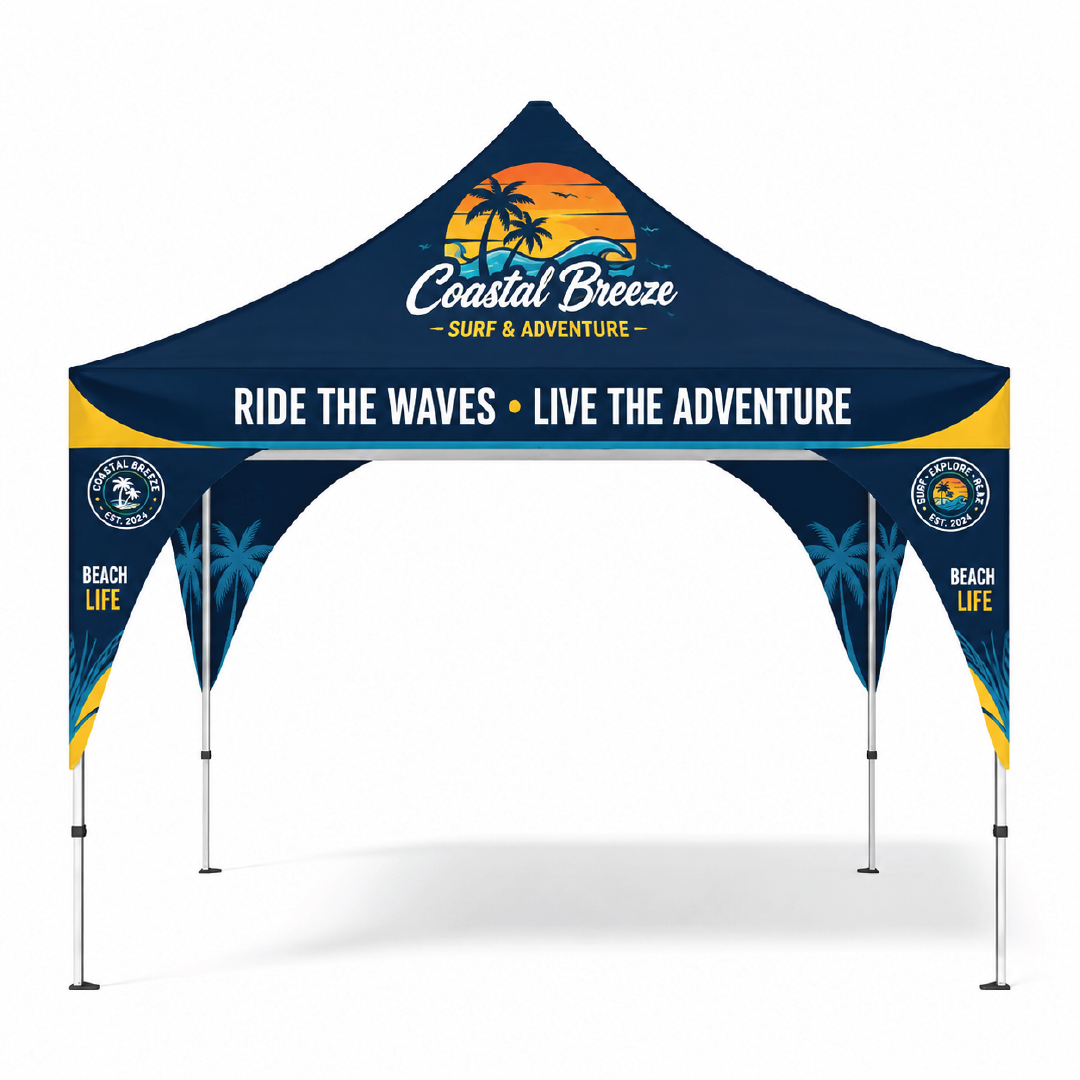
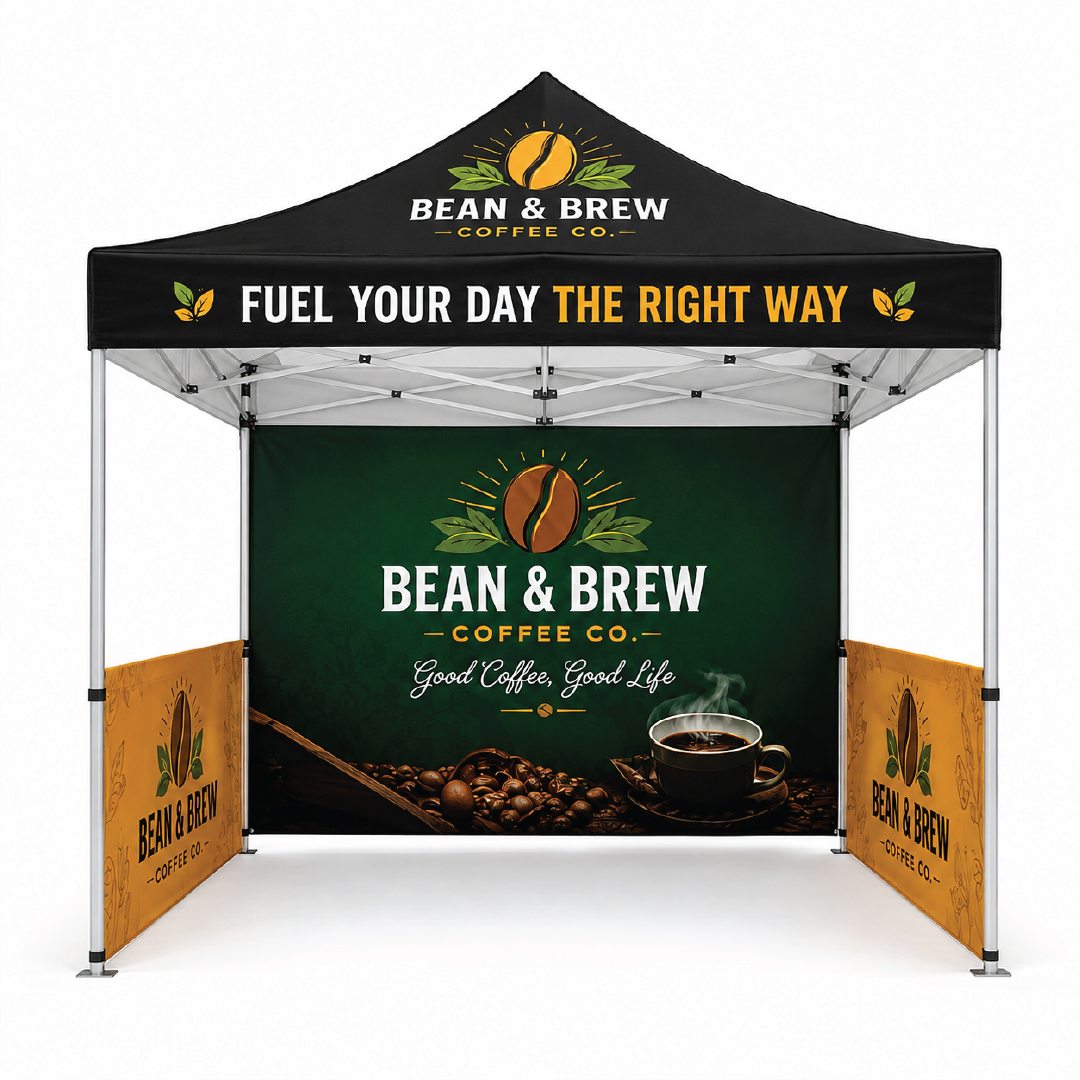
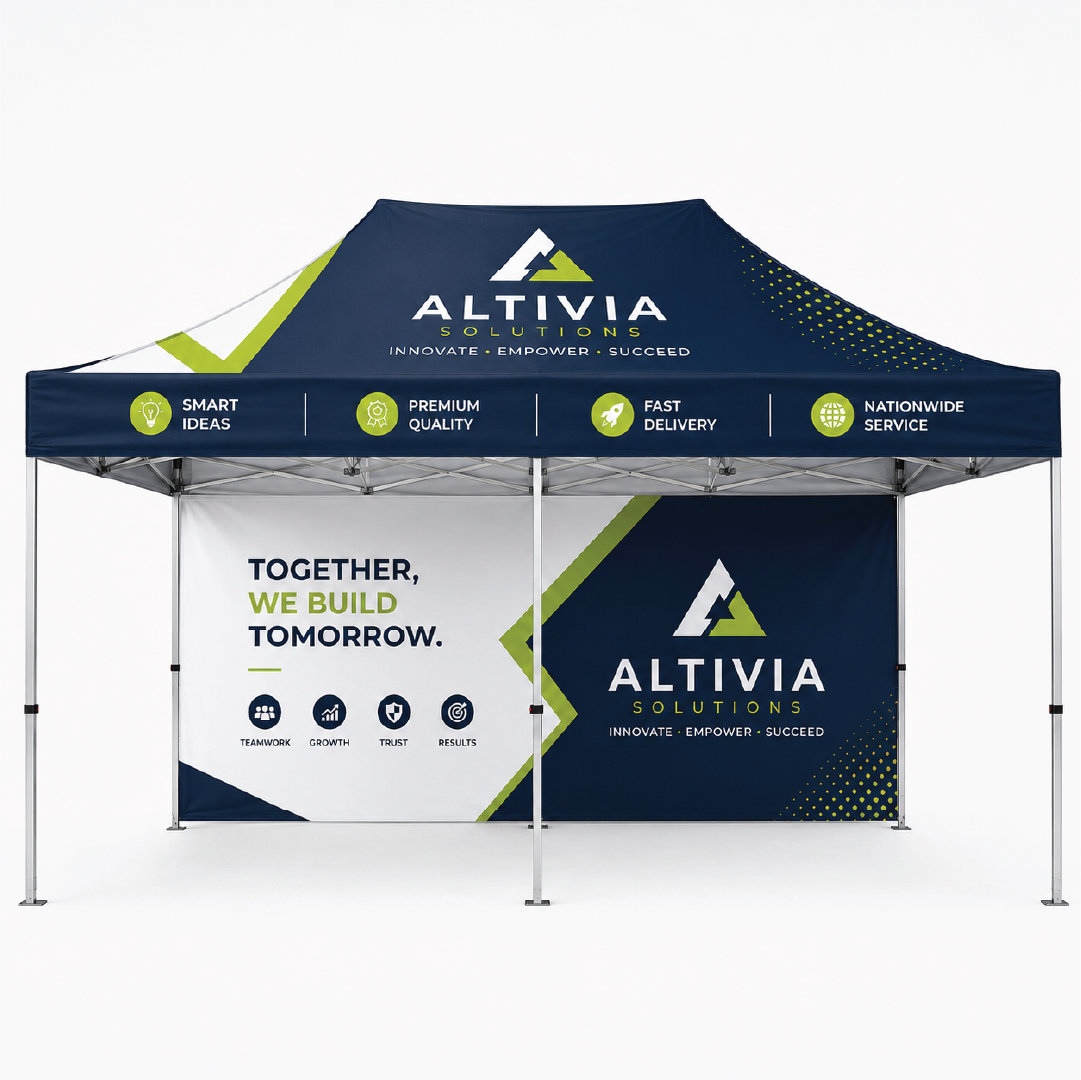
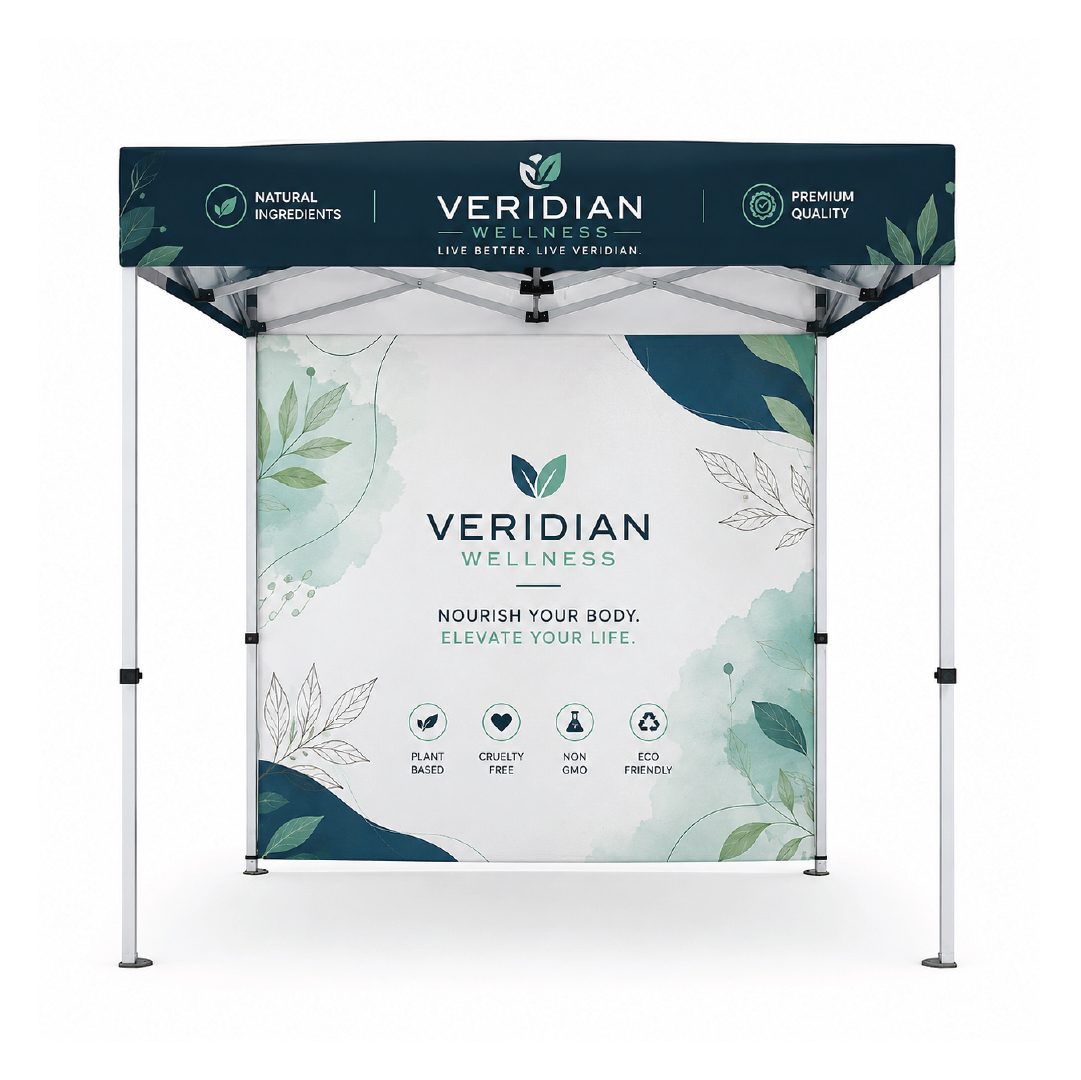
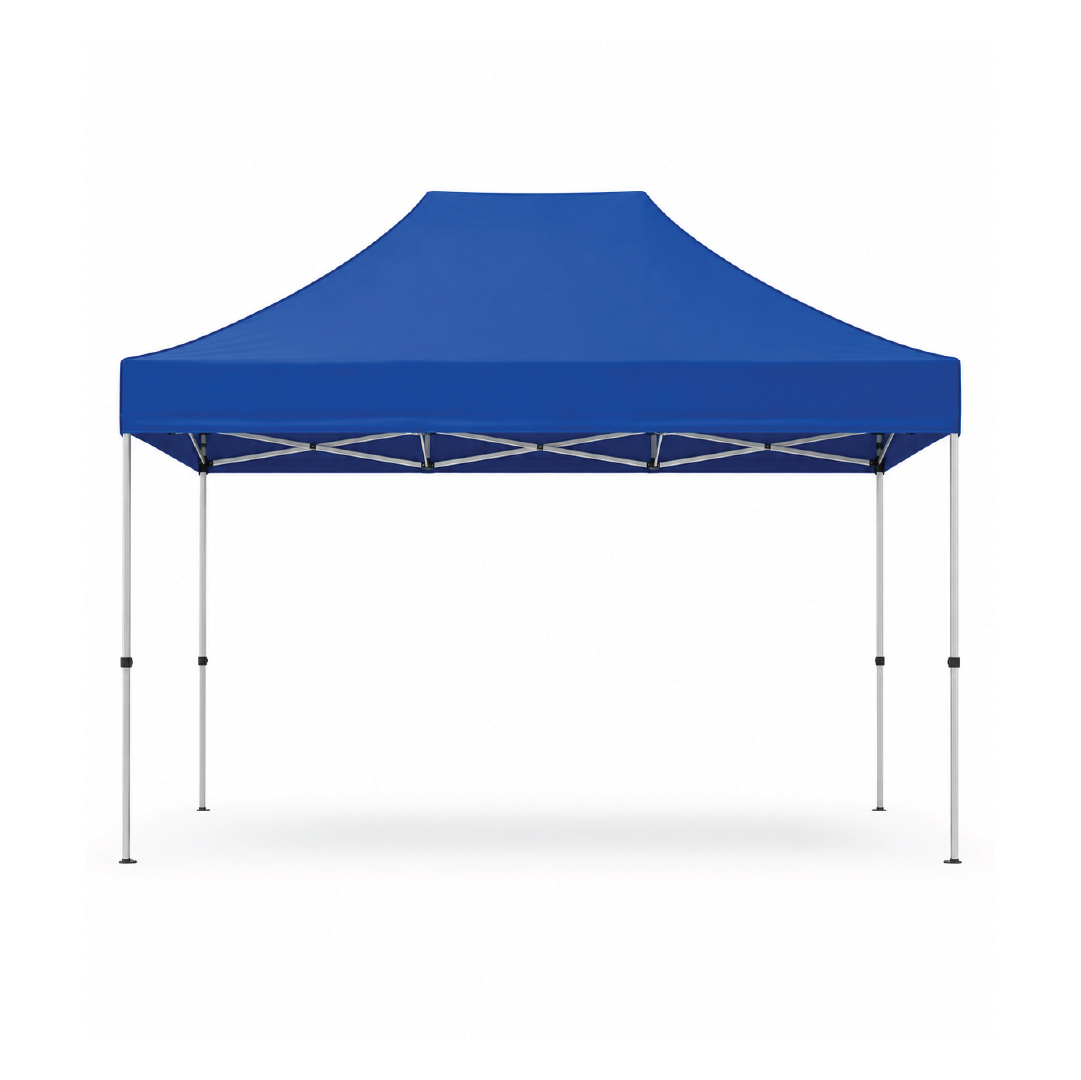
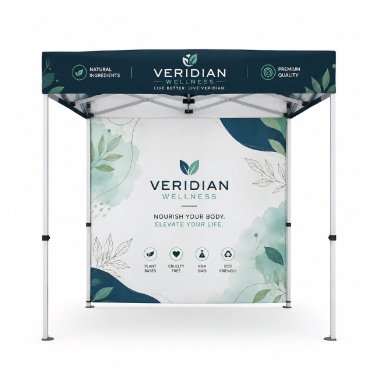
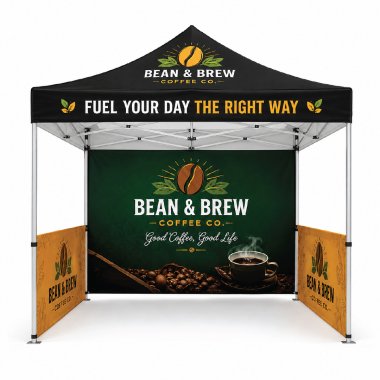
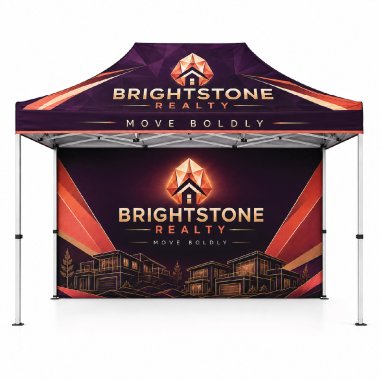
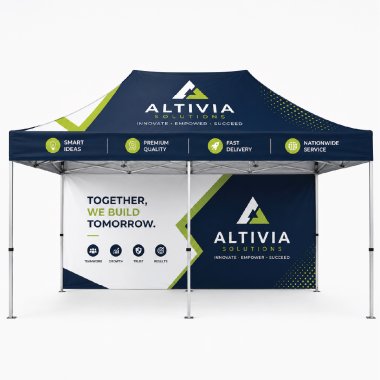
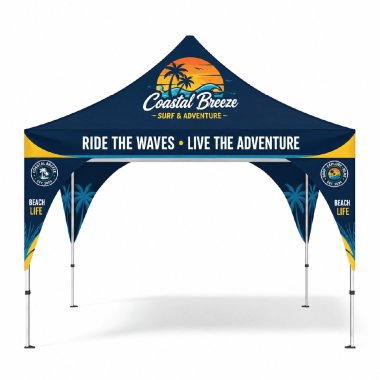
A canopy has a large amount of visible fabric, so the quality of the graphic treatment can influence how the entire outdoor display is perceived. The roof can carry a logo across a crowded venue, walls can establish a strong visual backdrop, and smaller elements such as toppers and flags can extend the brand upward into the surrounding space.
Maryland offers plenty of settings where that visibility can matter. A display may appear at a fair in Timonium, a market in Annapolis, an outdoor promotion in Baltimore, a community event in Frederick, or a seasonal gathering near Ocean City. Each location can bring different space, weather, setup, and venue requirements.
That makes customization a structural decision as much as a visual one. The printing method, fabric, frame, wall arrangement, anchoring system, and available footprint all contribute to how the finished custom canopy tent looks and functions. Printing Limitless offers custom printed canopy products with aluminum frames, dye sublimation graphics, wall configurations, toppers, flags, and other display options.
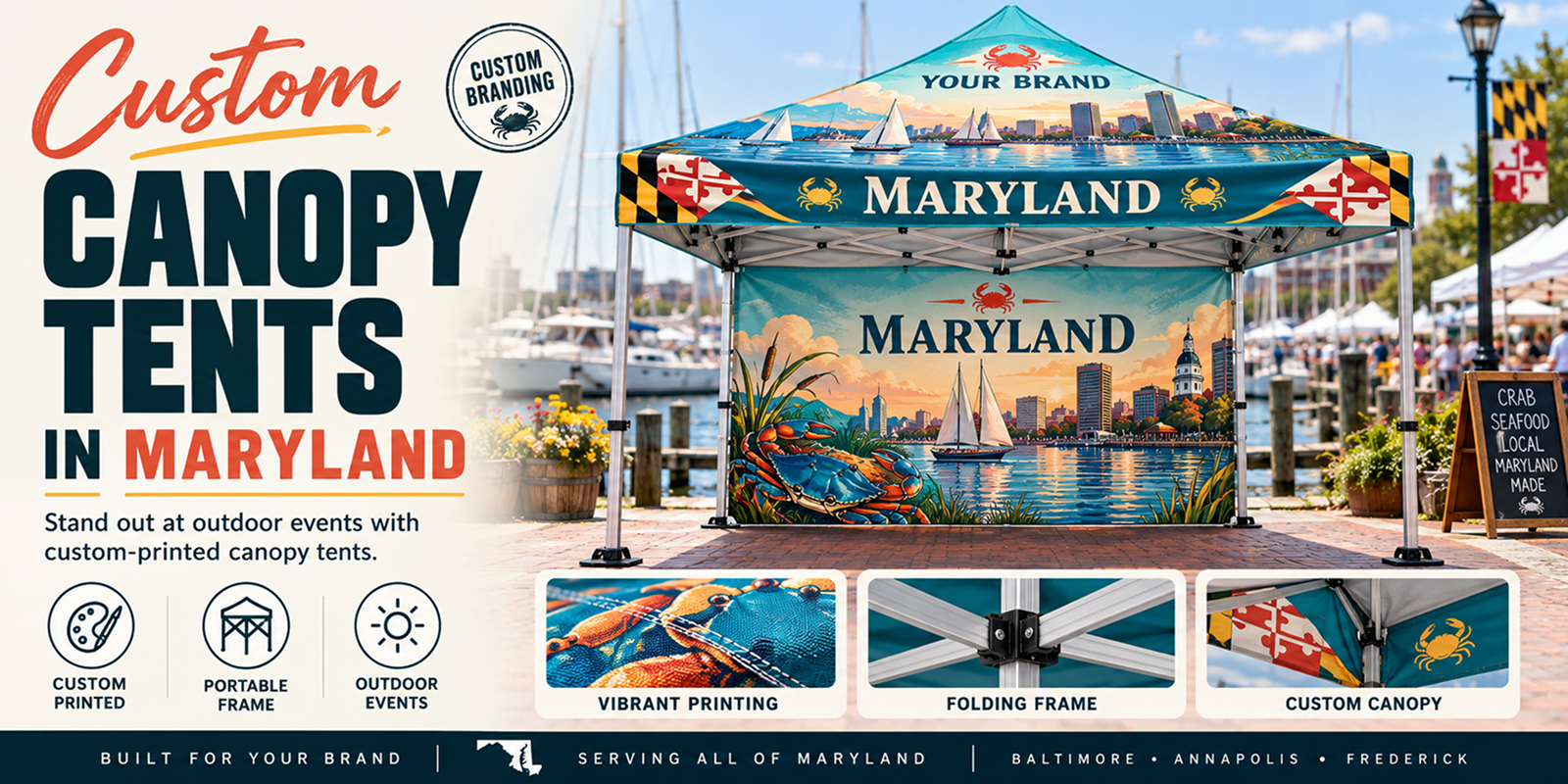
Large outdoor graphics need to communicate quickly. Visitors may see the canopy while walking past, approaching a booth, standing in a nearby queue, or viewing the event space across an open area.
A useful design begins by deciding what deserves the strongest visual position.
| Display element | Main branding role |
|---|---|
| Canopy roof | Establish recognition above eye level |
| Front valance | Reinforce the brand name or short message |
| Rear wall | Create a strong visual backdrop |
| Side walls | Extend the brand around the booth |
| Topper | Increase visibility above the main structure |
| Flag | Add a vertical identification point |
The strongest designs usually give each area a clear job instead of repeating the same logo at every possible position. A prominent brand mark can establish recognition while supporting graphics, photography, colors, or a concise message give the display additional visual depth.
That approach becomes particularly useful when the canopy is reused across different Maryland events. The identity remains consistent while the physical arrangement can change around the venue.
The printing process affects how the finished canopy handles repeated setup and storage. Dye sublimation uses heat to transfer color into polyester fabric, creating a graphic that becomes part of the material rather than forming a separate layer on its surface. This makes it well suited to large fabric graphics that need to be folded, packed, transported, and displayed repeatedly.
Printing Limitless uses dye sublimation printing on its custom canopy products. Its 6x6 canopy, for example, uses waterproof 600D acrylic-coated polyester fabric with an 8 oz graphic weight and an aluminum frame.
The result is a continuous printed surface that can carry detailed branding across the canopy rather than limiting the design to a small logo area.
Screen printing can still make sense for simple graphics and limited color requirements, but dye sublimation provides greater flexibility when the design calls for broad color coverage or detailed artwork.
A branded canopy can be designed as a complete visual environment. The roof establishes recognition from above. A rear wall can create the main photographic backdrop. Side panels can frame the space or extend the visual identity. Half walls provide a lighter configuration when full enclosure is unnecessary.
Printing Limitless offers different front, back, and side wall arrangements, along with single-sided and double-sided printing choices on its canopy products. Clear PVC half panels are also available on its 10x10 configuration.
This creates several ways to approach the same brand:
| Desired presentation | Configuration to consider |
|---|---|
| Open and accessible | Minimal wall coverage |
| Strong branded backdrop | Printed rear wall |
| Framed presentation | Rear and side walls |
| Greater enclosure | Multiple full walls |
| Visibility through a panel | Clear PVC section |
| Higher visual presence | Topper or flag |
The important part is deciding the configuration before the artwork is finalized. Graphic placement can then follow the actual roof and wall dimensions instead of forcing the design into a structure that was selected separately.
The Maryland State Fair provides a useful example of how event conditions can influence canopy selection. Its 2026 vendor information states that outdoor booth spaces are sold in 10-foot increments, while its vendor handbook requires outdoor tents to be weighted and says pop-up tents must be fire-retardant. The handbook also advises outdoor vendors to lower tents at night and encourages dismantling them during weekdays when the Fair is closed. Those requirements have practical implications for the canopy itself.
The booth footprint affects the size of the structure. Weight requirements affect the anchoring plan. Fire retardant requirements affect fabric selection. Nighttime storage considerations affect how easily the canopy can be lowered, dismantled, and transported. A canopy should therefore be evaluated as part of the complete event setup rather than as an isolated printed product.
Fabric requirements become important when an event specifically asks for documentation or fire-resistant material.
Maryland's State Fire Prevention Code incorporates national fire and life safety standards and contains provisions addressing tents and canopies. Specific requirements can become particularly important when temporary cooking operations are involved, but event organizers may also establish their own requirements for tent materials.
The Maryland State Fair provides a straightforward example. Its vendor handbook states that pop-up tents must be fire-retardant and that vendors using tents must be able to provide proof of that treatment.
Printing Limitless offers recycled flame-retardant fabric on its custom canopy configuration, giving buyers another material option when an event specifies flame-related documentation. The exact fabric and documentation should be confirmed before placing the order.
A canopy roof presents a broad surface to moving air. Open sides do not remove the forces acting on the structure, which means the frame should never be treated as its own complete anchoring system.
Grass and soil can allow stakes when the venue permits ground penetration. Pavement and concrete require ballast instead. Sandbags, weighted plates, and other approved systems can be attached to the canopy legs to provide downward force.
The amount of ballast should not be selected using a universal number. Canopy dimensions, wall coverage, surface conditions, weather exposure, manufacturer guidance, and venue rules can all affect the requirement.
Grass or soil
Stakes and high-strength tie-downs can be used when the site permits them.
Concrete or asphalt
Use an approved ballast system rather than attempting to stake through the surface.
Restricted venues
Some event sites prescribe specific weights or anchoring methods. Those instructions should take priority over a generic setup recommendation.
The Maryland State Fair specifically requires weights on outdoor tents, making anchoring part of the event preparation rather than an optional accessory.
The frame determines how easily the canopy moves between locations and how much effort goes into setup and teardown.
Printing Limitless uses aluminum frames with adjustable layers on its custom canopy products. Aluminum keeps the structure lighter than a comparable steel frame while providing corrosion resistance that is useful for repeated outdoor use.
| Frame consideration | Aluminum | Steel |
|---|---|---|
| Portability | Easier to transport | Heavier |
| Corrosion resistance | Naturally resistant to rust | Coating protects against rust |
| Repeated setup | Well suited to mobile displays | Better where portability is less important |
| Handling | Easier for smaller teams | Requires greater lifting effort |
| Typical role | Events and recurring outdoor displays | Heavier stationary setups |
The frame construction also deserves attention at the connection points. Reinforced truss bars, strong joints, adjustable legs, and a stable locking system contribute to how the structure behaves during repeated assembly.
Printing Limitless offers multiple canopy sizes, including 6x6, 10x10, 10x15, and 10x20 configurations. Size should follow the activity taking place underneath the canopy and the footprint assigned by the event.
| Space requirement | Canopy direction |
|---|---|
| Compact display area | Smaller footprint |
| Standard booth arrangement | Mid-size configuration |
| Additional merchandise or display space | Extended footprint |
| Larger branded environment | 10x20 configuration |
| Limited venue space | Compact structure with focused graphics |
The 10 x 20 configuration provides additional room for displays, equipment, staff movement, and customer interaction. Printing Limitless also offers a wheeled travel bag option for this configuration, which can simplify transportation between locations.
Selecting a larger structure simply because additional space is available can create unnecessary transportation and anchoring demands. The better choice is the one that fits the assigned footprint and supports the activity taking place underneath it.
Baltimore provides another reason to check local requirements before production. City code places time limits on tents in commercial districts, where temporary tents must be connected to a special event or a use on the same lot and cannot remain in place indefinitely. The city can also restrict tent size or location when the structure creates parking or access problems.
Special event guidance also addresses larger temporary structures. Baltimore materials state that tents exceeding 400 square feet can require inspection for fire safety and egress, with additional documentation and site planning requirements for larger structures. The canopy size, location, anchoring arrangement, and event conditions should be reviewed against the rules of the actual Maryland venue.
Maryland's geography creates a wide range of outdoor environments.
Annapolis can bring waterfront settings and event spaces where the surrounding environment contributes heavily to the visual presentation. Frederick offers a mix of downtown activities, community events, markets, and regional gatherings. Ocean City introduces another type of outdoor setting where sun, wind, pedestrian traffic, and limited event footprints can affect the way a temporary display is planned.
The same brand can use one visual identity across these settings while adjusting the physical configuration. A rear wall can create a defined backdrop in a compact downtown space. An open layout can keep a display accessible at a busy market.
Additional wall coverage can help create a more defined environment at a larger outdoor activation. The graphics stay recognizable while the setup responds to the location.
Small text that looks clear on a computer screen can disappear when printed across a large canopy and viewed several feet away.
The most important visual elements should therefore receive the largest and clearest treatment. Brand colors can establish recognition, while a short message can explain the purpose of the display without forcing visitors to stop and read a paragraph.
A practical hierarchy could use:
Large brand identity
Logo, company name, or primary campaign mark.
Short supporting message
A concise statement explaining the offer, product, service, or event purpose.
Visual reinforcement
Photography, product imagery, patterns, or supporting graphics.
Secondary action
A website, QR code, social handle, or short contact prompt.
This approach keeps the canopy readable in busy Maryland event environments where visitors may only have a few seconds to process the display.
Modularity can make a printed canopy useful across different event layouts.
Full-height walls provide substantial graphic area and enclosure. Half-height panels can define the lower portion of the booth while retaining a more open feel. Mesh panels can be useful when airflow and visibility matter. A topper or flag can add another branding position without changing the main canopy graphics.
Printing Limitless offers different wall configurations and accessory choices across its canopy range, including toppers, flag attachments, sandbags, and clear PVC panels. The modular approach makes it possible to create a core display and adjust the surrounding components according to the venue.
Outdoor graphics need proper handling after the event ends. The canopy fabric should be cleaned gently rather than treated like ordinary washable clothing. Printing Limitless recommends warm water, a soft sponge, and mild, non-detergent soap for cleaning its canopy fabric. The material should be completely dry before storage, with air drying recommended when possible.
The frame deserves the same attention. Check the joints, telescopic legs, truss bars, connectors, and locking points before the next setup. Inspect the fabric for tears, stains, or damaged stitching and confirm that the anchoring equipment remains in usable condition. Proper storage also helps protect the printed surface. Folding wet fabric and placing it into a travel bag can create avoidable moisture problems before the next event.
The easiest way to avoid design and setup conflicts is to make the decisions in sequence.
1. Confirm the venue
Check the assigned footprint, surface, access conditions, event rules, and installation restrictions.
2. Select the structure
Choose the canopy size and frame based on the available space and the way the area will be used.
3. Plan the anchoring
Determine whether stakes, ballast, or another approved method will be required.
4. Decide the wall configuration
Establish which areas need branding, enclosure, visibility, or open access.
5. Develop the artwork
Create the visual system around the actual roof and wall configuration.
6. Check material requirements
Confirm any fire-resistant fabric requirements or documentation requested by the venue.
7. Review the proof
Check colors, logos, proportions, wall positions, and graphic placement before production.
That sequence connects the practical setup with the creative work instead of forcing the artwork to fit decisions made later.
A strong canopy display combines structure and branding in the same system. The frame determines portability, the anchoring method supports stability, the fabric carries the visual identity, and the walls determine how much of that identity visitors see.
Printing Limitless offers custom canopy tents with aluminum frames, dye sublimation graphics, multiple sizes, wall configurations, toppers, flags, clear panel options, and other accessories across its canopy range.
Maryland venues can have their own requirements, with the Maryland State Fair and Baltimore providing clear examples of how tent material, anchoring, size, placement, and event rules can affect the final setup. Checking those conditions early leaves more room to build the graphics and configuration around the actual event.