Free Shipping on Orders $99+
Use Code FLAT15 & Get 15% Off On All Orders
Choose your store
Prices, currency, and delivery follow the store you select.
Prices, currency, and delivery follow the store you select.
Minnesota has a strong culture of outdoor gatherings, with public festivals, neighborhood events, arts markets, fairs, sporting events, and promotional activations taking place across Minneapolis, Saint Paul, Rochester, Duluth, Bloomington, and communities throughout the state.
The challenge is that an outdoor display has to work within the event rather than simply occupy space at it. A canopy may need to fit a specific site plan, meet temporary structure requirements, preserve accessible routes, accommodate a particular wall configuration, and present a professional brand image at the same time.
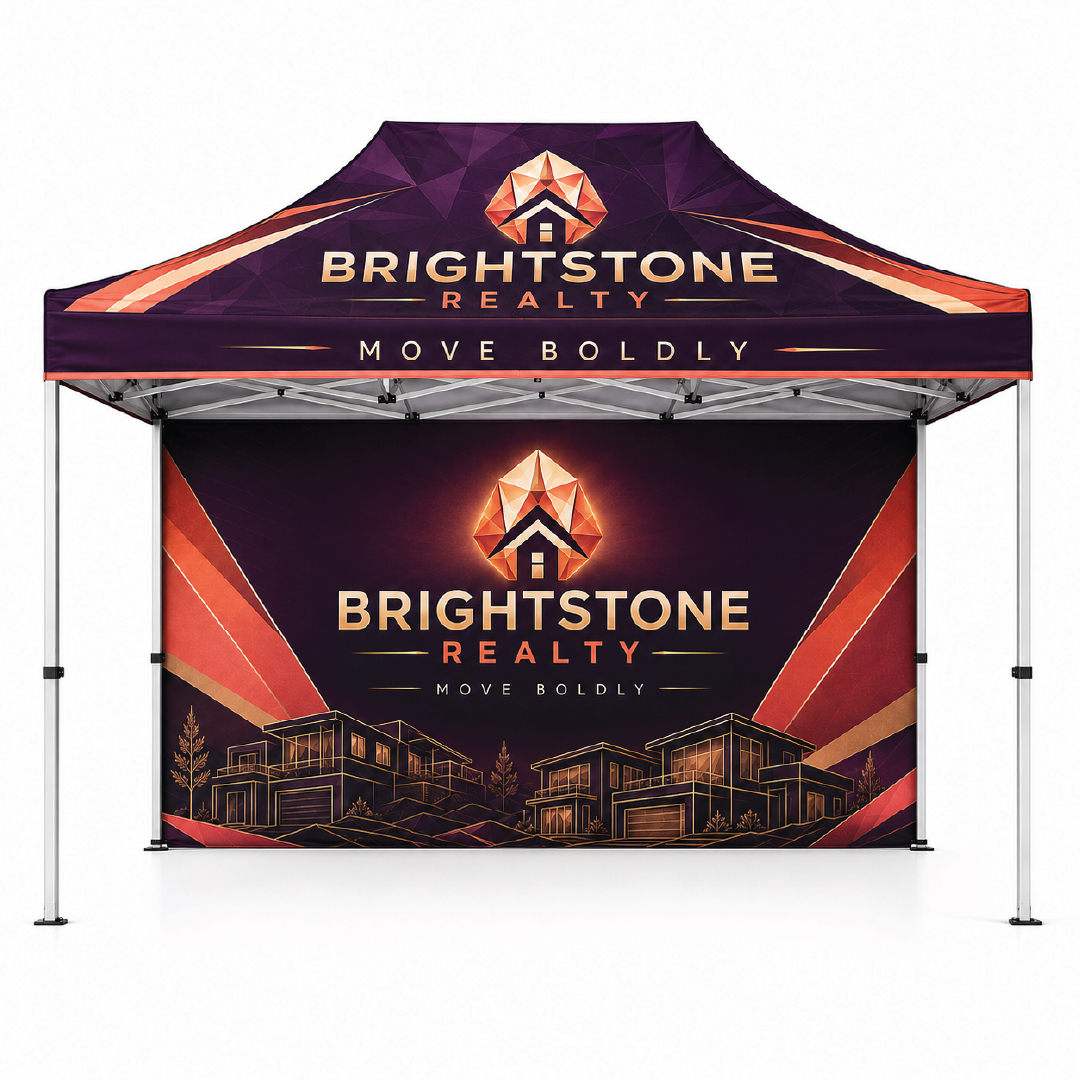
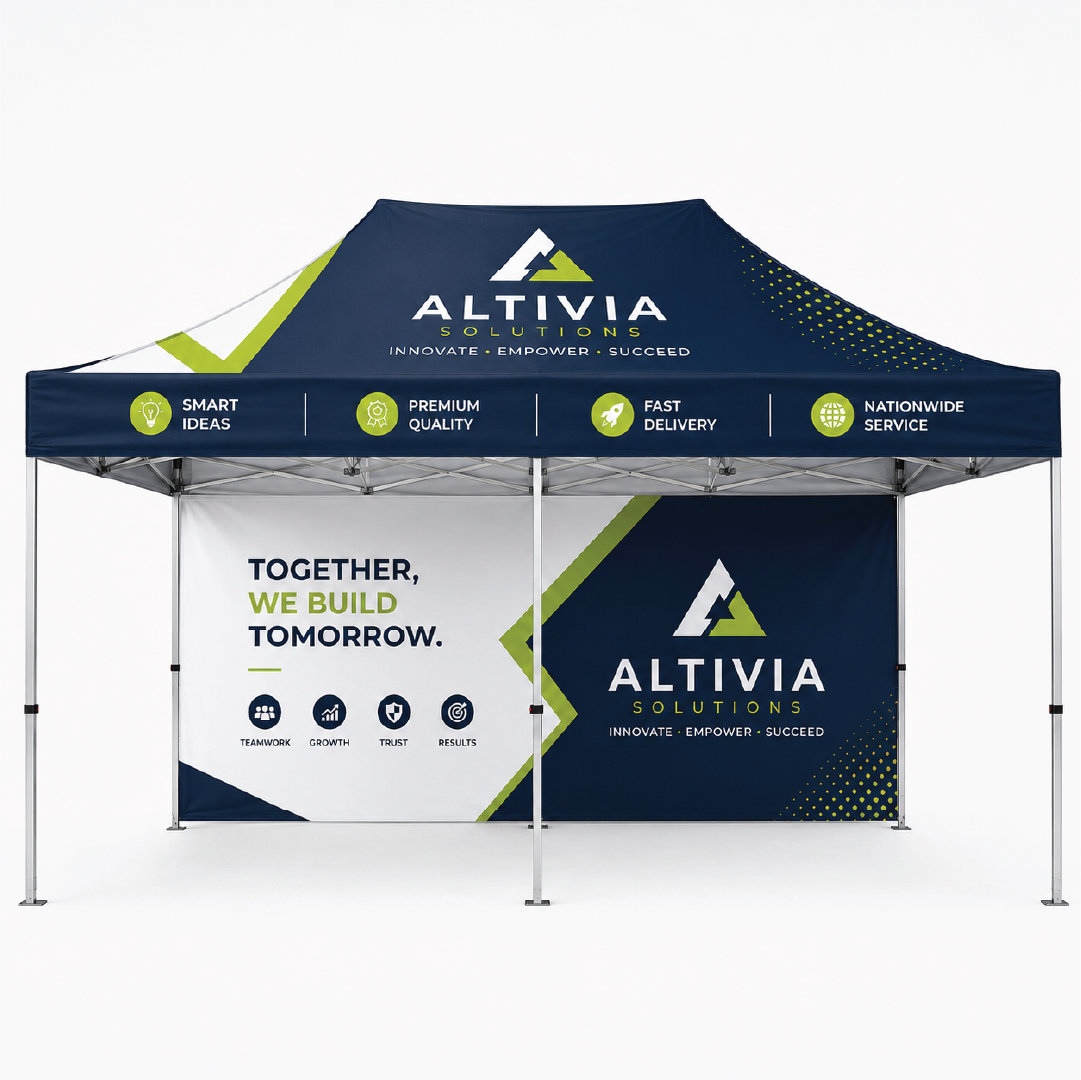
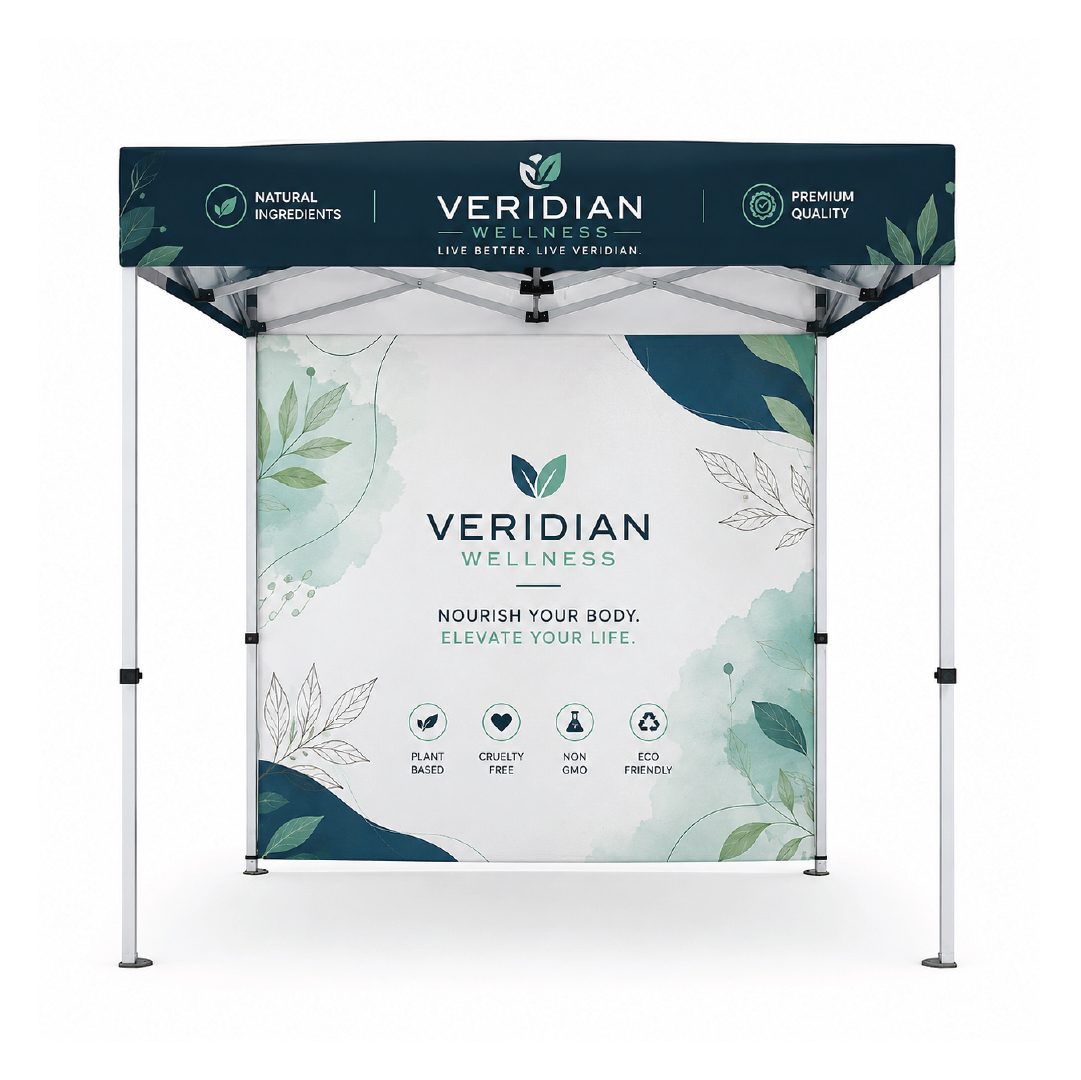
That makes the purchase decision less about finding a generic shelter and more about building a display that can operate within the environments where it will actually be used. With Minnesota custom canopy tents, the frame, printed surfaces, walls, footprint, and supporting display elements can be brought together into one recognizable setup.
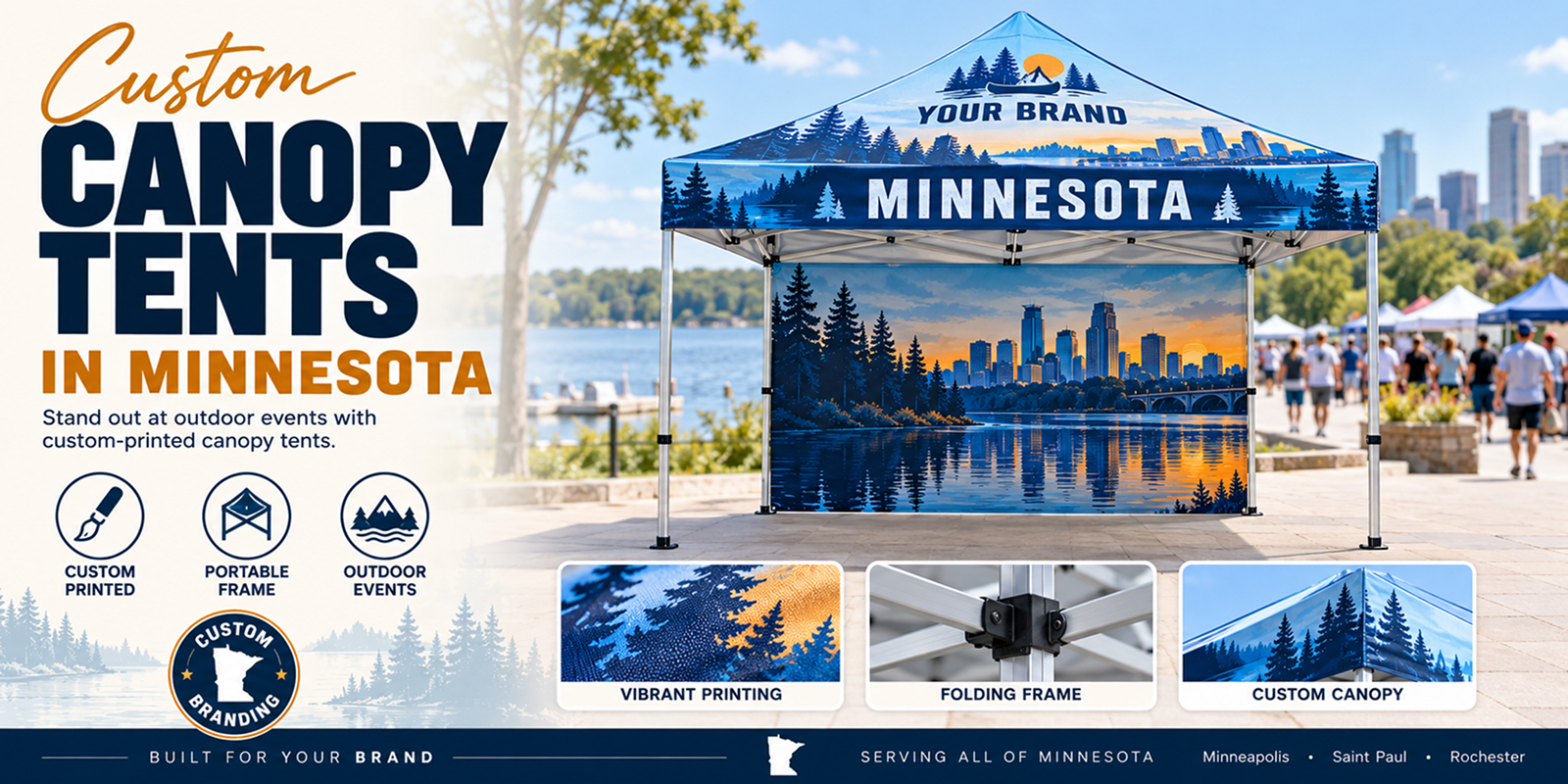
The space assigned to a vendor rarely tells the entire story. A site map may show the space available for your booth, but the actual setup also needs to account for entry points, visitor movement, display fixtures, accessible routes, staff positions, and any equipment that must remain within the designated area.
Minneapolis makes this particularly clear. Its current tent requirements state that accessibility, parking, seating, signs, ingress, and egress for people with disabilities must comply with the Minnesota State Building Code. Its temporary structure documentation can also require detailed plans showing the proposed setup. That changes how the canopy should be planned.
Instead of asking only, “What size tent fits here?” ask:
| Planning question | What it reveals |
|---|---|
| Where will visitors enter? | Helps determine the open side |
| Where will people stop? | Helps position displays and counters |
| What must remain accessible? | Prevents the booth from blocking required routes |
| What needs to stay inside the footprint? | Prevents last-minute layout problems |
| What will be visible across the venue? | Guides graphic placement |
| What does the organizer need to approve? | Helps prepare the right documentation |
The canopy is one component of the site plan, not the entire plan.
Minnesota buyers should be careful about assuming that a small portable canopy is automatically exempt because it is temporary. Minneapolis states that a permit is required to set up a tent, canopy, or membrane structure for any purpose. Its requirements vary according to factors such as how long the structure remains in place and whether it includes electrical connections, heating or air systems, plumbing, storage, or sales activity.
The city's current fire special event guidance also requires applications at least 15 business days before an event, and tent applications can require a detailed floor plan and proof of flame-resistant treatment. This gives Minnesota buyers an important reason to finalize the event location before ordering the final configuration. A canopy that works perfectly for a weekend market may have different documentation requirements when used for a longer promotional installation or another type of temporary event.
Saint Paul provides an especially useful distinction for canopy buyers. The city's current event guidance says canopies over 400 square feet and tents over 200 square feet require a Tent/Canopy Permit. It distinguishes a canopy as a roof that is open or unenclosed on three or more sides, while a tent has a roof with sides or drops on two or more sides. That means the wall package you choose can matter.
A buyer may start with a simple open canopy and later decide to add several enclosed panels for branding, privacy, product presentation, or wind screening. That change can alter how the structure is classified for a particular venue.
Before adding walls, confirm:
The graphics should come after those decisions, not before them.
Flame resistance is not simply an event organizer preference in Minnesota.
State law addresses public assembly tents and requires covered fabric enclosures used for certain gatherings of 15 or more people to be made of nonflammable material or treated and maintained in a flame-resistant condition. Covered tents are also required to carry the appropriate labeling under state law.
That makes documentation worth checking before an event. Do not wait until the day of installation to discover that an organizer wants proof of treatment or a product label.
Ask the canopy supplier:
This is one of the questions that can separate an easy event setup from an unnecessary last-minute problem.
A canopy may occupy a defined footprint, but the event organizer is usually planning the entire environment around it.
Minneapolis can require a detailed floor plan for tents and temporary structures, while Saint Paul requires tents and booths to appear on the site map for certain park facilities. Saint Paul Parks also states that tent and booth locations must receive approval, and staking at recreation center facilities is prohibited unless specifically directed by Parks and Recreation.
That makes the site plan useful before choosing the final setup.
Map these elements before ordering:
A canopy that looks spacious on paper can become restrictive once everything required for the event is placed inside it.
The Minnesota State Fair is one of the state's most recognizable event environments, and its commercial exhibit regulations provide a useful example of how seriously temporary structures can be treated.
State Fair regulations require privately owned buildings, booths, tents, or enclosures placed or altered on the fairgrounds to receive advance written approval. The rules also state that tents must be flame-proofed and accompanied by certification showing annual treatment by an approved vendor.
The lesson for exhibitors is broader than compliance. A fairground display is competing visually with many other booths. The canopy becomes part of the exhibit rather than an isolated piece of equipment. That makes coordinated branding valuable.
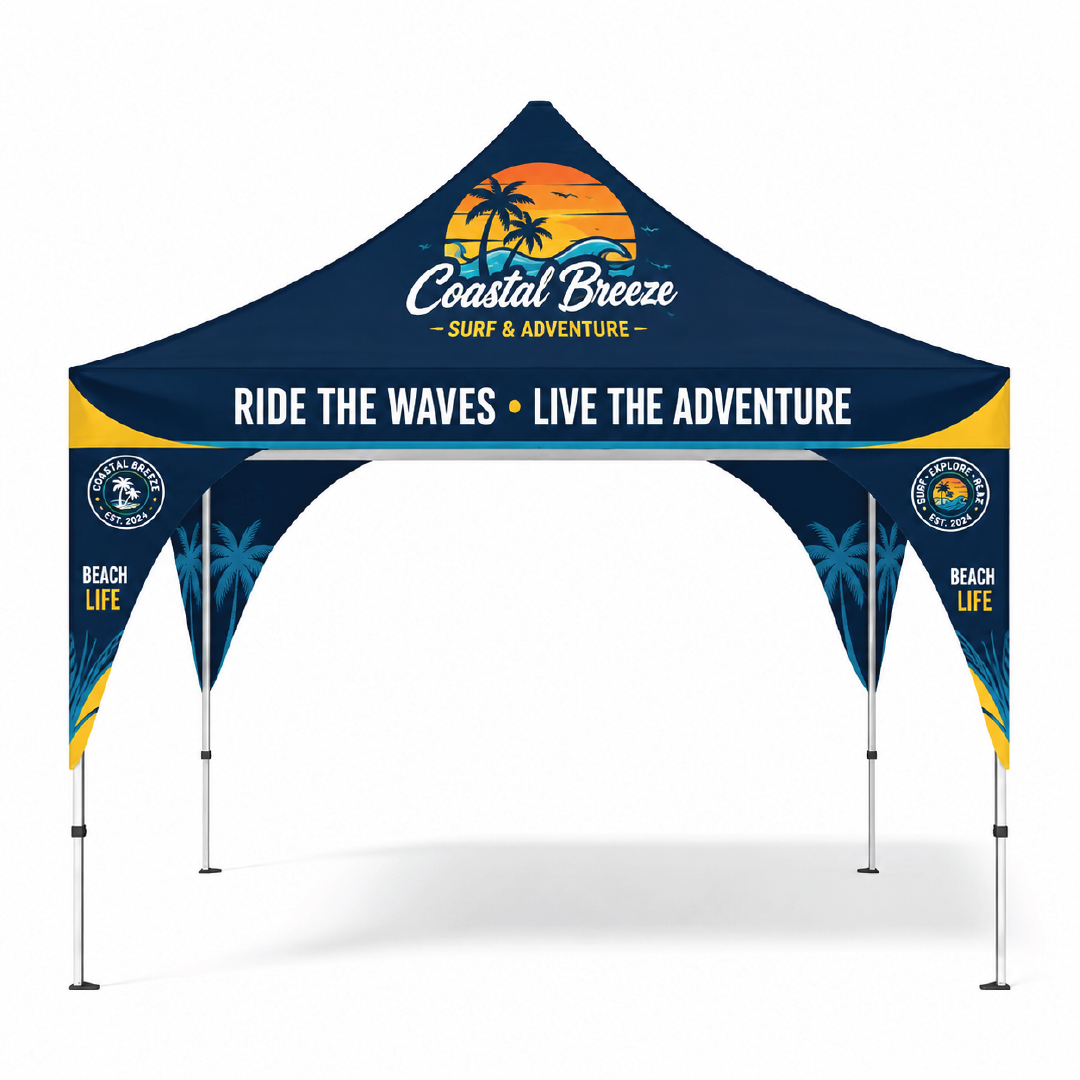
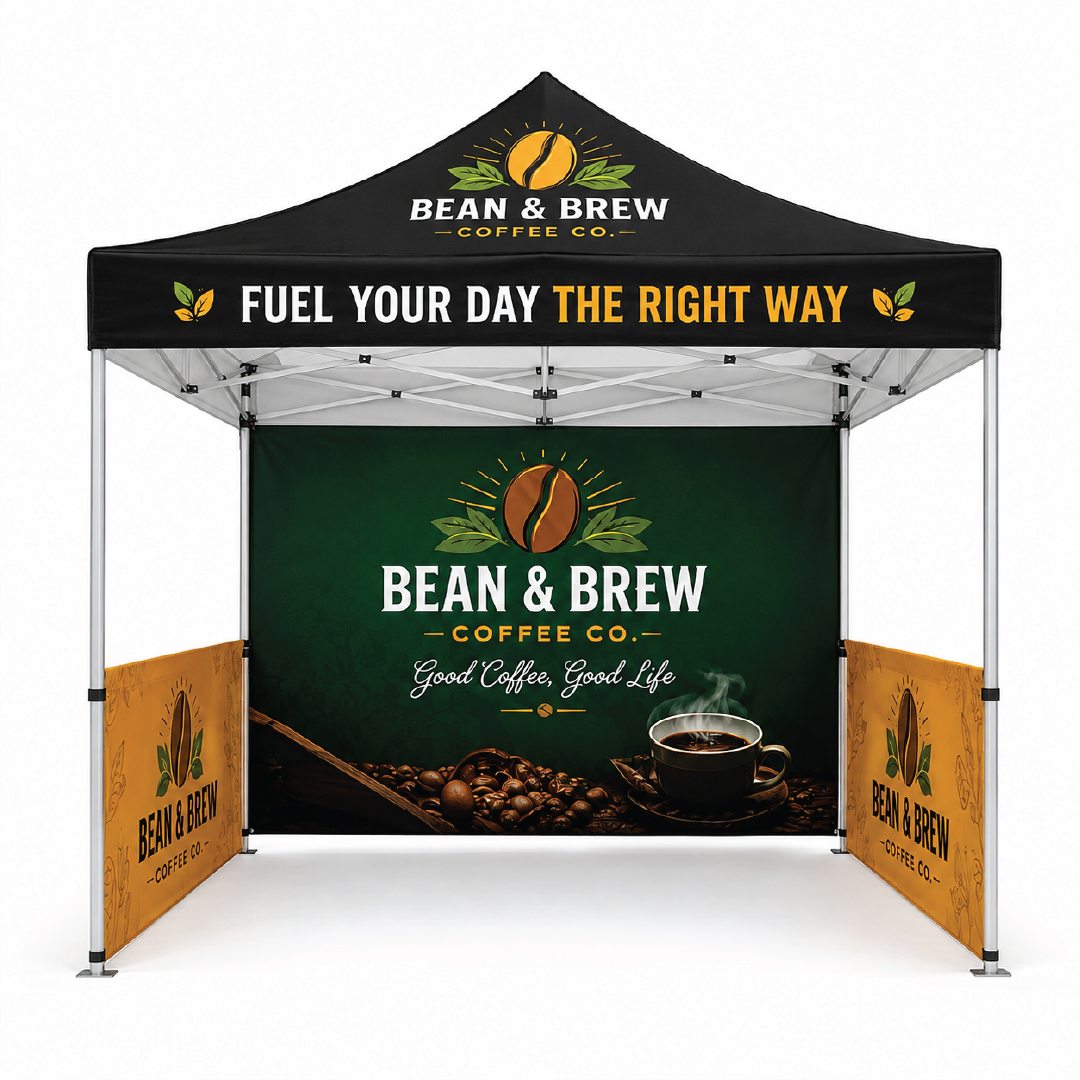
The roof can establish recognition across the fairground. The rear wall can create a visual anchor. Side panels can frame products or information. The interior can remain open enough for visitors to understand where to enter.
Most people will see the canopy before they decide to visit it. That makes distance visibility a design problem.
A visitor walking through a busy Minnesota festival does not have time to read a long message printed across a wall. The first visual needs to communicate quickly.
A useful hierarchy is:
| Viewing distance | Information to prioritize |
|---|---|
| Across the venue | Logo, brand color, distinctive visual |
| Approaching the booth | Main offer or category |
| At the entrance | Product, service, or event message |
| Inside the canopy | Detailed information and interaction |
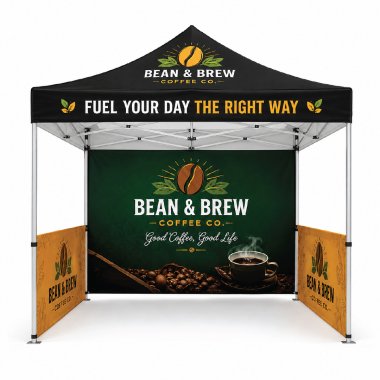
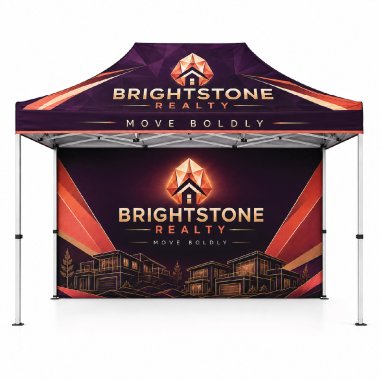
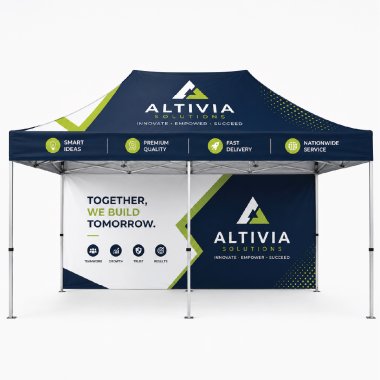
This is where custom printed canopy tents can provide an advantage over a plain structure. The entire visible surface can participate in the brand presentation rather than relying on one small sign.
Printing Limitless uses dye sublimation printing for its custom canopy products and offers different wall configurations, including half and full wall options on larger configurations.
A large printed surface can tempt a brand to fill every available area. That usually creates the opposite of the intended effect. The canopy should answer the first question a visitor has: Who is this and why should I stop?
The supporting information can live closer to the visitor. For example:
This creates a cleaner visitor journey and keeps the canopy readable even when the event area is busy.
Public park events require special attention because the canopy is being installed on managed public property rather than private event space.
Saint Paul Parks states that tents and other equipment cannot be placed on parkland without prior written authorization, and all tent and inflatable locations must be approved by the Park Permit Office.
Its recreation center guidance goes further, stating that tent and booth sizes and locations must be approved before installation and that driving stakes into recreation center facilities is prohibited unless specifically directed by the department.
This is a practical reason to ask the event organizer about the installation surface before ordering accessories.
A setup designed around ground stakes may require a different approach at a location where staking is prohibited.
Accessibility is easy to treat as an event organizer's responsibility, but the canopy layout itself can create obstacles.
Minneapolis explicitly connects tent requirements with accessible parking, seating, signage, entrances, exits, and circulation.
That means the display should leave enough usable space for people to approach and move through it.
A table pushed directly against the entrance can create a bottleneck. A wall that blocks a required path can make an otherwise compliant canopy layout unusable. A display fixture extending outside the assigned footprint can create another issue.
Good booth design therefore considers movement before decoration.
The right footprint is connected to the activity underneath it.
A display that exists primarily for branding can prioritize open space and strong graphic surfaces. A product-focused booth needs usable presentation area. An interactive activation needs room for people to stop without creating congestion.
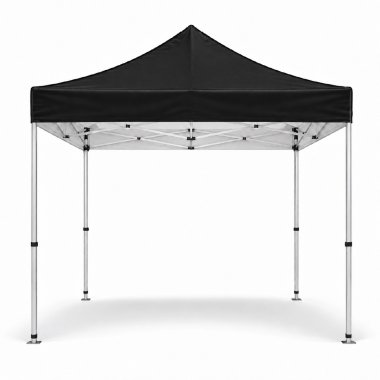
Printing Limitless currently offers custom canopy configurations including 6 x 6, 10 x 10, and 10 x 20 formats, with custom sizing available on its product pages. The 10 x 10 model uses an aluminum pop-up frame with adjustable telescopic legs and dye sublimation printing.
Rather than choosing a size by habit, create a simple floor plan first.
Put these into the drawing:
Then compare that drawing with the assigned event footprint.
A larger structure is not automatically a better display.
A compact footprint can sometimes create a clearer presentation because visitors immediately understand where the display begins and ends. It can also leave less unused space beneath the roof.
The deciding factor should be the relationship between usable interior area and event requirements.
A compact canopy makes sense when:
A larger configuration becomes useful when the canopy needs to support several people, larger product displays, demonstrations, or a more open visitor experience.
Minnesota events can place several exhibitors close together.
That makes differentiation important, but differentiation does not require complicated artwork.
Strong visual recognition can come through:
Printing Limitless also offers Pantone color selection on its larger custom canopy configuration, which can be useful when maintaining consistency with established brand colors.
For organizations using the canopy across multiple events, keeping the primary identity consistent can make the display easier to recognize even when the surrounding venue changes.
The people setting up the canopy are part of the buying decision.
A structure that requires several people to position, assemble, attach graphics, and organize the interior may not be practical for a small event team.
Likewise, a display with a large number of separate components can slow down both setup and teardown.
Printing Limitless describes its custom canopy products as pop-up systems with adjustable aluminum frames, while larger configurations can be ordered with a wheeled travel bag.
Before ordering, establish who will handle the setup.
Who transports the canopy?
How many people will assemble it?
How much vehicle space is available?
Who handles the graphic panels?
How quickly must the booth be ready?
Who packs everything after the event?
These questions can influence the practical value of the configuration just as much as its appearance.
A single branded canopy does not need to look identical at every appearance.
The core structure can stay consistent while the presentation changes around the purpose of the event.
| Event type | Display emphasis |
|---|---|
| Art fair | Product visibility and visual simplicity |
| Community festival | Brand recognition and open access |
| Corporate activation | Clear messaging and polished presentation |
| Sporting event | Sponsor or team identity |
| Farmers market | Product organization and easy interaction |
| Public information event | Readable messaging and accessible entry |
This makes custom canopy tent printing useful when a brand participates in several types of Minnesota events.
The canopy becomes the consistent visual foundation while the content underneath it adapts.
A canopy should be selected after the important event conditions are known.
Before placing the order, confirm:
| Question | Why it matters |
|---|---|
| Where is the event taking place? | City and venue rules can differ |
| Is the site public parkland? | Additional approval may apply |
| What footprint is assigned? | Determines the practical canopy size |
| Will walls be used? | Configuration can affect requirements |
| Is certification required? | Some events require flame resistance documentation |
| Does the organizer need a floor plan? | Helps avoid setup approval issues |
| Are stakes permitted? | Installation method may be restricted |
| What must remain accessible? | Prevents blocked routes |
| Who will assemble the display? | Helps determine operational practicality |
| How far away should the brand be visible? | Guides graphic scale |
This is especially important in Minneapolis and Saint Paul, where current city guidance contains specific requirements for tents, canopies, temporary structures, and event installations.
The most useful custom canopy tent is one that works on two levels.
It has to represent the brand visually, but it also has to fit the practical framework of the event.
Minnesota's rules demonstrate why that balance matters. Minneapolis requires permits for tents and canopies, Saint Paul distinguishes between tent and canopy configurations, state law addresses flame-resistant public assembly tents, and public park facilities can impose their own requirements for placement and installation.
Once those conditions are clear, the creative decisions become easier.
Choose the footprint around the activity. Choose the wall configuration around the event and visitor flow. Build the graphics around viewing distance. Choose supporting elements only when they add a clear function.
Printing Limitless offers custom canopy tents with dye sublimation graphics, aluminum frames, adjustable legs, multiple wall configurations, and optional display additions such as toppers and flag attachments on selected configurations.
The result can be a portable display that feels deliberate every time it appears across Minnesota.