Free Shipping on Orders $99+
Use Code FLAT15 & Get 15% Off On All Orders
Choose your store
Prices, currency, and delivery follow the store you select.
Prices, currency, and delivery follow the store you select.
A canopy used along the Mississippi Gulf Coast deals with a different environment than one set up in Jackson. Biloxi and Gulfport bring coastal exposure, high humidity, and persistent moisture into the equation, while inland locations introduce their own combination of heat, rain, and repeated outdoor use. The same canopy can therefore face very different demands depending on where it spends most of its time.
The National Weather Service's Gulfport observations illustrate how substantial the moisture load can be along the coast, with high dew points and relative humidity commonly accompanying summer heat. Mississippi's coastal environment also makes material selection worth considering before the first custom graphic is designed.
For buyers, the interesting question is not simply which canopy is waterproof or durable. It is how the fabric, frame, wall configuration, anchoring system, and storage routine will behave after repeated exposure to Mississippi's environment.
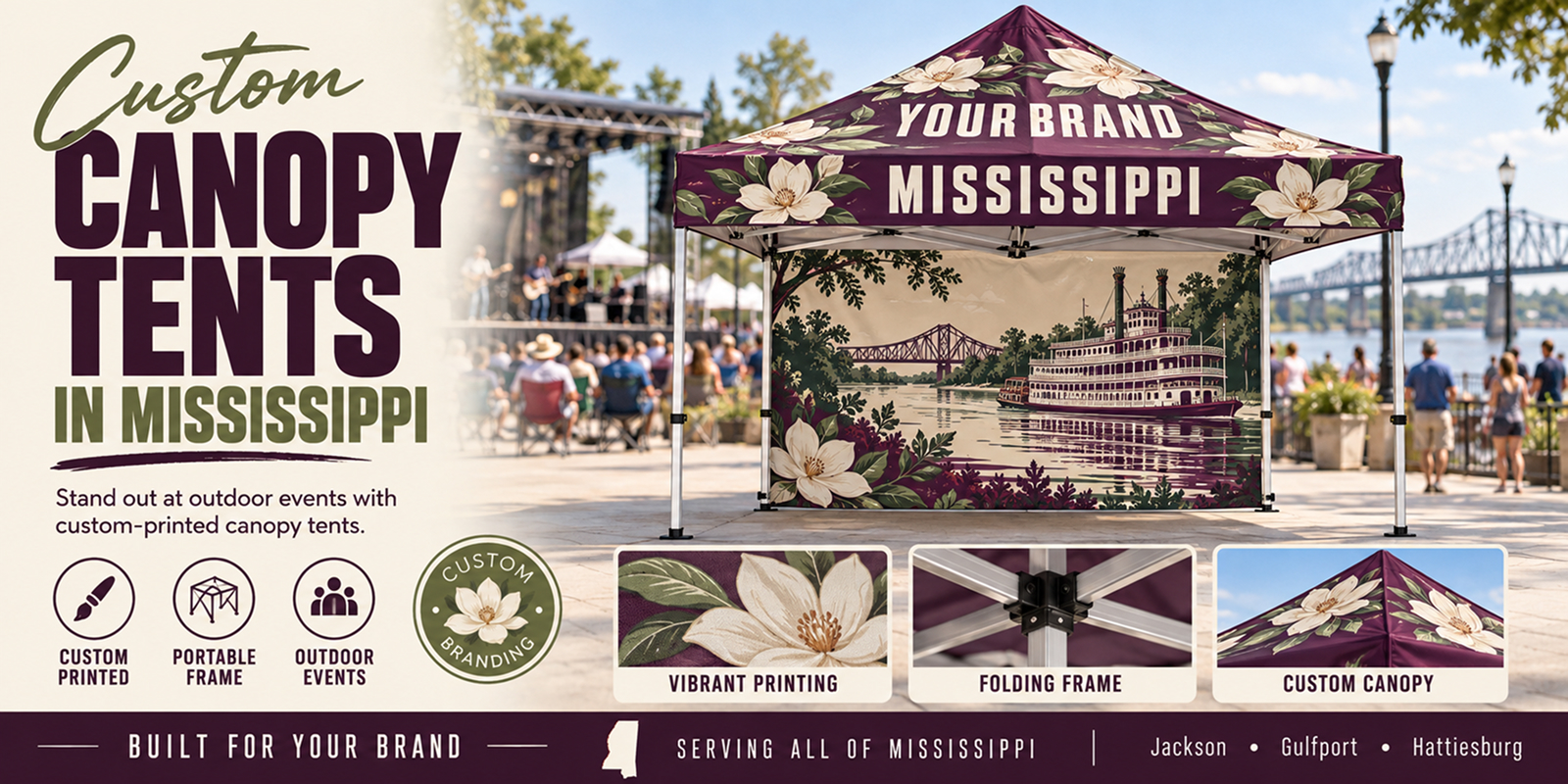
The state should not be treated as one uniform outdoor setting.
A canopy used near Biloxi or Gulfport can experience salty coastal air and persistent humidity. A setup in Jackson may be less exposed to salt spray but still faces hot summers, heavy rain, and moisture during storage. That distinction can influence the material choices that make sense for a frequently transported canopy.
| Location type | Main consideration | Canopy decision |
|---|---|---|
| Gulf Coast | Humidity and salt exposure | Corrosion-conscious frame selection and careful hardware maintenance |
| Inland urban area | Heat, rain and repeated handling | Durable fabric, ventilation and practical transport |
| Open outdoor venue | Weather exposure and anchoring | Appropriate ballast and a frame designed for commercial use |
| Covered or sheltered location | Reduced direct exposure | Greater emphasis on portability, graphics and layout |
| Frequently transported setup | Repeated assembly and packing | Lightweight commercial frame and wheeled storage |
That distinction makes 6000 series anodized aluminum an option worth discussing for buyers concerned about corrosion. Anodizing creates a protective oxide layer on aluminum, while powder coating is a finish rather than a material that makes steel immune to corrosion. It would be inaccurate, however, to say that powder-coated steel will simply “rapidly corrode” across all of Mississippi. The actual exposure, coating quality, scratches, hardware, and maintenance all matter.
For coastal use, the better purchasing question is therefore: How well is the entire frame and hardware system protected against the environment in which it will be used?
Salt air is especially relevant along the Gulf Coast because corrosion can affect exposed metal surfaces and hardware over time. That does not make steel unusable, nor does it mean anodized aluminum is automatically the only appropriate choice. It means coastal buyers should pay attention to the finish and construction of the complete frame.
Look beyond the main leg material and inspect:
A commercial aluminum frame can be attractive for frequent transportation because it combines structural performance with relatively manageable weight. Printing Limitless canopy systems use aluminum pop-up frames with telescopic legs, making them suitable for setups that need to be assembled, packed, and moved repeatedly.
For a canopy that spends substantial time around Biloxi, Gulfport, or other coastal locations, routine inspection also becomes part of ownership. Salt residue and moisture should not be allowed to sit on exposed hardware indefinitely.
Heavy rainfall creates a common misconception about canopy fabrics: the highest waterproof rating alone does not determine whether the finished structure will keep a display dry.
The roof has to manage water across its entire surface. Fabric tension, roof shape, seam construction, and the way the canopy is installed all influence what happens when rain arrives.
A PU-coated polyester can provide useful water resistance, and commercial canopy fabrics can be available in 600D constructions with protective coatings. Heat-sealed or taped seams can further reduce the opportunity for water to penetrate at stitched connections.
However, no responsible product specification should promise that a canopy can safely support indefinite water pooling simply because its fabric has a particular hydrostatic rating. Water should be encouraged to run off the roof rather than accumulate on it.
That makes roof tension an overlooked part of canopy selection.
The combination matters more than a single waterproofing number.
The most overlooked Mississippi canopy problem can happen after the event. A wet canopy packed into a dark storage bag creates an environment where mildew and unpleasant odors can develop. High humidity along the Gulf Coast makes this especially relevant, but the same problem can occur anywhere the fabric is stored before it has completely dried. This is why fabric selection and storage practices should be considered together.
A commercial polyester with a mildew-resistant treatment can help, but no coating eliminates the need for proper drying. After a wet setup, spread the fabric out fully and allow it to dry before long-term storage. Pay particular attention to folded areas, seams, and sections that receive less airflow.
The practical sequence is simple:
Use → clean if necessary → dry completely → fold → store.
That routine protects the fabric and graphics while reducing the chance that a canopy develops problems between uses.
A canopy's purpose is to create shade, but a fully enclosed structure can become uncomfortable under strong summer sun.
Along the Gulf Coast, high temperatures can combine with high humidity. Gulfport climate observations show how heat index values can climb into the 90s and above during warm periods, with high dew points contributing to the muggy conditions.
A vented roof can help release hot air from the upper portion of the structure. The effect depends on the particular canopy design and airflow around it, but ventilation is worth considering when the canopy will be occupied for long periods.
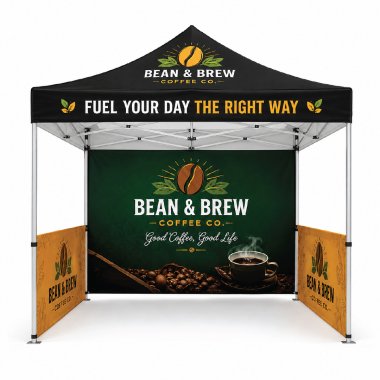
Wall configuration then becomes another temperature decision. A full enclosure may offer heavier rain and display protection. A partially enclosed arrangement can preserve airflow while still creating a branded backdrop. An open configuration may be preferable when the priority is customer access and natural ventilation.
The useful part is the ability to change the arrangement rather than committing every setup to the same wall configuration.
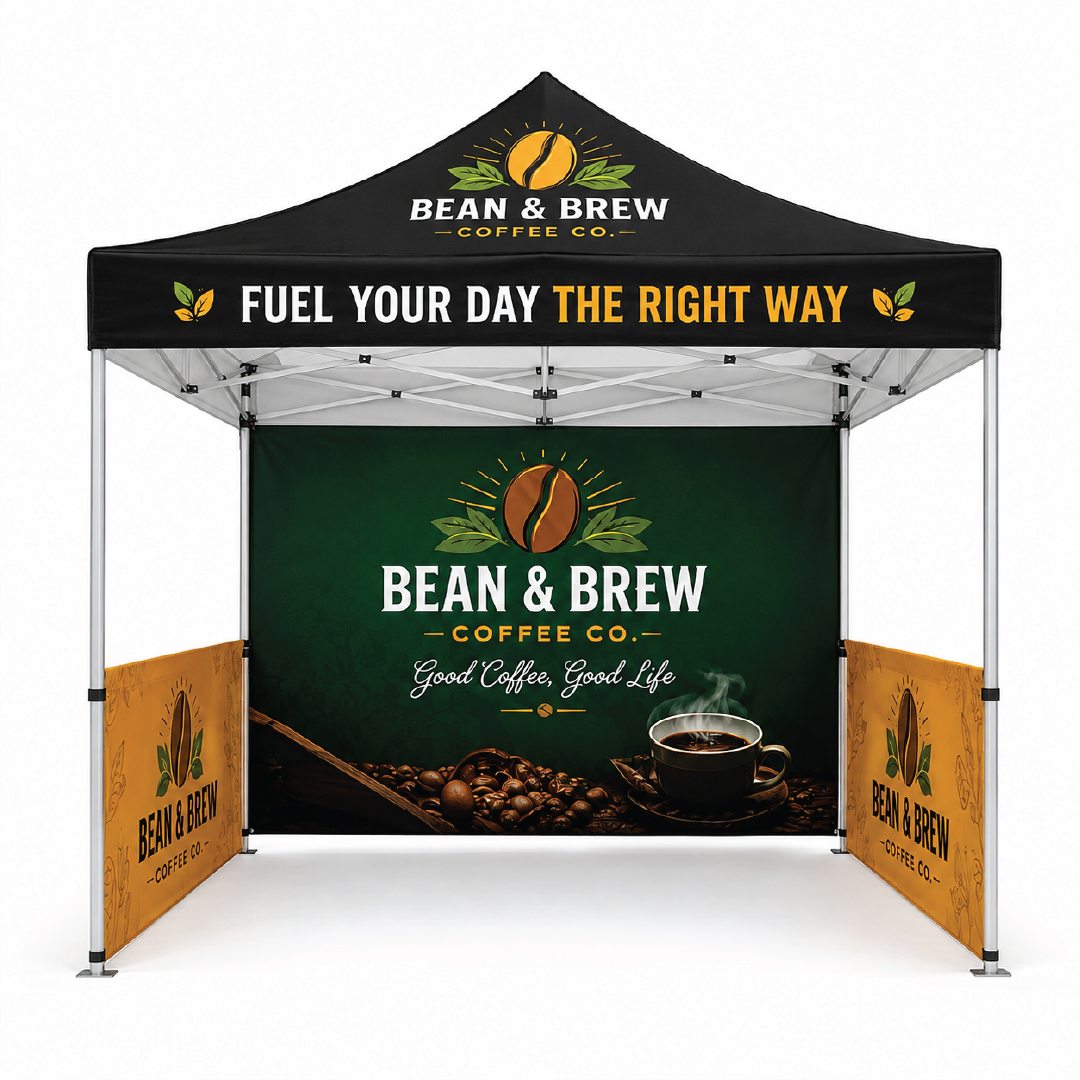
Mississippi outdoor displays rarely need one permanent configuration. The same frame can be used with different wall arrangements depending on the location and conditions.
That makes detachable walls useful for reasons beyond branding.
| Configuration | Practical role |
|---|---|
| Open sides | Maximum access and airflow |
| One back wall | Creates a visual anchor without enclosing the booth |
| Two sidewalls | Adds protection from lateral sun or rain |
| Full walls | Provides stronger enclosure and display coverage |
| Partial wall arrangement | Balances protection with openness |
The choice can change during the day. A wall that blocks strong afternoon sun can be useful at one point and unnecessary later. A rain-exposed side can be closed while the opposite side remains open.
This flexibility is especially valuable for a canopy that travels between Gulfport, Biloxi, and inland Mississippi locations, where the surrounding environment can vary considerably.
A canopy graphic has to live in the same environment as the fabric carrying it.
Strong sunlight can affect colors over time, while repeated folding and handling can place stress on the printed surface. Dye sublimation is a practical choice for fabric canopy graphics because the artwork becomes integrated into the textile rather than forming a thick surface layer.
The graphic strategy should also reflect where people will see the canopy.
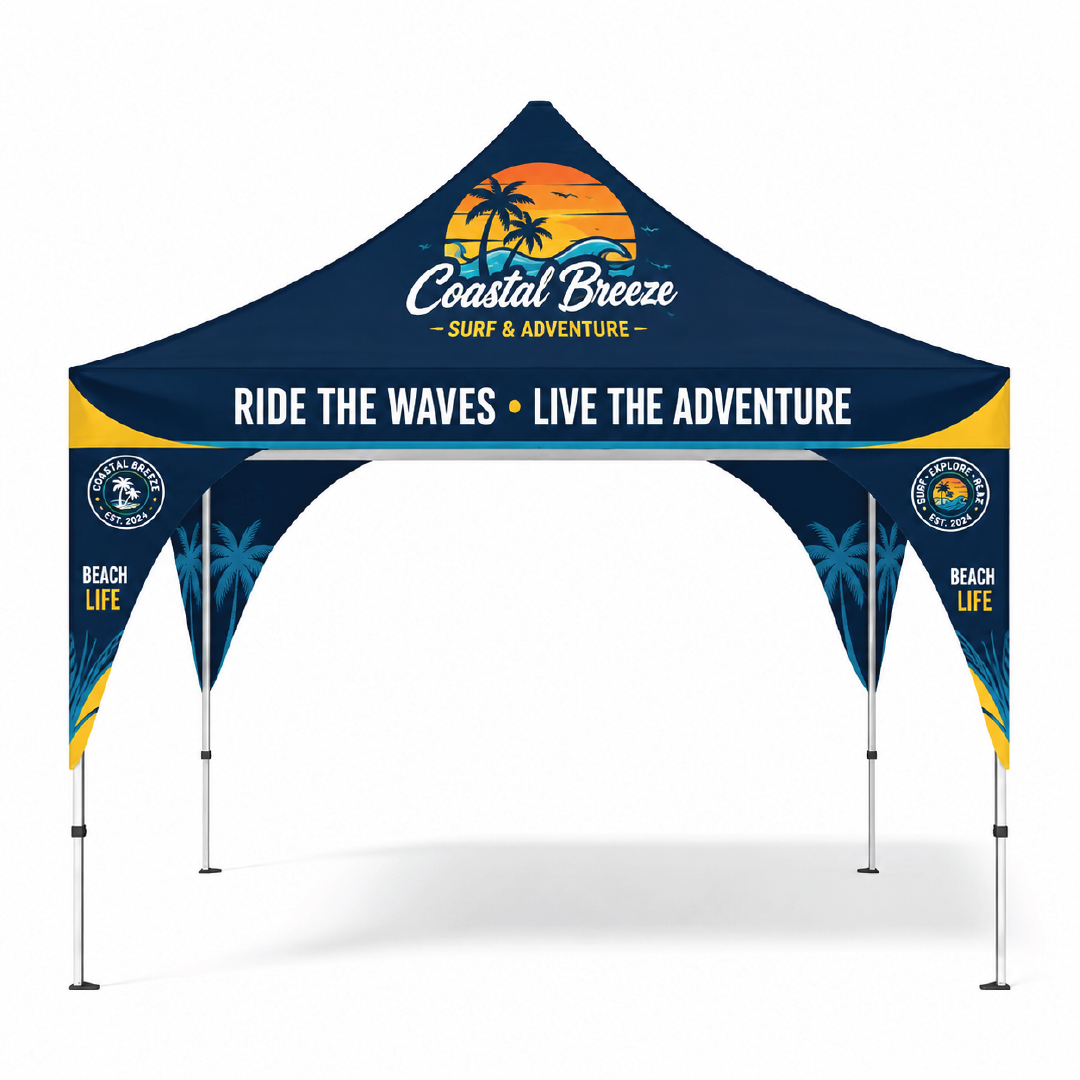
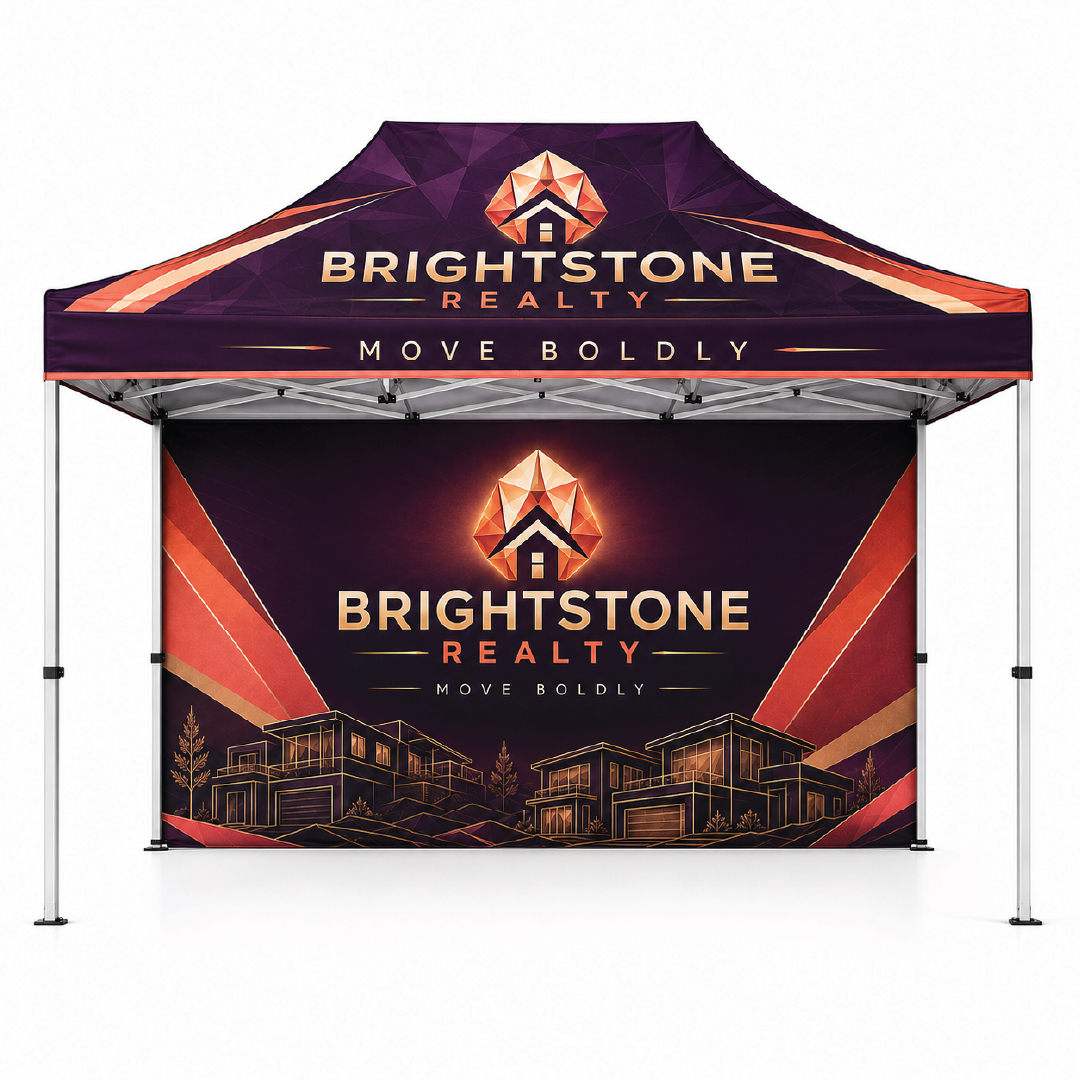
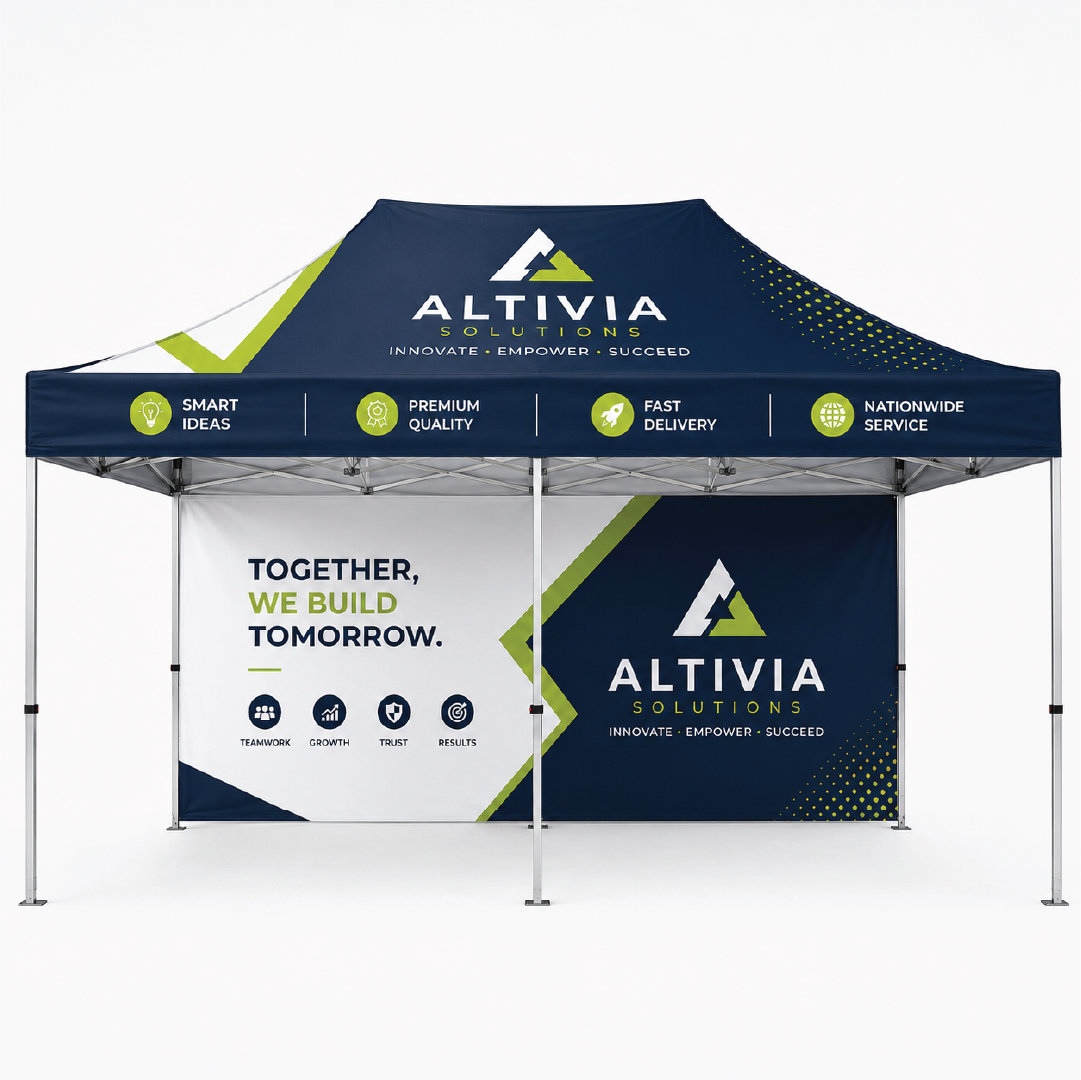
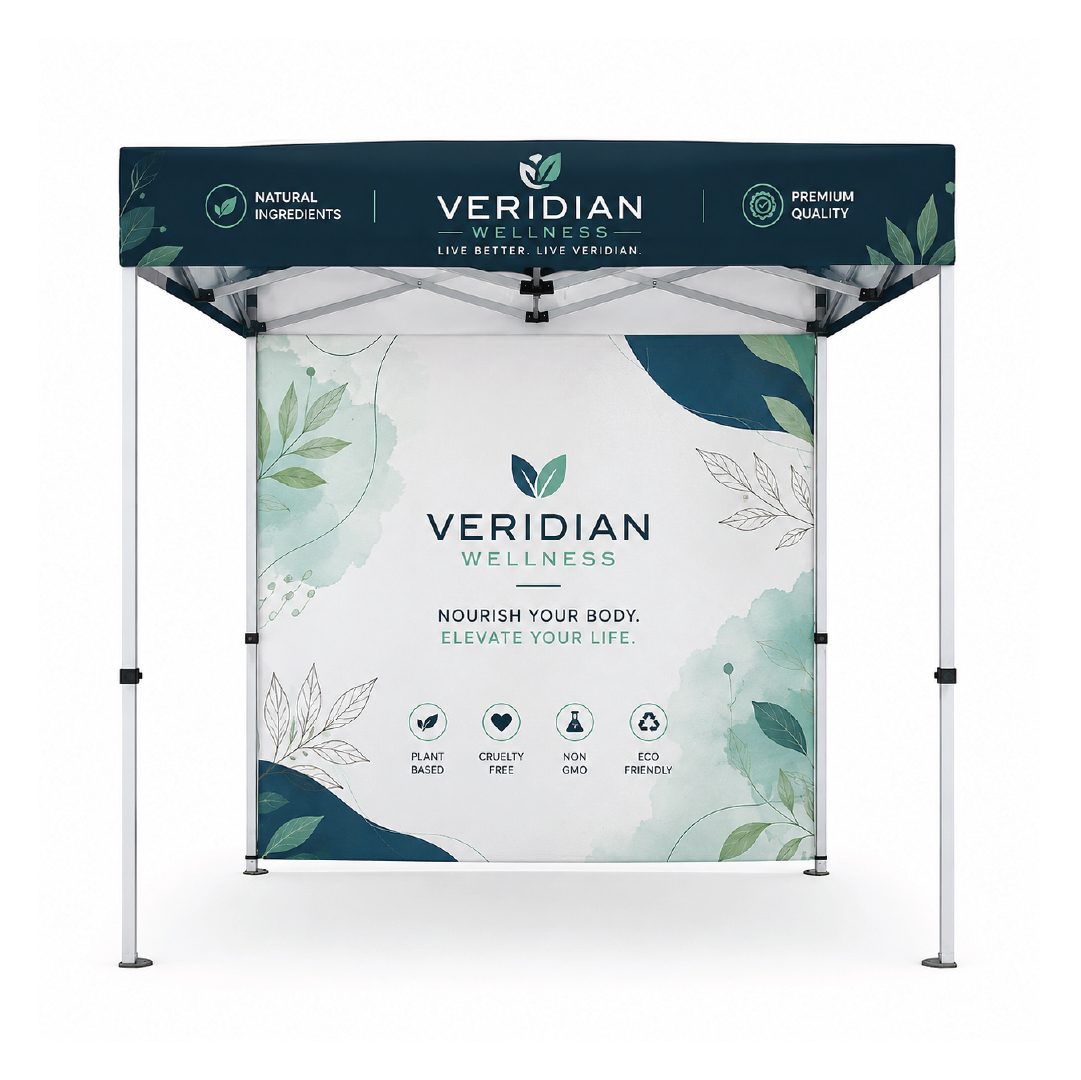
A roof can provide broad visibility. A backwall can create a strong brand background. A valance can keep the name visible at a lower viewing height without closing the booth. Sidewalls can combine graphic space with protection from sun and rain.
This gives Mississippi buyers an opportunity to make the canopy visually useful without covering every available surface with branding.
Size affects much of the setup beyond available display space.
A 10 x 10 canopy can work well where the available footprint is limited and a compact presentation is preferred. A 10 x 15 or 10 x 20 configuration provides additional covered area, but it also increases the space required for setup, transport and anchoring.
The distinction becomes particularly useful when a canopy is being planned for repeated commercial use.
| Size | What it can offer | What to plan for |
|---|---|---|
| 6x6 | Compact footprint | Limited interior display area |
| 10x10 | Balanced commercial footprint | Standard booth planning and transport |
| 10x15 | Additional presentation depth | Greater site clearance |
| 10x20 | Large display or multiple functional areas | More space, heavier packed configuration and greater anchoring considerations |
A larger canopy should never be selected solely because it provides more covered space. The surrounding site, display requirements, and transport routine should all support the choice.
Gulfport's public event permit application provides a useful example of how the canopy becomes part of the broader event layout. The city's application asks organizers to identify the locations of canopies, tents, booths, and other temporary structures on the event site plan. It also requires emergency access lanes through the event venue.
That means the canopy cannot always be treated as an isolated piece of equipment.
Its position can affect:
For larger outdoor setups, drawing the canopy footprint before ordering can prevent a surprisingly common problem: purchasing a configuration that technically fits the booth assignment but leaves too little usable space around it.
Mississippi's regulatory structure requires some care when discussing temporary canopy requirements.
The Mississippi State Fire Marshal's Office states that the state adopted the 2024 International Fire Code and International Building Code effective July 1, 2024. At the same time, Mississippi law allows counties and municipalities to adopt fire prevention codes that meet or exceed the state requirements. That means the frequently repeated 400 sq. ft. threshold should not be presented as a universal Mississippi rule.
Local rules can differ. Tupelo, for example, specifies requirements for tents and membrane structures exceeding 200 square feet and canopies exceeding 400 square feet, including a 20-foot clearance requirement from other structures and tents.
The takeaway for a canopy buyer is to check the jurisdiction and venue before assuming a statewide threshold applies. The same applies to fire retardant documentation. If the location requires certified flame-resistant or flame retardant fabric, obtain the manufacturer's documentation before the canopy arrives at the site. Do not rely on a generic statement that a fabric is “fire safe”.
There is also no sound basis for stating that Mississippi universally requires a specific 40 lb weight per leg or that outdoor operations are automatically cancelled at a statewide 30 mph wind threshold.
Those requirements can be established by individual venues, municipalities, or event organizers.
The practical approach is to confirm:
For Gulf Coast setups, where wind conditions can become a concern, properly secured ballast is an important part of the complete canopy system. But the manufacturer's anchoring recommendations and the venue's specific requirements should determine the final arrangement.
The more frequently a canopy is assembled, the more value there is in components designed for repeated handling.
A commercial aluminum frame with telescopic legs can simplify transportation and setup. Reinforced joints can reduce the stress placed on connection points during repeated assembly. A wheeled travel bag can make a substantial difference when the canopy needs to move between locations.
Printing Limitless configurations can combine aluminum frames with custom fabric printing, wall options, anchoring accessories, and wheeled transport solutions.
The useful feature is not simply having every accessory available. It is being able to build a configuration that matches the actual operating routine.
For a frequently used commercial canopy, the following combination provides a sensible starting point:
| Component | What to consider |
|---|---|
| Frame | Commercial aluminum construction for a balance of strength and portability |
| Coastal exposure | Protective finish and corrosion-conscious hardware selection |
| Fabric | 600D acrylic-coated polyester or another documented commercial canopy textile |
| Printing | Dye sublimation for full color fabric graphics |
| Roof | Properly tensioned construction with ventilation where useful |
| Walls | Detachable configurations for changing sun and rain exposure |
| Ballast | Venue-approved weights matched to the canopy footprint |
| Transport | Wheeled travel bag for repeated movement |
| Storage | Complete drying before long-term packing |
| Compliance | Current certification and documentation required by the venue |
This is where a custom canopy becomes different from a basic recreational shelter. The specification is being assembled around where the canopy will live, how often it will move, what it needs to protect, and how the space needs to function.
A few checks can make the purchasing process considerably easier.
If the canopy will spend substantial time around Biloxi or Gulfport, give greater attention to moisture exposure, corrosion-conscious construction, and storage. A setup based in Jackson may have different priorities even though heat and heavy rain remain relevant.
List the tables, merchandise, equipment, people, and electrical items that need protection. That will tell you whether a compact 10x10 is sufficient or a larger footprint makes operational sense.
Check the site's access lanes, neighboring structures, and display boundaries. Gulfport's public event documentation demonstrates how temporary structures can form part of the overall event site plan.
If the canopy regularly comes down wet, establish a drying routine before storage. If it travels frequently, prioritize a practical packed configuration and wheeled transport.
Confirm permitting, fire documentation, anchoring, placement, and clearance requirements directly with the municipality or event organizer. Mississippi's adoption of the 2024 IFC does not mean every local venue operates with an identical checklist.
Mississippi rewards a more deliberate approach to canopy selection. The requirements along the Gulf Coast can differ significantly from those farther inland, and the structure has to cope with moisture, heat, rain, repeated handling, and the practical requirements of the location.
A well-specified custom canopy tent for Mississippi starts with those conditions rather than adding features afterward. The right combination of frame material, fabric, ventilation, wall coverage, graphics, anchoring, and transport can make the finished setup easier to operate and better suited to the places where it will actually be used.