Free Shipping on Orders $99+
Use Code FLAT15 & Get 15% Off On All Orders
Choose your store
Prices, currency, and delivery follow the store you select.
Prices, currency, and delivery follow the store you select.
Outdoor displays have to work within real spaces. Booth dimensions, ground conditions, venue rules, weather exposure, customer movement, branding, transportation, and setup time can all affect the canopy that makes sense for an event.
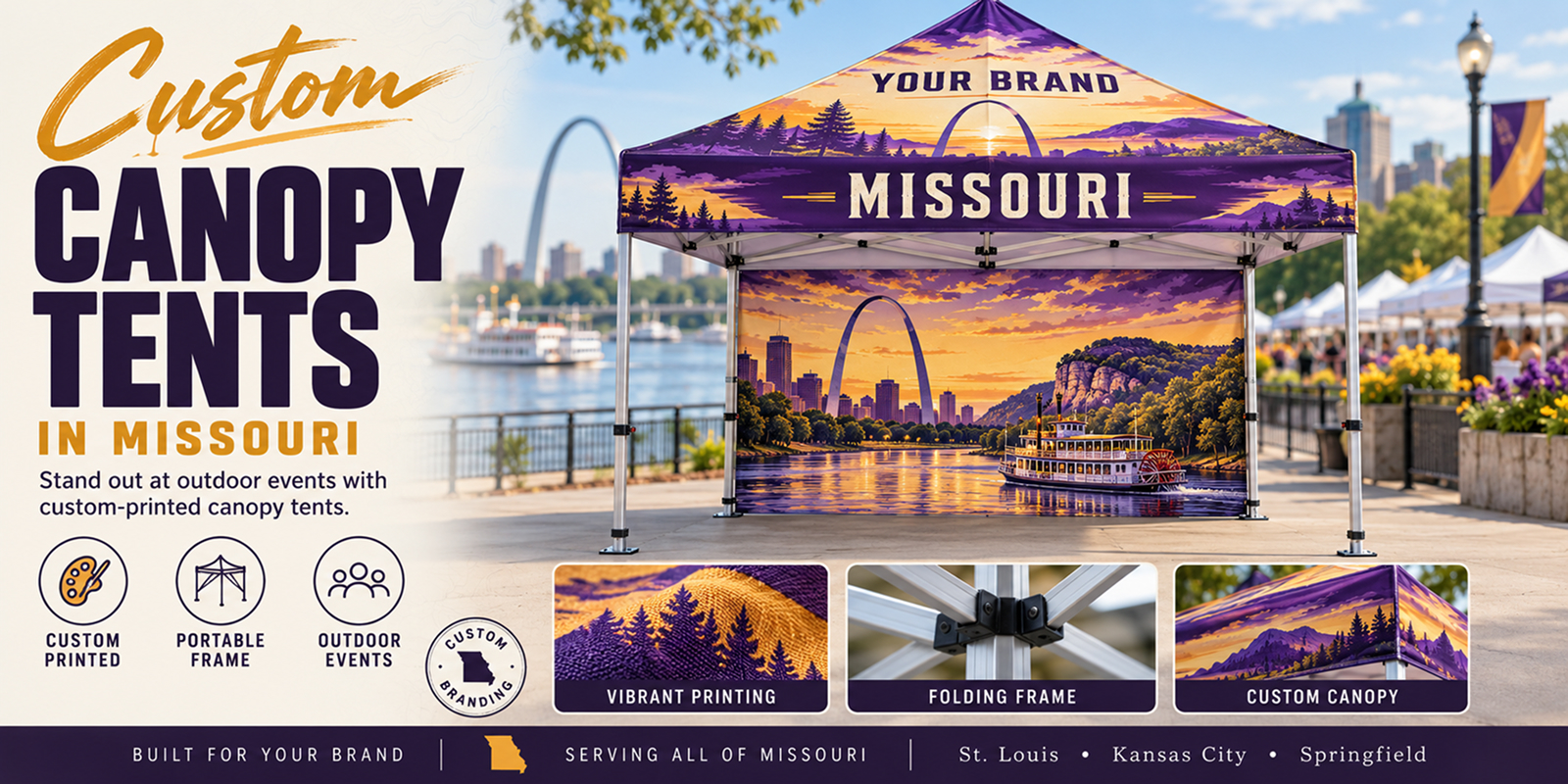
Missouri presents a wide mix of settings for these displays, including markets, fairs, trade shows, sporting events, festivals, community gatherings, outdoor promotions, and branded activations. A canopy used around St. Louis may face different site restrictions than one installed at an event in Kansas City, Springfield, Columbia, or another Missouri community.
That makes the purchase more useful when the structure is planned alongside the event rather than treated as a printed roof added to a booth later. Printing Limitless offers custom canopy tents in multiple sizes and configurations, with printed graphics, aluminum frames, wall options, toppers, flags, and anchoring accessories available across applicable models.
The available footprint often determines the canopy configuration before artwork enters the discussion. A compact event space may leave little room for extended walls or accessories. A larger outdoor activation can provide enough room for product displays, seating, demonstrations, registration, customer conversations, or branded visual elements.
The surface beneath the structure matters just as much. Grass may permit stakes where the venue allows them, while concrete and asphalt generally require a different anchoring approach. Some locations place additional restrictions on where tents can be installed.
St. Louis provides a useful example. City policies require tents at certain special events to be placed on grass so they can be staked, while tents cannot be placed on pavement under those rules. Downtown plazas can have additional restrictions when a tent would require anchoring into turf. Before selecting a custom printed canopy tent, confirm:
| Site detail | Why it matters |
|---|---|
| Booth dimensions | Determines the usable canopy footprint |
| Ground surface | Influences the anchoring method |
| Placement rules | May restrict where the structure can stand |
| Wall allowances | Can affect the final configuration |
| Setup access | Determines how the frame and packed canopy reach the site |
| Event schedule | Influences assembly and teardown planning |
| Local approvals | Some temporary structures require permits or inspections |
The venue's instructions should be treated as part of the product specification.
A canopy is exposed to wind across its roof and side surfaces, so its stability depends on how the structure is secured rather than the weight of the frame alone. Soft ground can allow approved stakes and tie-downs to connect the structure to the ground. Hard surfaces call for ballast that can be attached securely to the canopy legs. The appropriate amount depends on the canopy configuration, surface, weather exposure, manufacturer's guidance, and event requirements.
Missouri venues can specify their own standards. St. Louis tent policies, for example, contain structural and wind-related requirements for permitted installations, while its downtown and park policies place additional restrictions on tent placement and anchoring.
Printing Limitless offers sandbag options on applicable canopy configurations, giving the structure an additional anchoring accessory where the event setup calls for it.
The frame affects transportation, assembly, storage, height adjustment, and repeated use. A heavy structure may provide useful mass, but portability becomes harder when the same canopy needs to travel to multiple locations.
Printing Limitless uses aluminum frames with adjustable telescopic legs on its custom canopy products. The 6 x 6 model, for example, uses an aluminum pop-up frame and adjustable legs, with a compact footprint suited to locations where available space is limited.
| Frame characteristic | Aluminum frame | Steel frame |
|---|---|---|
| Weight | Lighter and easier to transport | Heavier |
| Corrosion resistance | Naturally resistant to rust | Coating can require protection if damaged |
| Mobility | Suited to repeated transport | Better where weight is less of a concern |
| Setup | Practical for portable displays | Can require more handling |
| Typical consideration | Recurring outdoor use and events | Situations where added frame mass is useful |
Frame selection should also include the quality of joints, leg adjustment, truss construction, and overall packed configuration. A portable canopy has to perform through the entire cycle of loading, transport, assembly, use, dismantling, and storage.
Not every canopy frame creates the same relationship between its roof and its footprint. Straight leg systems keep the legs vertically aligned with the canopy structure, making the designated footprint easier to use. Slant leg designs angle outward toward the ground, creating a wider base but changing the usable area beneath the canopy.
The tubing profile matters as well. Commercial structures may use larger hexagonal or octagonal frame profiles instead of lighter square tubing. Larger profiles can provide greater structural rigidity and distribute forces differently through the frame.
These details rarely appear in the finished photograph, yet they influence how the canopy feels during setup and how it performs through repeated use.
Local requirements become particularly important when a temporary structure is part of a public event. St. Louis requires permits for certain tents, including tents with an area of 800 square feet or greater and tents that affect or obstruct required means of egress. Its special event process also covers public events using city streets, parks, or other public property when tents are involved.
The city's tent policies address matters such as site plans, exits, accessibility, inspection, occupancy, and structural requirements. The rules can differ according to the type, location, size, and use of the temporary structure.
That does not make every Missouri canopy subject to the same permitting process. The useful step is to identify the specific venue and event requirements before production.
A few minutes spent checking these details can prevent a configuration problem when the event arrives.
St. Louis deserves particular attention because its public event policies contain specific requirements for tents and temporary structures. Events open to the public that use city property and include tents can fall under the city's special event permitting process. The city recommends beginning applications well in advance for complex events, with applications generally due no later than 30 days before the event.
The location can change the practical requirements. City park policies state that tents must be placed on grass so they can be staked and cannot be placed on pavement. Downtown plaza rules can require self-standing tents where anchoring into turf would otherwise be necessary. These restrictions illustrate why the canopy should be selected around the actual event location. A structure that works perfectly at one venue may require a different setup at another.
Missouri's outdoor event calendar is not limited to one metropolitan area. Kansas City provides a major setting for festivals, markets, community events, sporting activities, and promotional installations. Springfield and Columbia add further opportunities for outdoor displays tied to local commerce, education, community activities, and regional events.
The value of a reusable branded canopy tent increases when the graphics can remain consistent while the physical arrangement changes. One event might call for an open front and a rear graphic wall. Another could benefit from half panels and a topper. A third location may have a tighter footprint that calls for a more compact configuration. The printed identity stays recognizable while the booth arrangement adapts to the site.
Printing Limitless offers several canopy sizes, including 6 x 6, 10 x 10, 10 x 15, and 10 x 20 configurations. The decision should begin with the activity taking place inside the footprint.
| Display requirement | Size consideration |
|---|---|
| Tight event footprint | Compact configuration |
| General promotional setup | Mid-size canopy |
| Additional display area | Extended footprint |
| Multiple tables or equipment | Larger configuration |
| Broad branded backdrop | Larger roof and wall surface |
A 10 x 20 canopy can create considerably more room for displays, staff movement, equipment, or customer interaction.
Printing Limitless also lists a wheeled travel bag option for its 10 x 20 configuration, which can be useful when the structure is transported between venues.
The largest canopy is not automatically the most practical choice. The available booth footprint, transportation requirements, anchoring plan, and intended layout should determine the final selection.
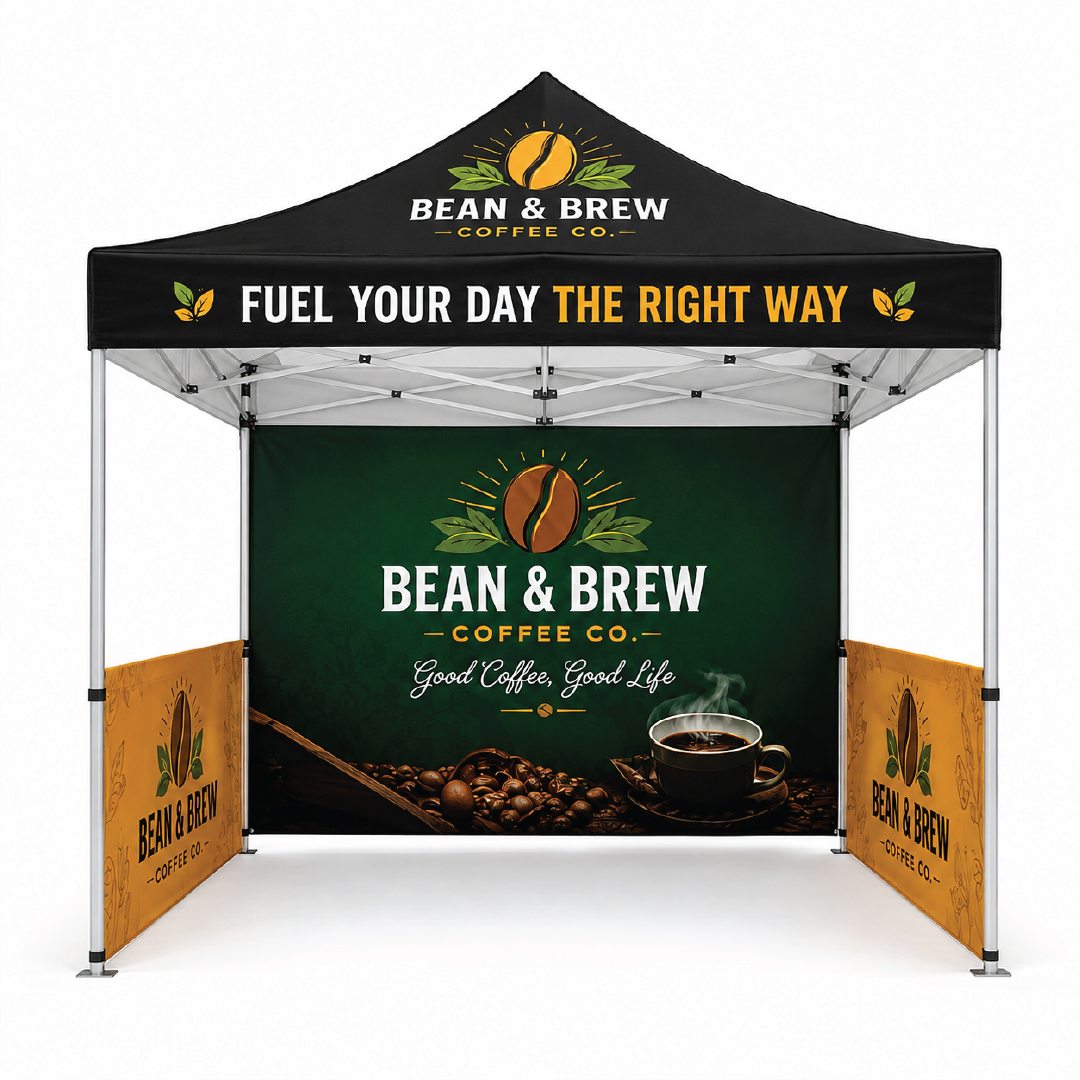
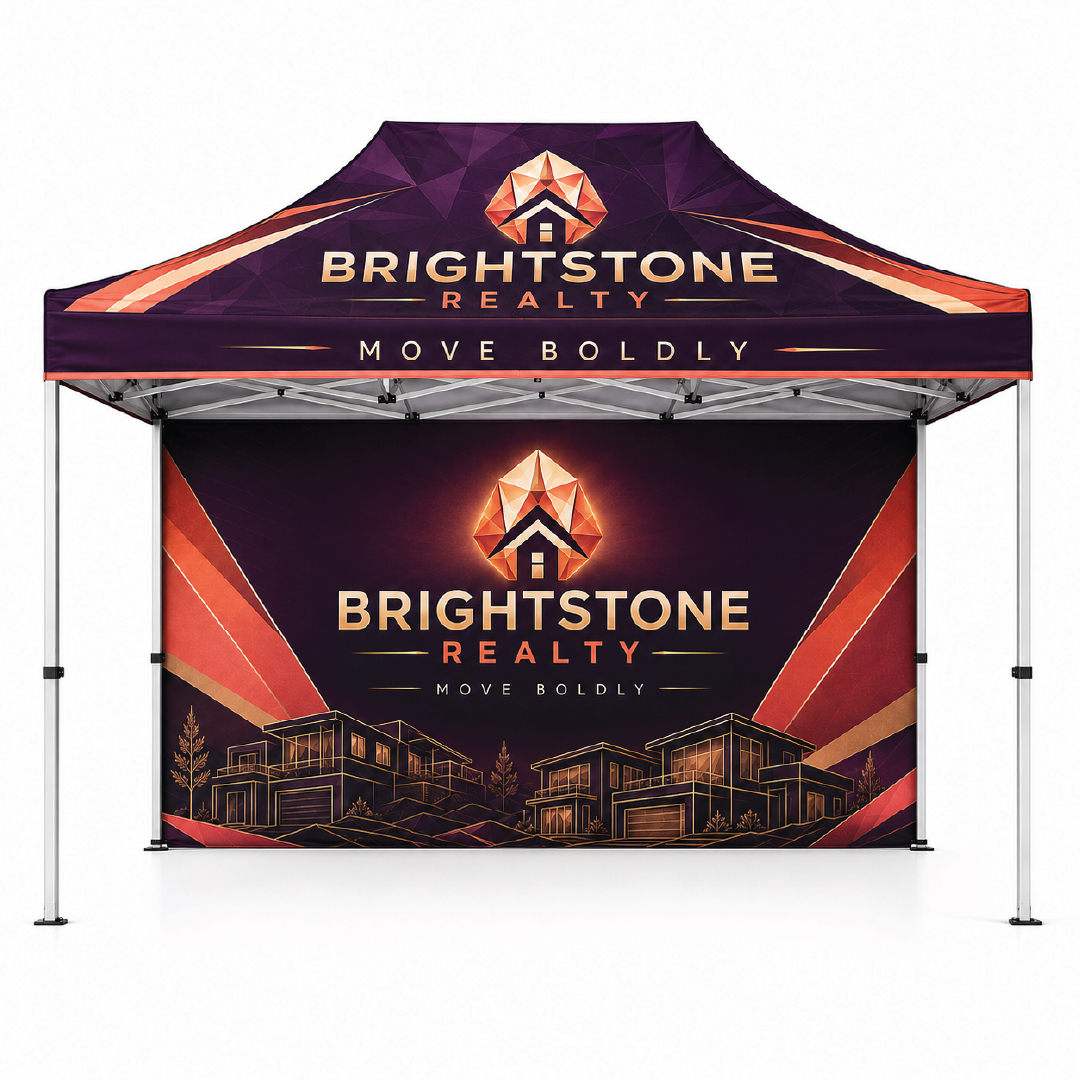
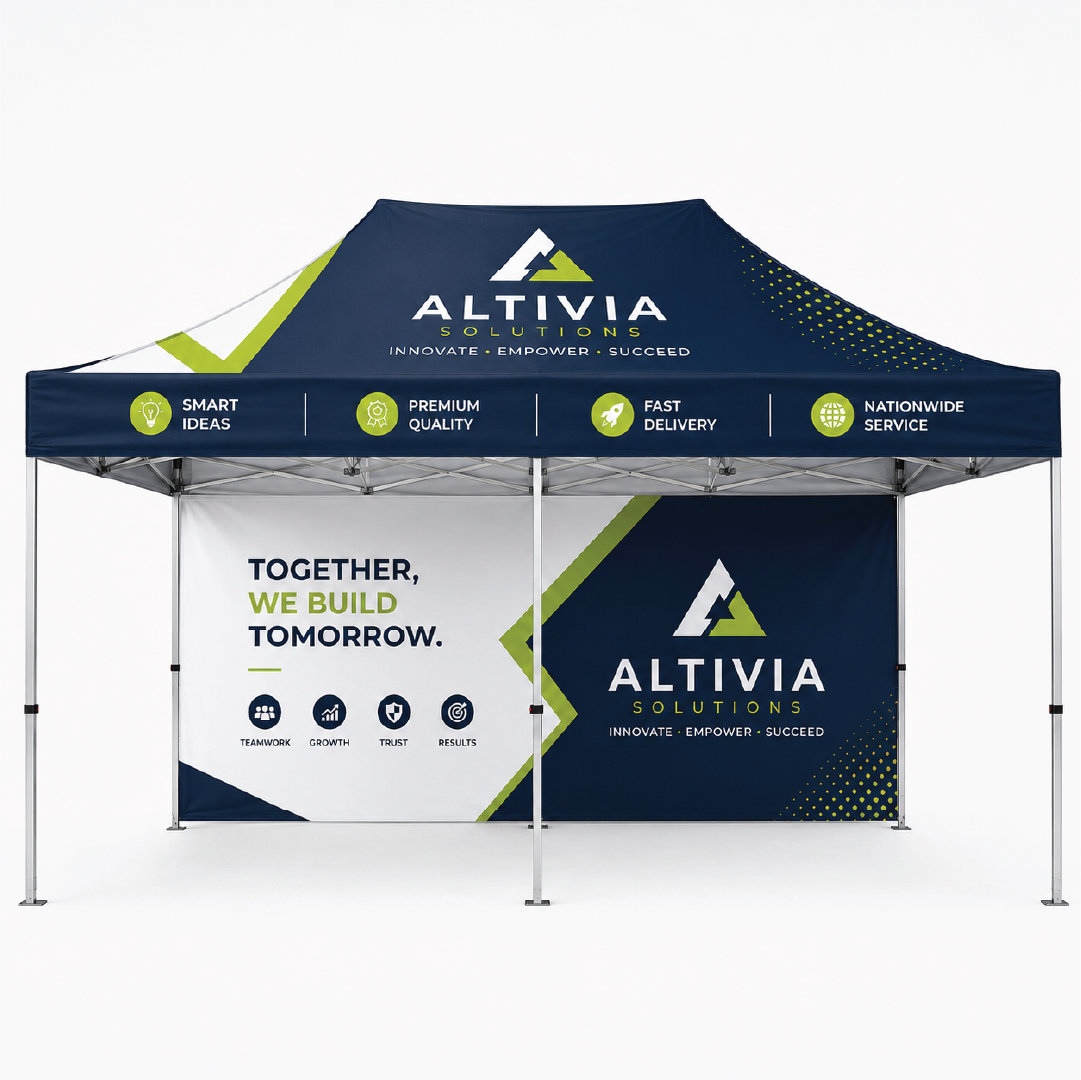
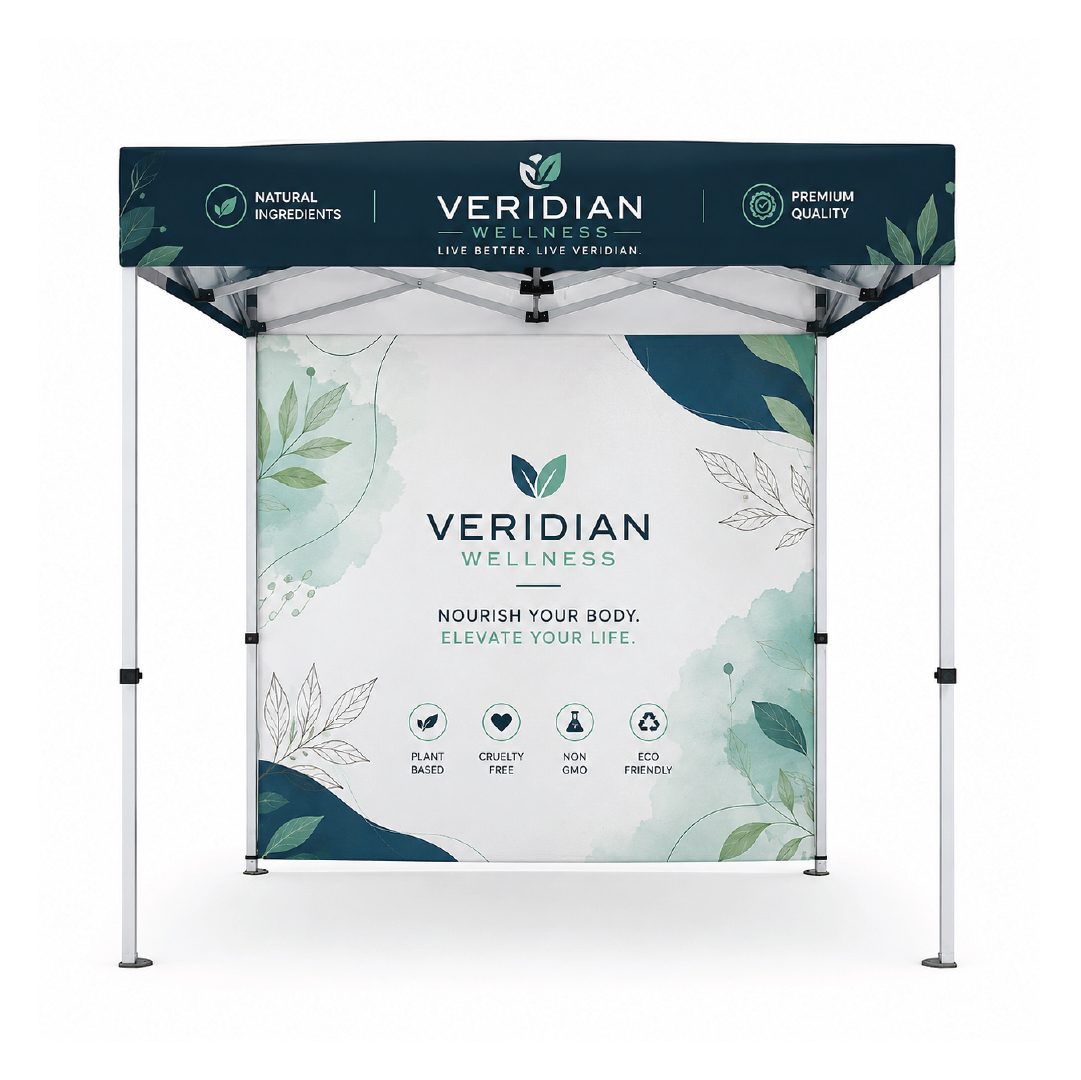
A canopy often has to communicate while people are walking past it. The roof can establish recognition from a distance. Valances can reinforce a company name or short message. Walls provide larger areas for imagery, branding, product information, or campaign graphics.
Printing Limitless uses dye sublimation printing on its custom canopy products and offers wall configurations, toppers, optional flag attachments, and Pantone color matching on applicable models. A useful graphic hierarchy keeps the most important information visible first:
Trying to place every piece of information onto the canopy can weaken the display. Large outdoor graphics benefit when the hierarchy remains clear at a distance.
Wall configuration affects visibility, access, privacy, weather exposure, and the amount of printable surface available.
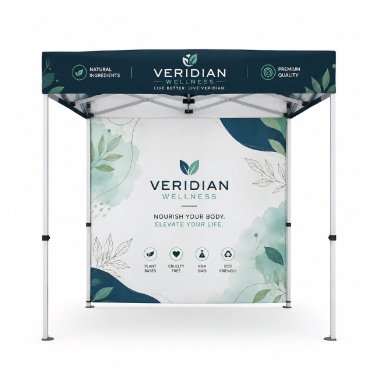
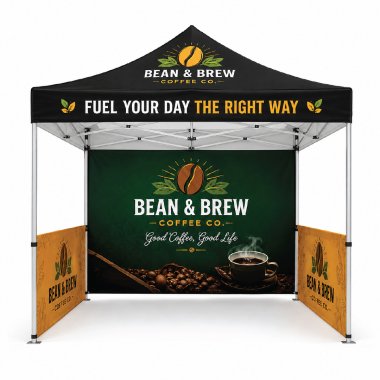
An open setup keeps the space visually accessible. A rear wall can create a strong branded backdrop without enclosing the entire booth. Half panels can provide defined areas while retaining visibility. Full walls create a more enclosed presentation and give the graphics considerably more room.
Printing Limitless offers front, back, left, and right wall configurations on applicable custom canopy products, with half and full panel options and single- or double-sided printing choices.
| Display style | Wall configuration to consider |
|---|---|
| Open interaction | Minimal wall coverage |
| Strong photo backdrop | Full rear wall |
| Partial enclosure | Half panels |
| Heavy visual branding | Multiple printed walls |
| Visibility through the enclosure | Clear panel option where available |
Wall placement should follow the way visitors are expected to approach and move through the space.
The fabric has a practical role beyond carrying the artwork. Printing Limitless lists 600D acrylic-coated polyester with an 8 oz graphic weight on its custom canopy products. Selected configurations also offer recycled flame-resistant fabric options.
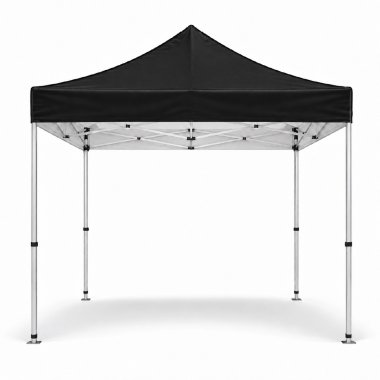
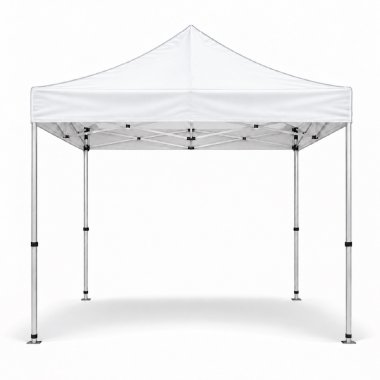
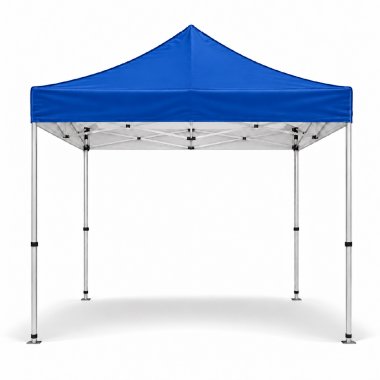
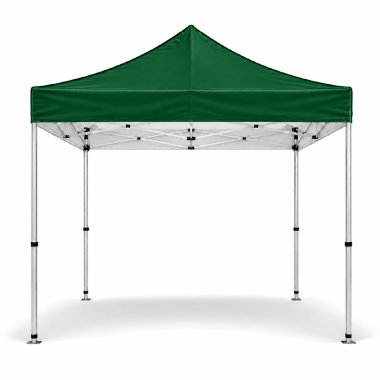
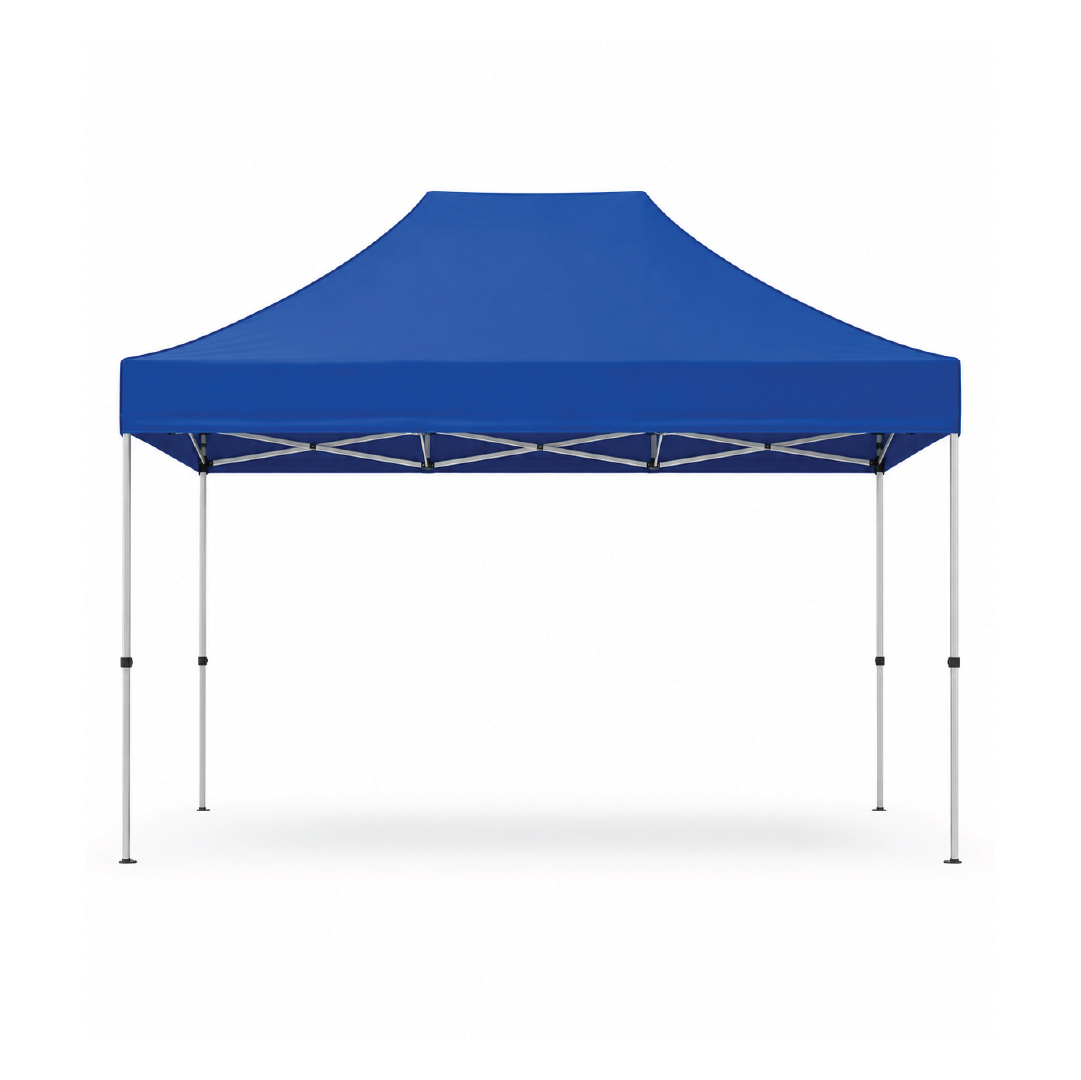
A solid color option is available as well, using 420D Oxford polyester and an aluminum frame. It provides a cleaner presentation when full custom printing is not required.
Material selection can therefore follow the display strategy:
The fabric should also be stored properly between events. Printing Limitless recommends cleaning coated canopy fabric with warm water, a soft sponge, and mild non-detergent soap, followed by complete drying before storage.
Customization does not stop with the printed canopy. A topper can extend the visible branding above the main structure. A flag can create a vertical identification point in a crowded event environment. Sandbags can support an approved anchoring setup. Clear panels can provide enclosure without completely blocking visibility.
Printing Limitless lists these options on applicable canopy configurations, along with design assistance for buyers who need help preparing their graphics. The most effective configuration is usually the one where each added component has a clear purpose.
A canopy becomes easier to justify when it can support several appearances rather than one event.
The core structure can remain consistent while the surrounding presentation changes. One event may need a simple open layout. Another may require printed side panels. A promotional activation could add a topper and flag. A larger footprint can accommodate additional display elements when the venue permits it.
That flexibility makes custom canopy tents in Missouri useful for recurring event schedules where the same visual identity needs to appear in different environments.
Before each event, inspect the frame, joints, legs, fabric, connectors, tie-downs, and ballast. Check the venue instructions again rather than assuming the requirements are unchanged.
A clear order of decisions keeps the purchase simpler.
1. Identify the venue
Confirm the exact location, booth footprint, surface, access conditions, and event restrictions.
2. Check the anchoring method
Determine whether stakes, ballast, or another approved system can be used.
3. Select the frame and size
Match the structure to the available space, transportation requirements, and intended activity.
4. Decide on wall coverage
Choose the level of openness, enclosure, visibility, and graphic area required.
5. Develop the artwork
Build the design around the actual roof and wall configuration rather than creating graphics before the structure is selected.
6. Add useful accessories
Consider toppers, flags, sandbags, travel bags, or other options only where they contribute to the setup.
7. Review the final proof
Confirm dimensions, colors, graphic placement, wall positions, and the final configuration before production.
This sequence connects the practical and visual sides of the purchase without treating them as separate decisions.
A successful outdoor display starts with the site and develops into a complete structure. The frame determines portability and setup, the anchoring method addresses stability, the canopy fabric carries the visual identity, and the walls shape how people interact with the space.
Printing Limitless offers custom printed canopy tents, solid color options, multiple sizes, aluminum pop-up frames, configurable walls, toppers, flags, and anchoring accessories across applicable products.
St. Louis, Kansas City, Springfield, Columbia, and communities throughout Missouri can present very different event conditions. Checking the venue first and then building the canopy around those requirements creates a more practical path to a reusable outdoor display.