Free Shipping on Orders $99+
Use Code FLAT15 & Get 15% Off On All Orders
Choose your store
Prices, currency, and delivery follow the store you select.
Prices, currency, and delivery follow the store you select.
Outdoor spaces can change the way a brand, organization, or individual setup is experienced. A canopy introduces a defined area without requiring a permanent structure, giving the space a visible point of focus while keeping the setup flexible.
In New York, that flexibility can matter across very different surroundings. A canopy may become part of a busy outdoor setting in New York City, a community gathering in Albany, or a larger open area in Buffalo. The surroundings change, but the need for a structure that looks considered, functions well, and can be adapted to the setting remains.
The canopy itself is only one part of the finished setup. The frame, printed surfaces, enclosure, artwork, accessories, and the way the structure is handled between uses all influence the final result.
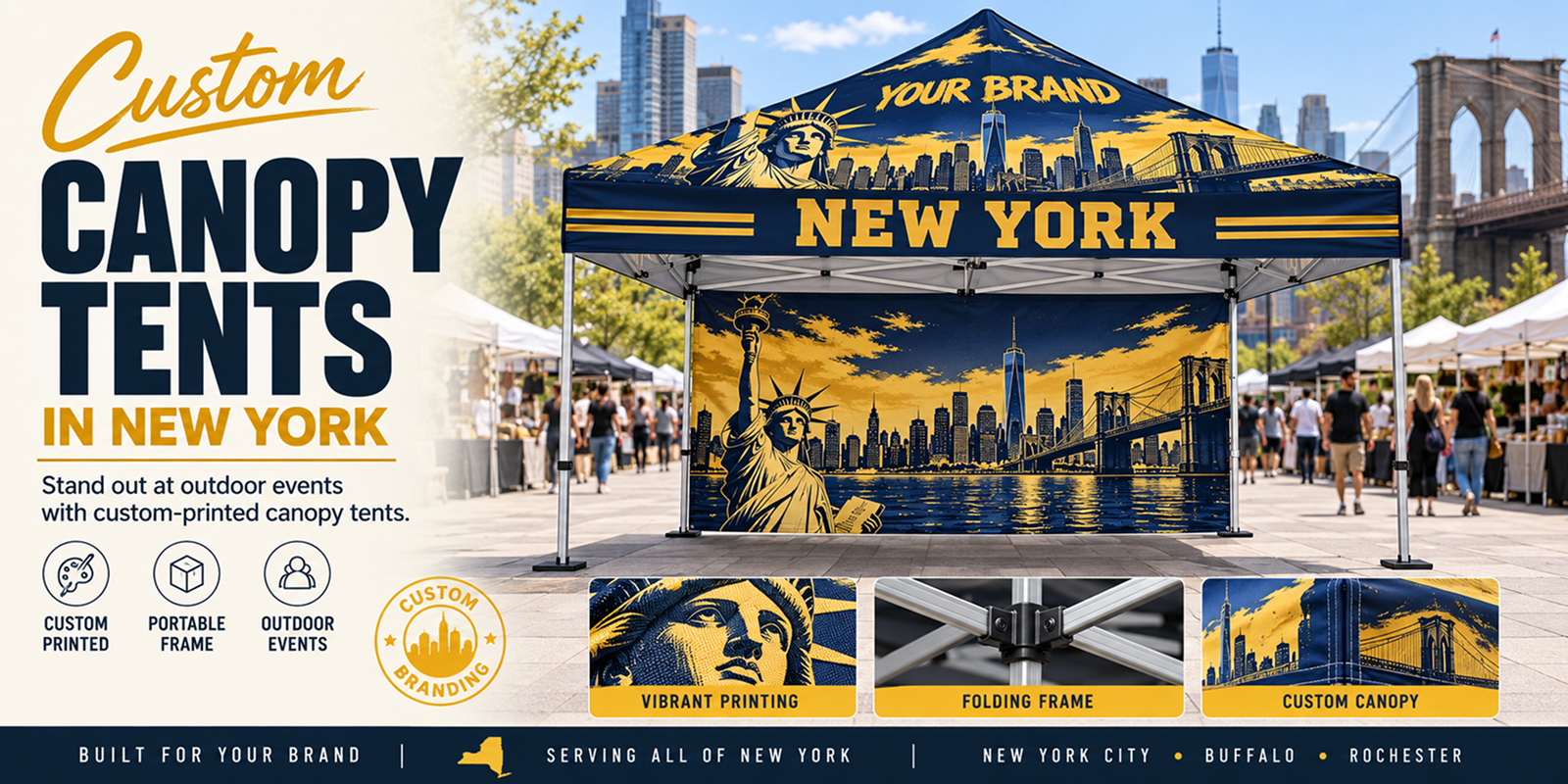
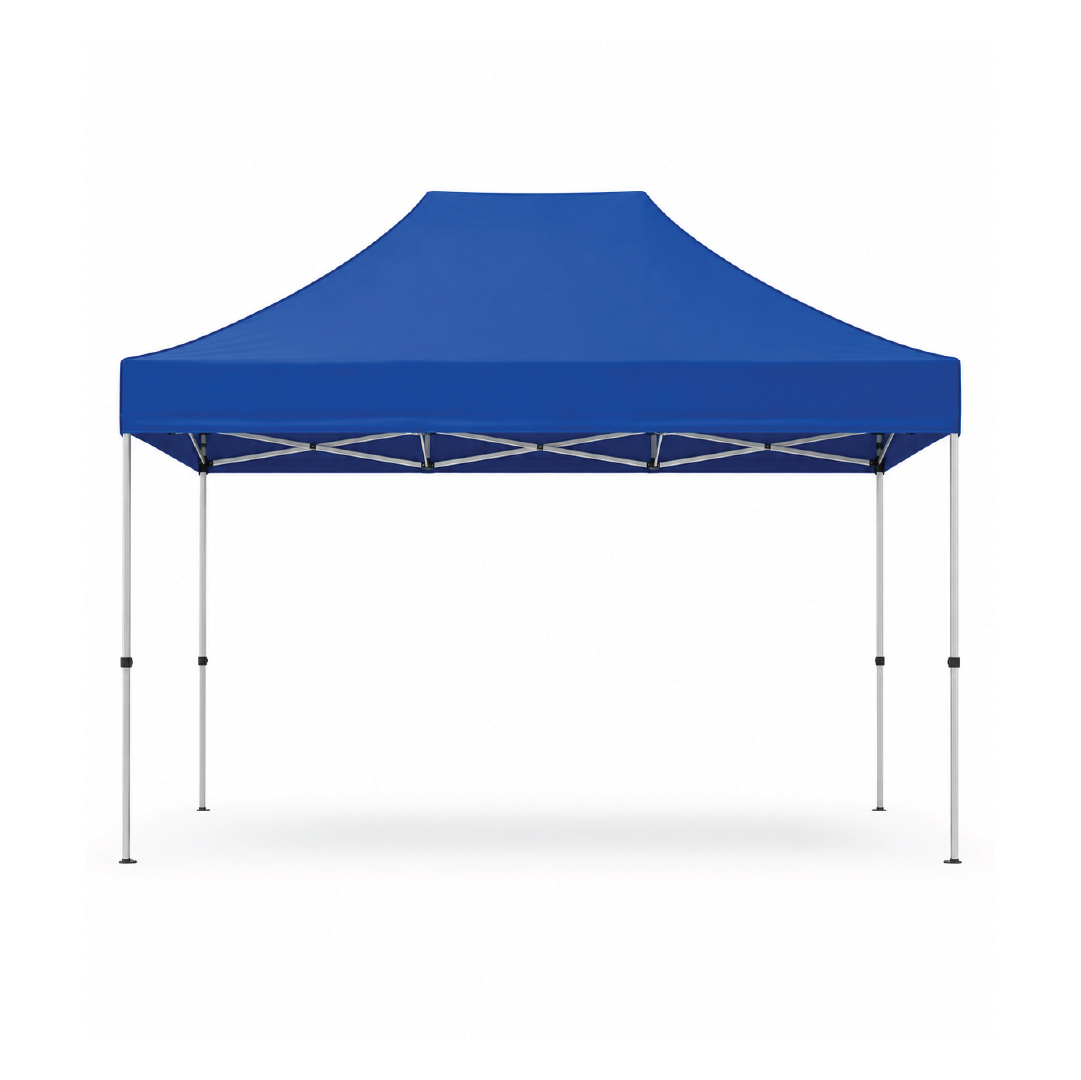
A canopy naturally establishes boundaries within an open area. The roof creates overhead coverage, while the frame gives the setup a recognizable shape that can be seen across the surrounding space.
That makes the structure useful when you need to distinguish a particular area without building a permanent installation. An open configuration can maintain easy access, while selected wall arrangements can create greater separation when the setting calls for it.
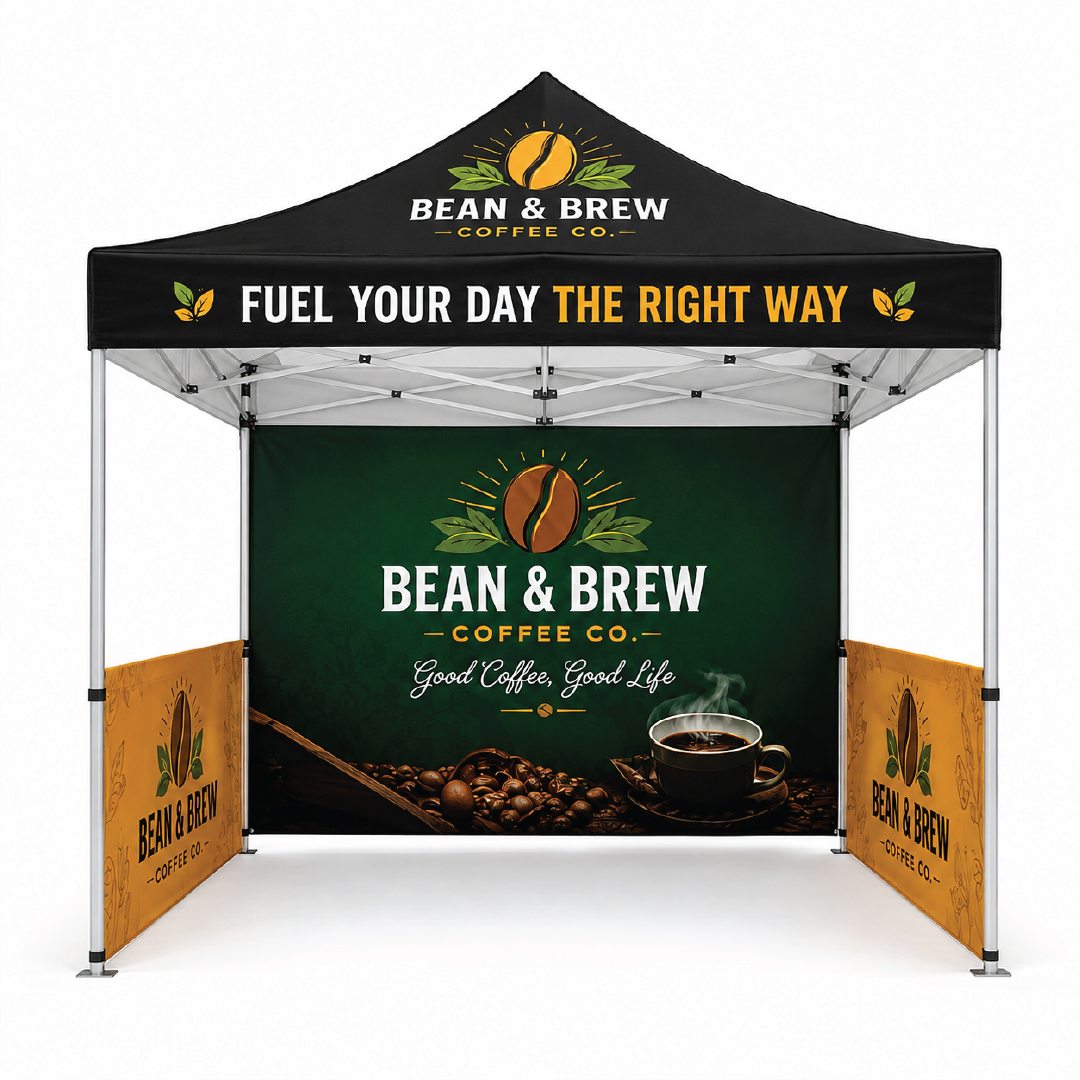
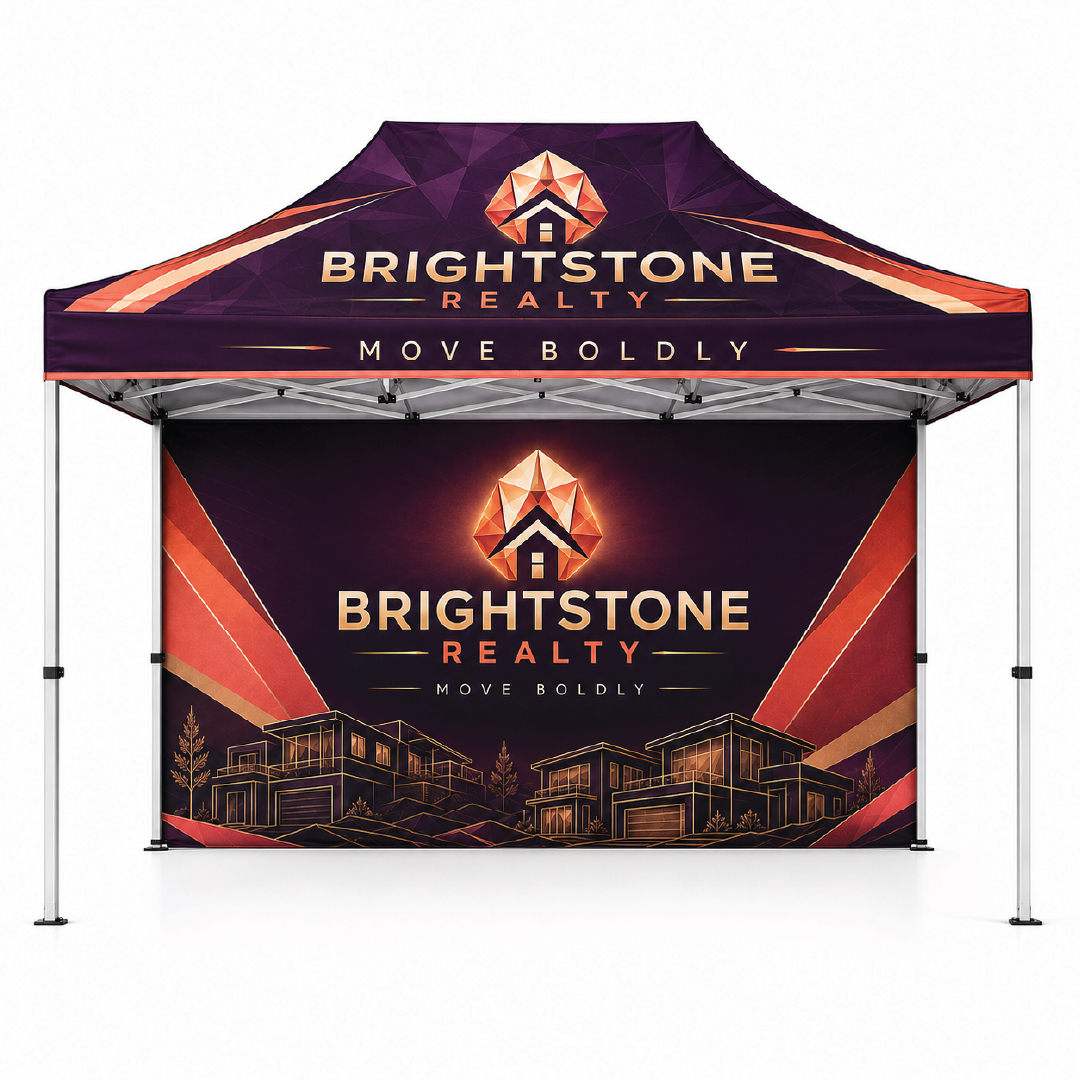
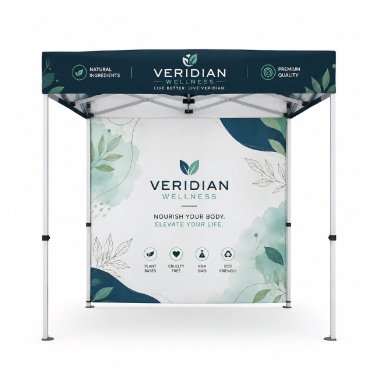
The visual impact also depends on what appears across the fabric. A carefully planned graphic can turn the canopy into a recognizable element of the space instead of leaving the structure visually disconnected from everything around it.
Size should be considered in relation to the entire setup rather than the canopy alone. The available ground area, surrounding clearance, furniture, equipment, people, and access points can all affect which footprint makes sense.
A compact structure may be preferable where floor space is restricted. A larger footprint can make sense when additional covered room is required. The important consideration is how the structure will function once everything that needs to go underneath it is in place.
Printing Limitless offers several canopy footprints, including compact and larger configurations, giving buyers flexibility when planning the available space. Before ordering, measure the intended area and account for room around the structure. This can help prevent a canopy from feeling cramped once it is fully assembled.
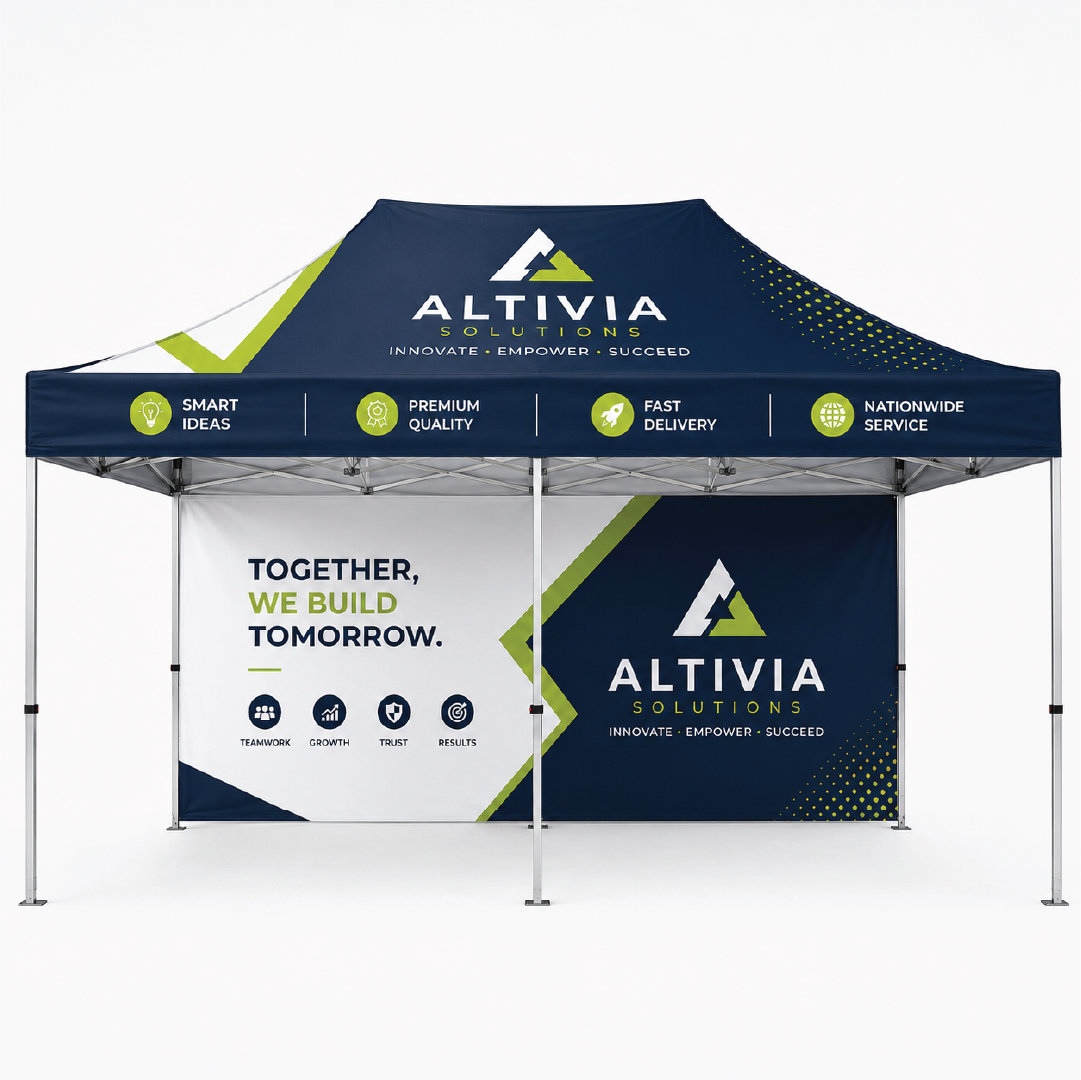
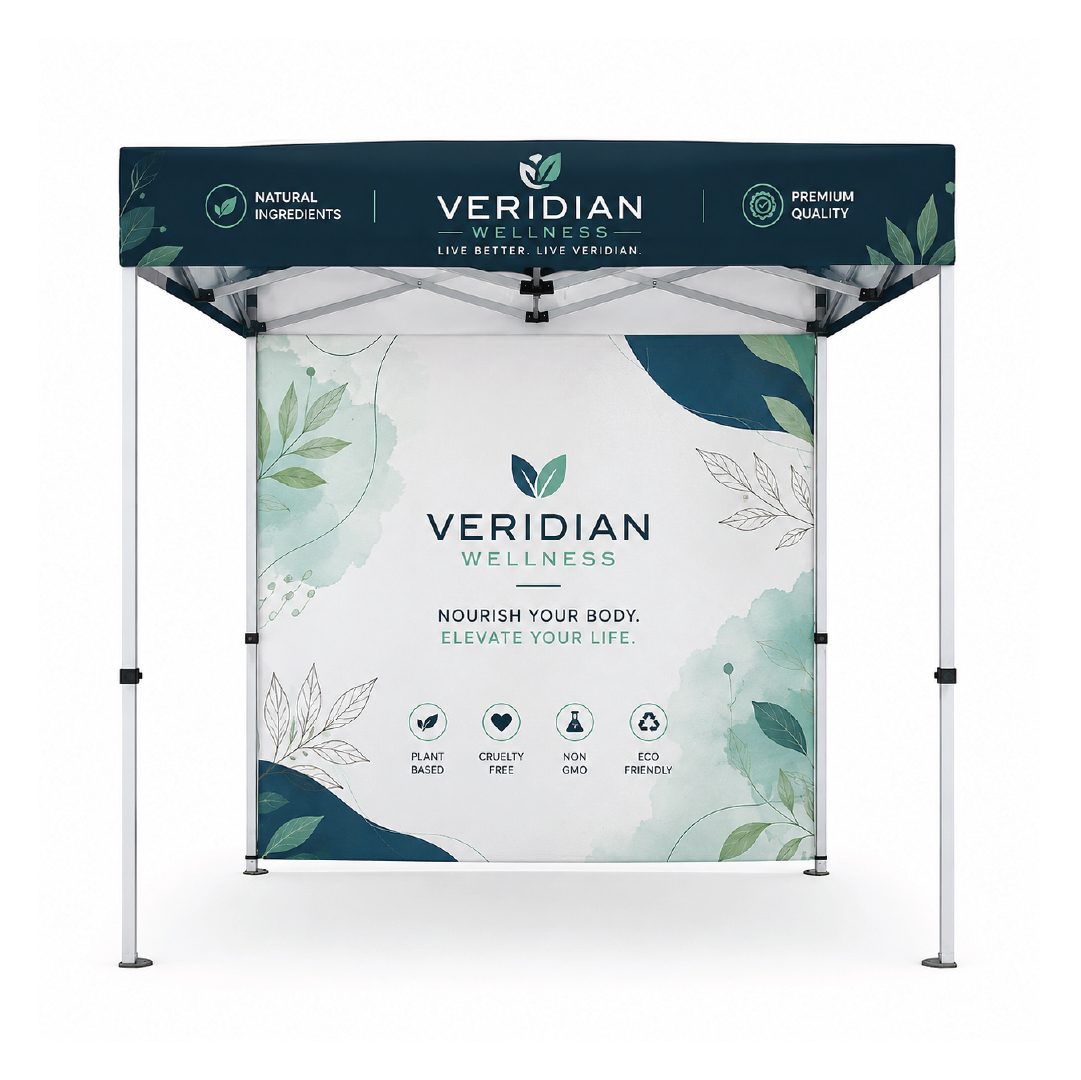
A canopy graphic needs to work as part of a three-dimensional structure rather than as a flat image on a screen. Large visual elements can create strong recognition, while smaller text may become difficult to read at a distance. Logos, color blocks, photography, patterns, and other artwork should therefore be positioned according to how the finished canopy will actually be viewed.
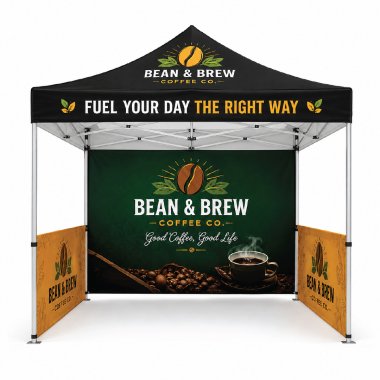
The roof can provide a large visual surface, while walls and other graphic areas can create additional opportunities for branding and imagery. Keeping the design visually balanced across these surfaces helps the complete structure feel intentional.
Printing Limitless uses dye sublimation printing on applicable canopy graphics. Pantone color matching is also available on applicable configurations for buyers who need greater consistency with established brand colors.
The printed fabric may be the most visible part of the canopy, but the frame determines how the structure is assembled, adjusted, and supported.
Applicable Printing Limitless models use aluminum frames with telescopic legs. Adjustable sections allow the height to be modified within the product's specified range, while the frame provides the underlying structure for the canopy fabric and selected accessories.
The frame should be considered alongside the intended frequency of use. A setup that will be assembled repeatedly needs a structure that can be handled practically during both installation and breakdown. Looking at the frame, fabric, connection points, and accessories as one system provides a more useful basis for comparison than judging the graphic alone.
Not every canopy needs the same degree of enclosure. An open structure can keep the surroundings visible and make access straightforward. Additional panels can create a more defined interior area.
Available configurations can include:
| Configuration | Purpose |
|---|---|
| Open sides | Keeps the area accessible and visually open |
| Half panels | Adds partial coverage while retaining openness |
| Full panels | Creates greater enclosure around the structure |
| Clear sections | Maintains visibility through selected areas |
Printing Limitless offers several wall configurations depending on the canopy model. Selected configurations also include half clear panel options using clear PVC vinyl. The choice can depend on how much separation is useful, how the structure should look from outside, and how much visibility needs to be retained.
A canopy does not exist in isolation. The surface beneath it, the surrounding clearance, nearby structures, pedestrian movement, and the overall visual environment can all affect how well the setup works.
A design that feels appropriate in a dense Manhattan setting may need a different approach in an open area around Rochester or Syracuse. That does not necessarily mean changing the entire canopy. Small decisions such as graphic density, wall placement, color, and accessory selection can change how the finished structure relates to its surroundings.
This is also where proportion becomes important. A structure should provide enough presence to serve its purpose without making the surrounding space feel unnecessarily crowded.
The canopy itself can provide the primary visual identity, while accessories can extend that identity into the surrounding space.
Depending on the selected configuration, options can include:
Accessories work best when they serve a specific purpose rather than being added simply because they are available. A flag can extend visibility above nearby structures, while a wall can change how the interior space is experienced.
Custom canopy printing becomes more useful when the artwork is planned as part of an existing visual identity.
Logo proportions, established colors, typography, photography, and graphic elements should remain recognizable when transferred onto fabric. If the canopy is part of a larger visual system, matching those elements can make it feel connected to other branded materials.
For buyers who do not have production-ready artwork, design assistance is available. A design proof can be reviewed before production, giving you an opportunity to check the arrangement before the graphics are printed. This stage is particularly important for large graphics because a design that looks balanced on a computer screen can appear different once distributed across multiple physical surfaces.
Outdoor setups do not always remain identical. The amount of coverage required can change, the visual treatment may need updating, or additional enclosure may become useful later.
That makes configuration flexibility valuable. Depending on the selected product, customers can choose a stand, graphic, or combination of components. Additional graphic or accessory options can also provide ways to adapt the setup over time where compatible.
This approach can be useful when the canopy needs to remain relevant as its application changes rather than being treated as a fixed installation.
A canopy should be evaluated for the complete ownership experience, not just how it looks when assembled.
Consider where the structure will be stored, how it will be transported, who will handle setup, and how often it will be taken down. Keeping the frame and fabric together with the appropriate storage solution can simplify repeated use.
The packed size and weight of the selected configuration are also worth checking before purchase, particularly when the canopy will be moved frequently. Planning for transportation in advance can make the difference between a structure that is convenient to reuse and one that becomes difficult to manage.
Proper care can help maintain both the appearance of the printed fabric and the condition of the structure.
For routine cleaning, Printing Limitless recommends water, a soft sponge, and mild non-detergent soap. Machine washing and strong detergents should be avoided. After cleaning or exposure to moisture, allow the fabric to dry completely before folding and storing it.
It is also useful to inspect the frame and fabric before repeated use. Checking connection points, adjustable sections, graphic attachment areas, and other components can help identify issues before the next setup.
During outdoor use, the canopy should be secured appropriately for the conditions and monitored as weather changes. Severe weather can create forces that are unsuitable for temporary canopy structures, so the setup should never be left unattended when conditions become unsafe.
A custom canopy does not need to be selected as a collection of unrelated features. The frame, graphics, walls, accessories, and storage approach should work together around the intended use.
Printing Limitless provides custom canopy options with different footprints, graphic treatments, wall configurations, and accessory choices. Custom graphics can incorporate logos, imagery, colors, and other approved artwork, while selected configurations provide options such as clear panels and additional visual elements.
The result is a portable outdoor structure that can be configured around the space available and the appearance you want to create.