Free Shipping on Orders $99+
Use Code FLAT15 & Get 15% Off On All Orders
Choose your store
Prices, currency, and delivery follow the store you select.
Prices, currency, and delivery follow the store you select.
A canopy is often the first piece of event equipment that has to be decided. How much space do you need? How visible should your booth be? Will customers walk in or stop at the edge? Do you need room for products, staff, registration, demonstrations, or hospitality? How will the structure be secured once the weather changes?
Those questions become important when a business is moving between events across Ohio. A vendor at a farmers market may need a compact footprint with open access, while a company exhibiting at a large outdoor show could require a 10 x 20 space with walls, graphics, and room for demonstrations.
That is why a custom canopy tent in Ohio should be selected as part of the event setup rather than treated as a standalone shelter.
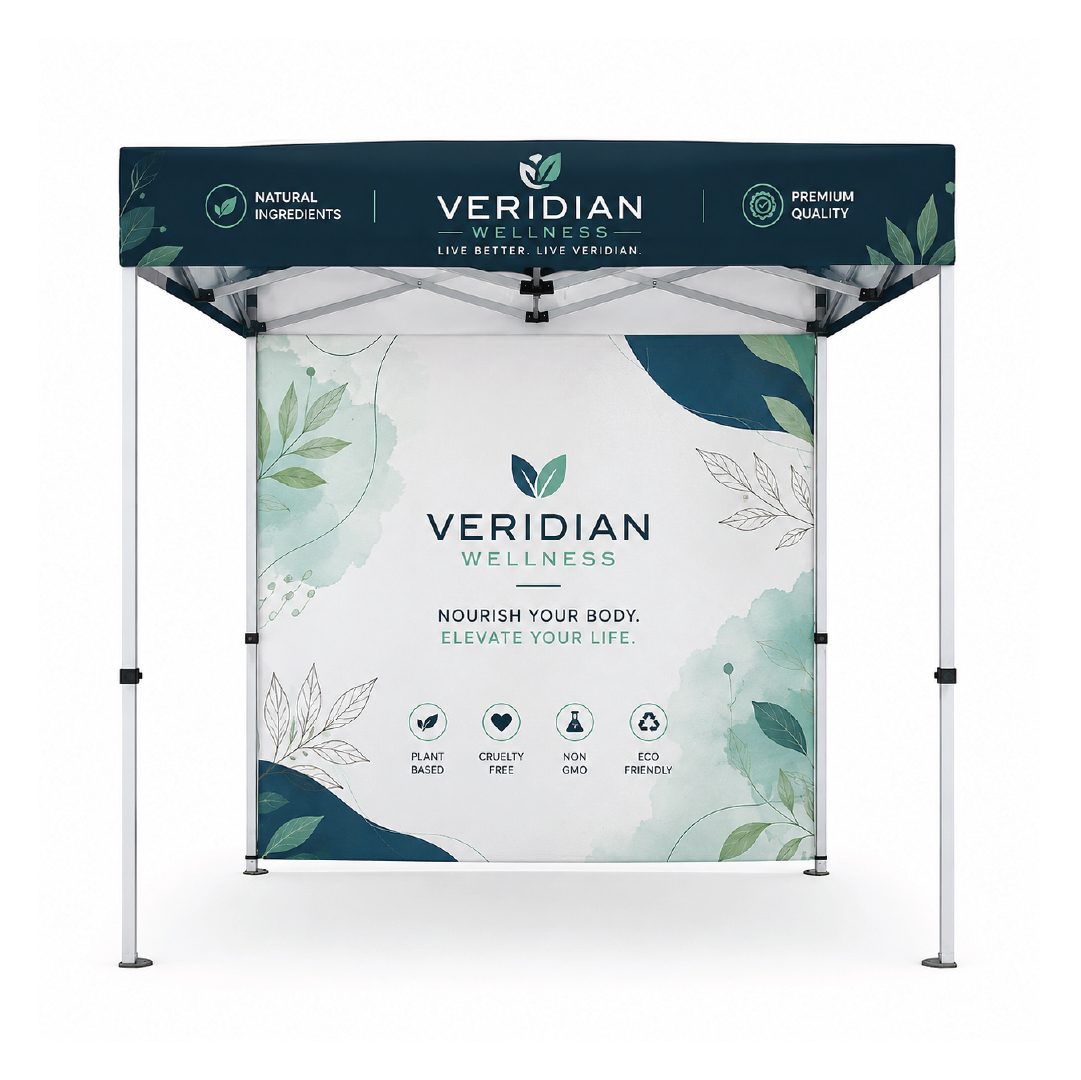
Printing Limitless offers six canopy configurations, including 6 x 6, 10 x 10, 10 x 15, 10 x 20, 10 x 10 beach, and solid color models. Each serves a different combination of space, branding, portability, and event requirements.
Before choosing graphics or fabric, look at the footprint assigned to you.
A booth that feels spacious on paper can become crowded once you add a table, chairs, product racks, staff, storage, customers, and signage. The reverse can happen too. A large canopy in a small vendor area can leave little room for movement around the structure.
Use the available footprint to determine your starting point:
| Available setup | Possible Printing Limitless option | Useful for |
|---|---|---|
| Compact promotional station | 6 x 6 canopy | Sampling, information, small displays |
| Standard vendor footprint | 10 x 10 canopy | Markets, promotions, exhibitions |
| Additional display depth | 10 x 15 canopy | Demonstrations, retail displays |
| Large event environment | 10 x 20 canopy | Hospitality, multiple displays |
| Recreational or open setting | 10 x 10 beach canopy | Outdoor recreation and promotions |
| Simple shelter with separate branding | Solid color canopy | Vendors, events, general coverage |
The 6 x 6 model, for example, provides a compact aluminum pop-up structure with adjustable telescopic legs and optional half panels, topper, Pantone matching, and wheeled travel bag.
The point is not to choose the biggest canopy available. It is to select enough space for the activity taking place underneath it.
Build the Booth Around Visitor Movement
A useful event canopy should make it easy for people to understand what happens inside the space.
Consider a simple visitor journey:
See → Approach → Enter → Explore → Interact → Leave
Your canopy can support each stage.
A visible roof graphic can help someone locate your booth before they reach it. An open front can encourage entry. A back wall can provide the primary brand message. Side panels can frame the display without blocking customer movement.
For a product demonstration, the arrangement might look different. The rear area can hold equipment while the front remains open for interaction. A registration or information booth may need a counter immediately inside the entrance. A food or beverage vendor may prioritize service flow and cleaning access. A branded pop-up canopy therefore works best when the graphic layout and physical layout are planned together.
Local event rules can influence the setup.
The Columbus Farmers Market handbook, for example, requires vendors to use canopies that are in good repair and requires weights on each canopy leg. Its guidance recommends weights of at least 15 pounds per leg depending on canopy size and requires them to be secured at each corner. The market also warns that canopies may have to be removed if they become unsafe during high winds.
That makes anchoring a planning issue, not an accessory you remember after arriving.
For your Ohio event kit, account for:
The requirements can vary considerably by venue.
Ohio's current administrative code addresses temporary tents and membrane structures, including permitting provisions for structures over specified sizes. State-owned property and events sponsored by state agencies can also involve fire marshal permitting requirements under Ohio law. For that reason, always confirm the requirements of the specific event before setup.
The Ohio State Fair demonstrates how extensive outdoor vendor environments can become. Its current vendor information lists more than 400,000 square feet of outdoor exhibit space and specifically identifies requirements such as a tent permit and tent staking map for vendors. The fair also requires certain vendors to carry insurance naming the State of Ohio as certificate holder and additional insured.
That kind of environment changes the role of a canopy. You are not simply creating shade. You are creating a recognizable location where customers can find your business among a large number of exhibitors and concessions.
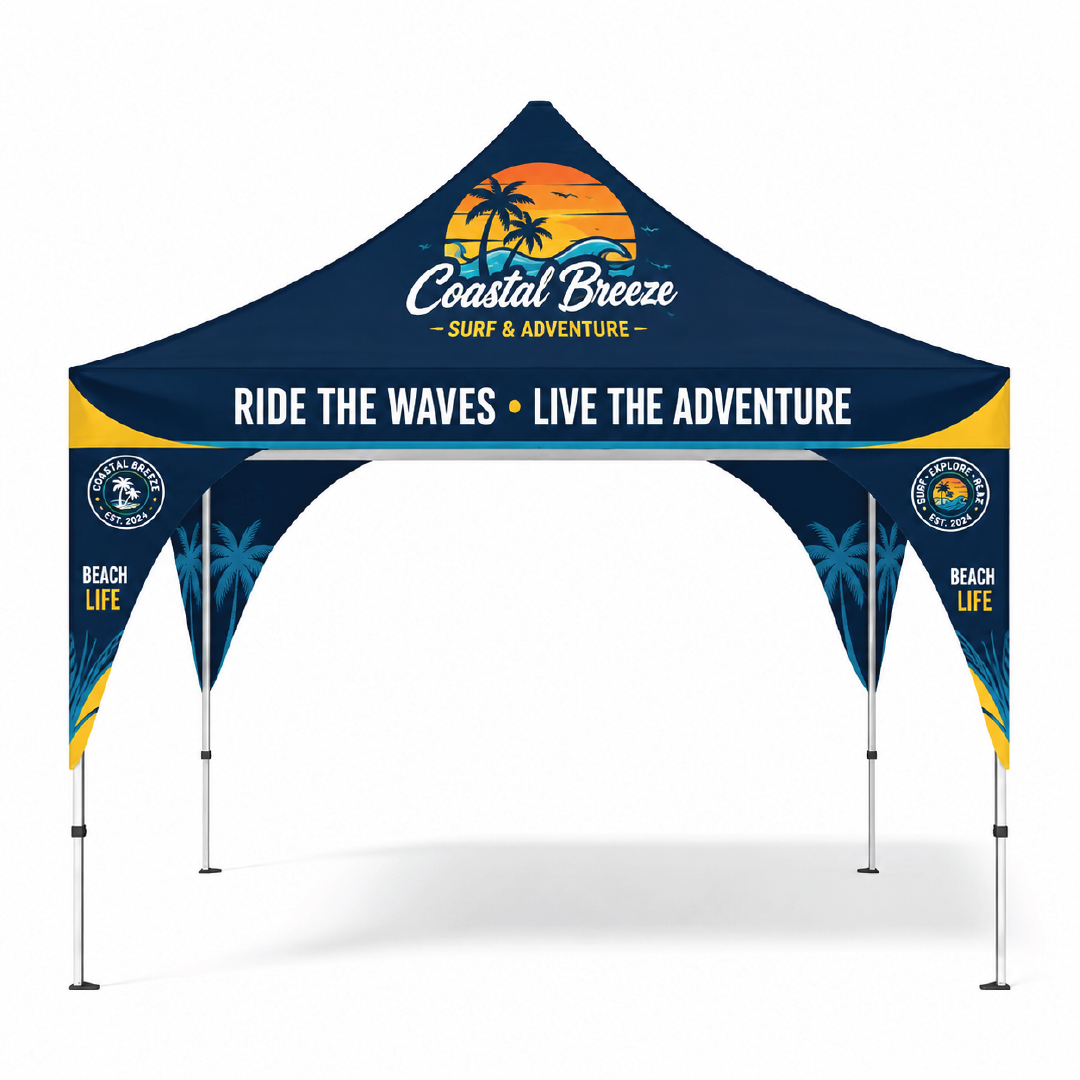
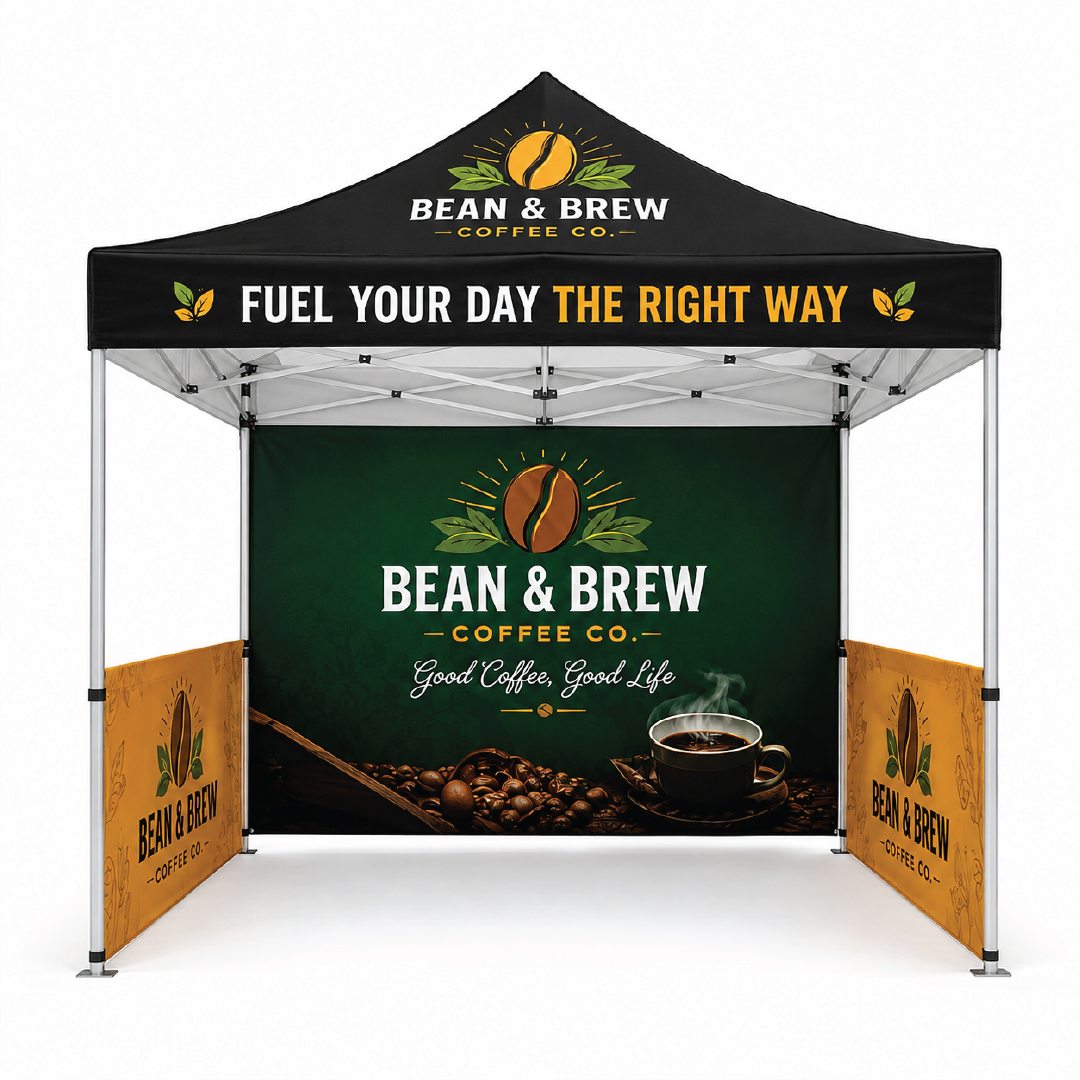
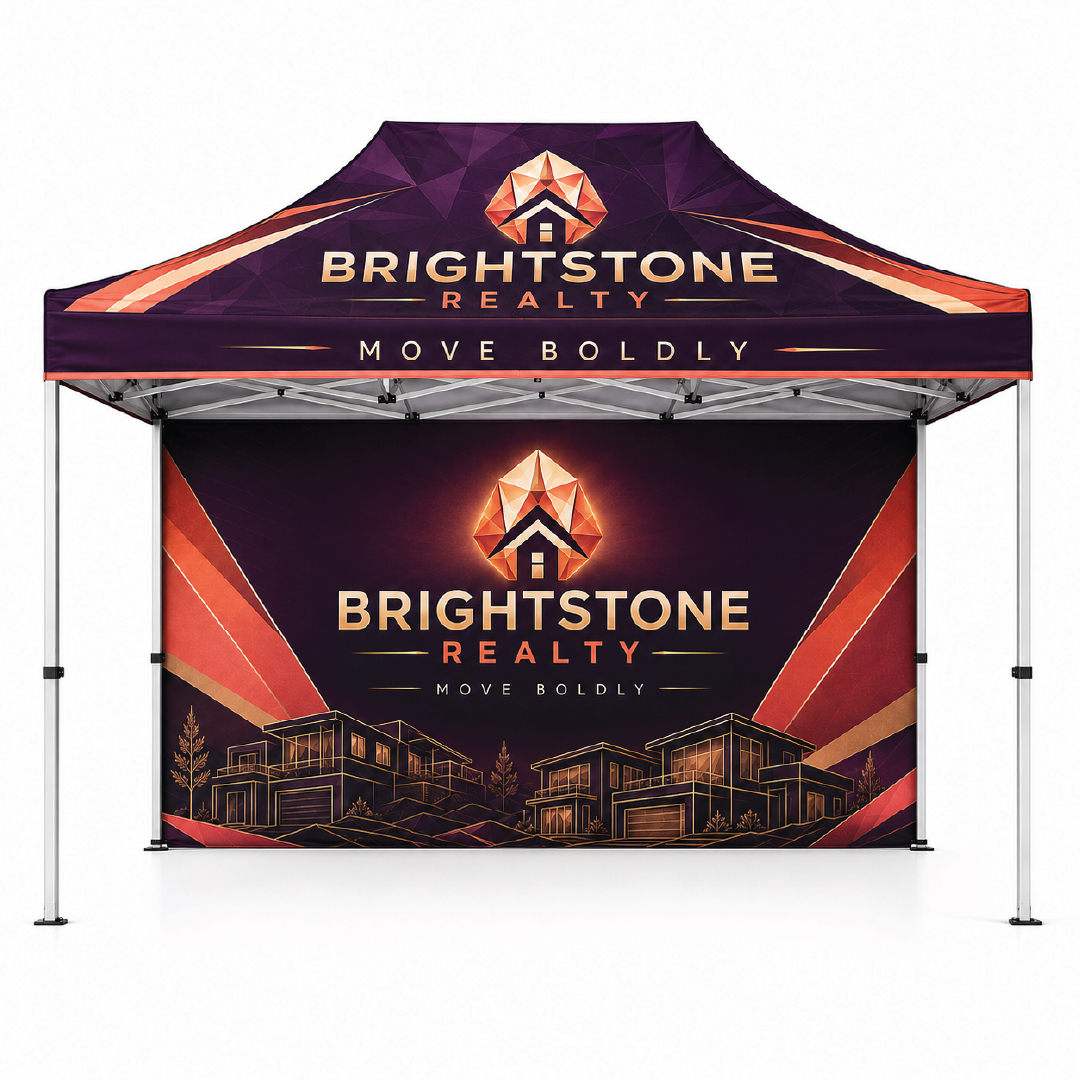
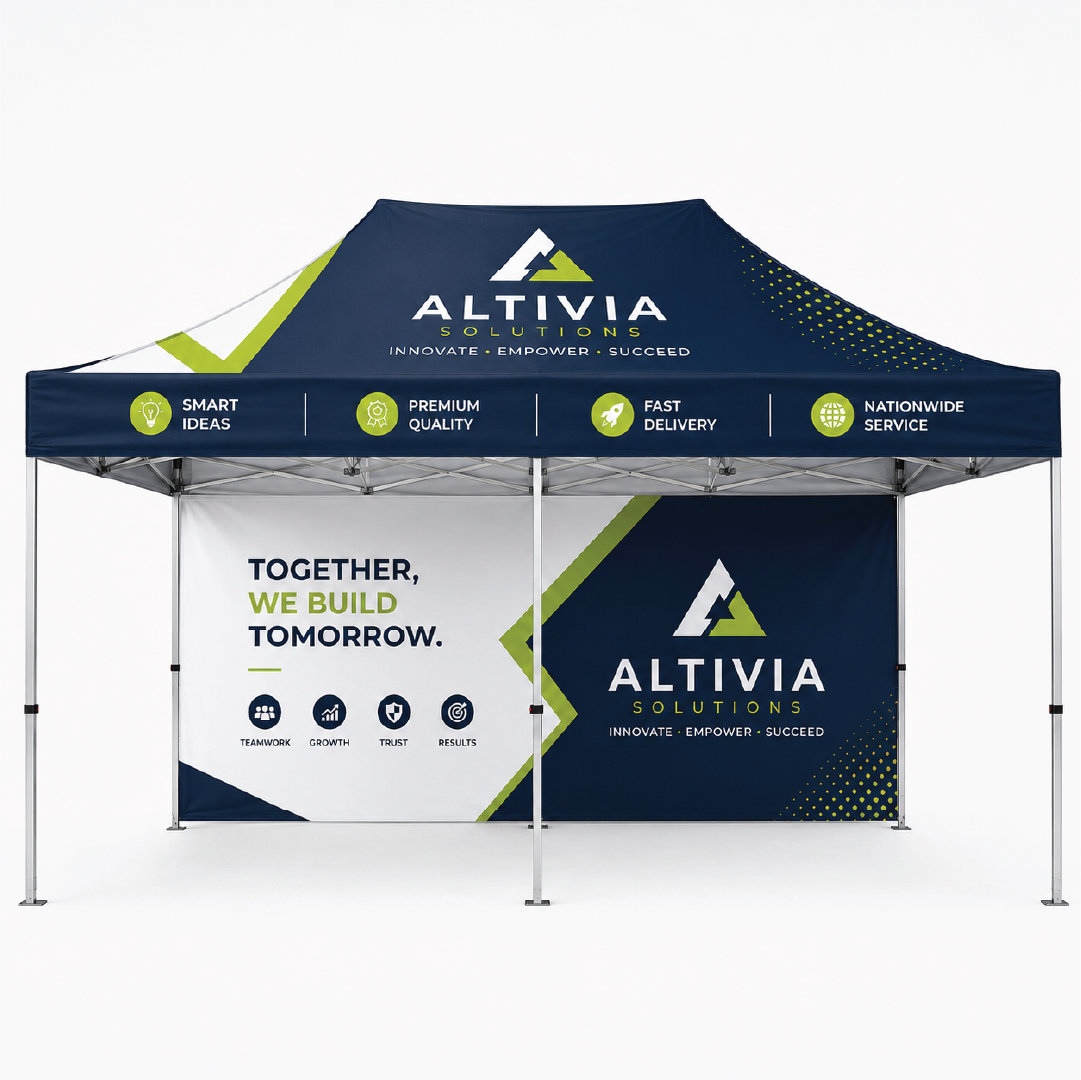
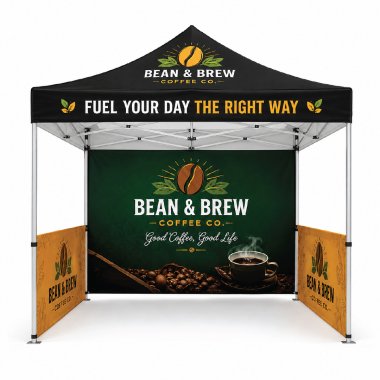
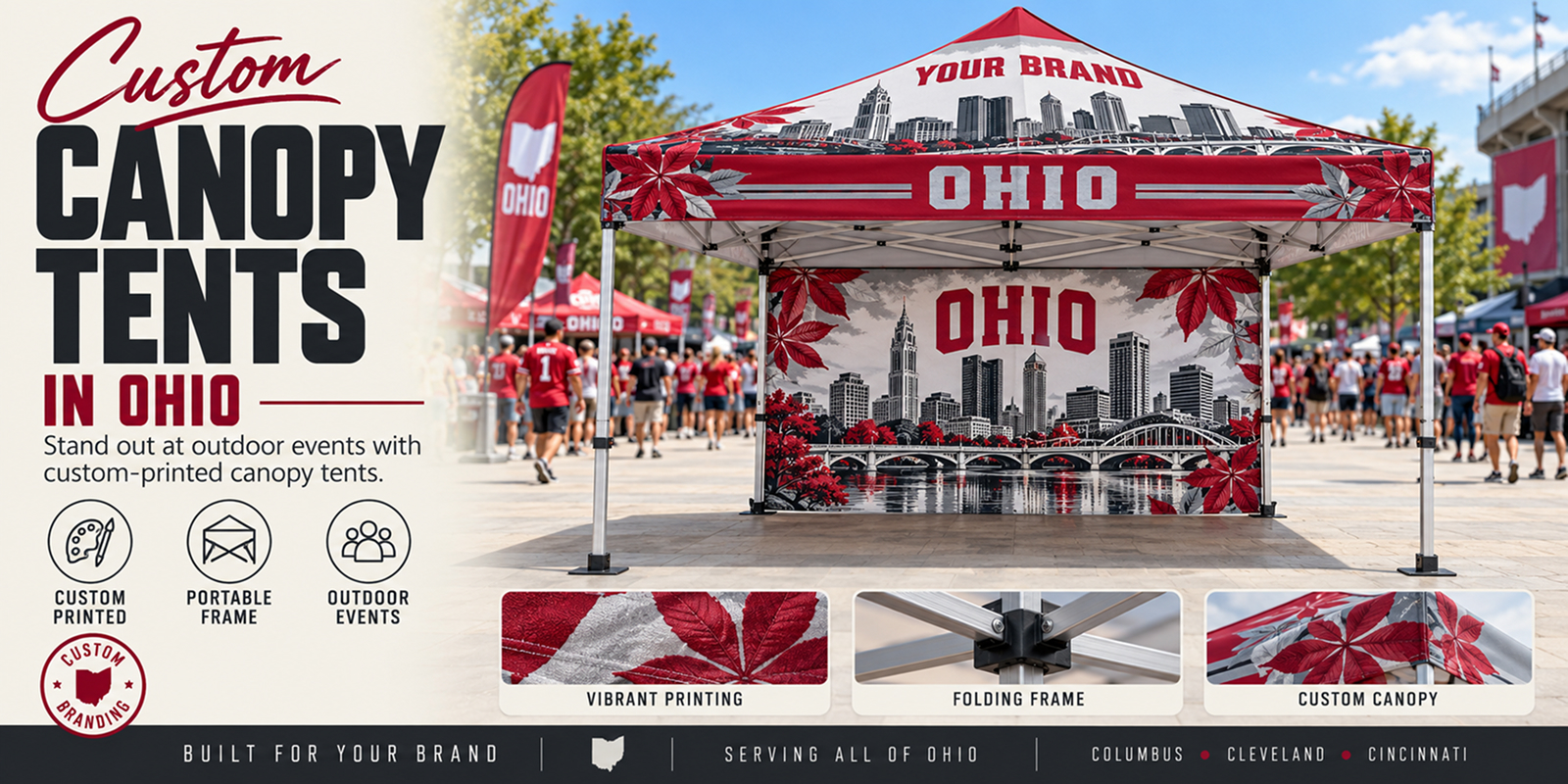
A custom printed canopy can give the booth a consistent visual identity across the roof, valance, back wall, and side panels. For larger outdoor events, the 10 x 15 and 10 x 20 formats can provide additional room for merchandise, product demonstrations, customer conversations, hospitality, or staff storage.
There are two audiences for a canopy graphic. The first is the person walking past. The second is the person already standing inside the booth. The first needs quick recognition. The second can engage with supporting information.
That means your custom canopy printing should have a clear hierarchy rather than placing every piece of information at the same visual level.
At a distance:
Prioritize:
At booth level:
Use:
The large fabric surfaces of a canopy provide plenty of room for branding, but the design still needs visual discipline.
Printing Limitless supports artwork uploads in JPG, JPEG, PNG, GIF, WEBP, PDF, CDR, SVG, AI, EPS, TIFF, and PSD formats, with files up to 500 MB. Customers can upload their own artwork or use the design service when additional assistance is needed.
For a farmers market, prioritize accessibility.
A 10 x 10 canopy can create a recognizable selling area while leaving the front open for browsing. Half panels can provide branding without turning the booth into an enclosed room.
For a trade show, prioritize identification.
Use the roof, valance, back wall, and side panels as parts of one visual system. A larger 10 x 15 or 10 x 20 footprint can provide additional space for product displays and demonstrations.
For a sports event, prioritize quick recognition.
A participant may only have a few seconds to identify a registration desk, sponsor booth, team station, or recovery area. Large logos and strong color contrast can make the location easier to find.
The Akron Marathon Health & Fitness Expo, for example, includes packet pickup, an information booth, race merchandise, exhibitors, and photo opportunities, illustrating how event spaces can combine several functions in one visitor environment.
For a corporate event, prioritize presentation.
A coordinated canopy, branded walls, clean table display, and consistent graphics can create a more organized hospitality or customer engagement area.
For a food or beverage operation, prioritize workflow.
The canopy needs to accommodate service, staff movement, customer queues, equipment, and applicable health requirements. Cincinnati, for example, requires temporary food licensing for many vendors selling food or beverages at special events within city limits.
The tent is only one part of the operating environment.
Printing Limitless uses different materials across its canopy range rather than applying one fabric specification to every model.
| Model | Fabric | Notable details |
|---|---|---|
| 6 x 6 Custom | 600D acrylic coated polyester | Waterproof, 8 oz, dye sublimation |
| 10 x 10 Custom | Eco-friendly or recycled FR fabric | 8 oz graphic weight |
| 10 x 15 Custom | Eco-friendly or recycled FR fabric | 8 oz graphic weight |
| 10 x 20 Custom | Eco-friendly or recycled FR fabric | 8 oz graphic weight |
| 10 x 10 Beach | 300D polyester | UV protection and water-repellent coating |
| Solid Color | 420D Oxford polyester | Approximately 10 oz |
The 6 x 6 model uses an aluminum adjustable frame, while the solid color model uses a 420D Oxford polyester fabric with an aluminum frame and adjustable layers. The material selection should therefore follow how and where you intend to use the canopy.
The fabric attracts attention, but the frame determines how the structure behaves during setup and use. Printing Limitless canopy models use aluminum pop-up frames with adjustable layers. The 6 x 6 product lists a pole diameter of approximately 1.6 inches, with height adjustment between roughly 8.4 and 11.2 feet.
The solid color model lists an aluminum frame with adjustable layers, a maximum height of 135 inches, a minimum height of 101 inches, and approximately 1.57 inch pole diameter. This adjustable construction gives businesses flexibility when setting up on different event sites.
Still, no frame eliminates the need for appropriate anchoring. A portable canopy is a temporary structure, and the event surface, wind conditions, venue rules, and canopy size all influence how it should be secured.
Open canopies encourage movement. Closed or partially enclosed canopies create definition. The right balance depends on your event.
The 6 x 6 model, for example, offers front and side half panel options, including single and double sided configurations, while applicable larger models provide additional wall choices.
This modular approach can make one canopy useful for several types of events.
The largest standard Printing Limitless custom canopy is not simply a larger version of a 10 x 10. The additional footprint can change how the space is organized.
A business could use one section for reception and customer interaction and another for product demonstrations. A corporate team could create a hospitality zone with a separate staff area. A retailer could dedicate one side to product displays while maintaining an open customer entrance.
The 10 x 20 custom canopy tent supports this type of larger layout, with wall configurations and accessories available for applicable setups. A useful rule is to plan the interior before ordering the structure. Sketch the tables, displays, chairs, storage, staff positions, and customer path first. Then select the canopy size that accommodates the plan.
Large structures receive most of the attention, but a smaller canopy can be strategically useful. The 6 x 6 canopy tent is suited to situations where the event footprint is restricted, or the business needs a focused station rather than a full vendor environment.
It can serve as:
Its optional wheeled travel bag also makes repeated transportation easier. For organizations attending many smaller community events, that compact format can be easier to integrate into different spaces.
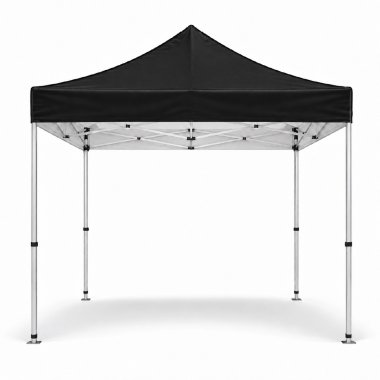
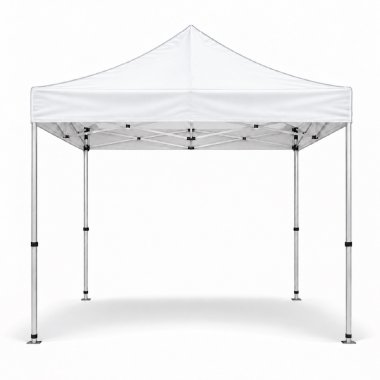
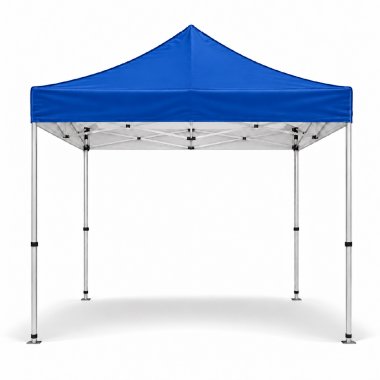
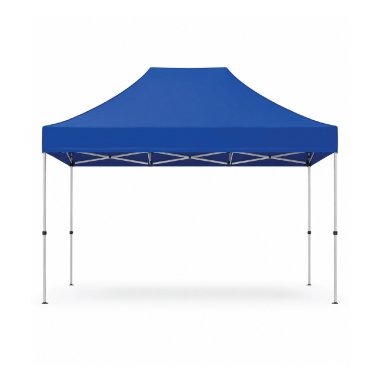
Not every business needs a fully printed structure. The solid color canopy tent is available in 10 x 10 and 20 x 10 sizes and uses 420D Oxford polyester. The current product configuration offers black, white, and blue color selections, along with an aluminum adjustable frame.
This option can make sense when branding is already handled through separate banners, flags, table covers, signs, or other displays. It also creates a simpler visual foundation for organizations that prefer a clean event setup.
Instead of treating the canopy order as the final step before an event, work backward.
Four to six weeks before
Confirm:
Before artwork production
Check:
Before leaving for the event
Pack:
At the venue
Confirm:
This preparation is especially valuable because Ohio event requirements can vary. The Ohio State Fair has its own tent and staking requirements, Columbus Farmers Market specifies canopy weighting practices, and Cincinnati handles temporary structures through its special event permitting process.
A reusable display is an investment in your event program, so maintenance should be part of the routine.
Printing Limitless recommends cleaning its canopy fabric with water, a soft sponge, and mild, non-detergent soap. Strong detergents and machine washing are discouraged because the fabric includes a protective coating. The fabric should be completely dry before storage.
After every event:
That routine becomes particularly useful for businesses traveling between Columbus, Cleveland, Cincinnati, Akron, Dayton, Toledo, and other Ohio communities.
The value of a portable event canopy increases when it can move between campaigns. A retailer might use it for a weekend promotion, then take the same setup to a community festival. A sports organization could use it for registration at one event and merchandise at another. A company exhibiting at a trade show could later use the structure for a customer appreciation event. A nonprofit could adapt the walls and graphics for fundraising, outreach, and community programs.
The physical structure stays familiar while the surrounding event changes. That is where thoughtful customization becomes useful. The canopy can carry a consistent identity while the interior layout, walls, accessories, and supporting displays change according to the occasion.
Ohio businesses do not have to use the same canopy configuration for every appearance. A compact 6 x 6 custom canopy can handle focused event stations. A 10 x 10 offers a versatile footprint for vendors and promotional teams. A 10 x 15 adds working room without reaching the footprint of the largest model. A 10 x 20 can support a larger event environment.
Printing Limitless also provides a 10 x 10 custom beach canopy and solid color canopy for situations that call for different material or presentation choices. Add printed walls, toppers, Pantone color matching, flag attachments, clear panels, and anchoring accessories where applicable. Upload existing artwork or use the design service when you need help developing the graphics. Printing Limitless also provides design proofing, free shipping on qualifying orders, and designer assistance.
The right canopy is ultimately the one that fits the event you are actually attending: its footprint, audience, branding requirements, operating needs, and venue rules.