Free Shipping on Orders $99+
Use Code FLAT15 & Get 15% Off On All Orders
Choose your store
Prices, currency, and delivery follow the store you select.
Prices, currency, and delivery follow the store you select.
A Minnesota banner can spend a short period outside during a summer event or remain part of a longer promotional campaign. The conditions surrounding the display can change considerably during that time, so ordering the printed graphic is only one part of the decision.
Outdoor exposure can bring strong summer sun, rain, thunderstorms, and wind. Longer installations can encounter freezing temperatures, snow, ice, and repeated temperature changes. Installation also deserves attention because a banner needs to work with the structure supporting it.
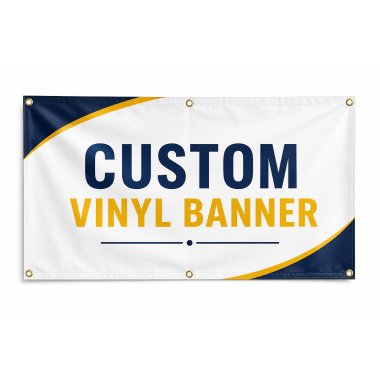
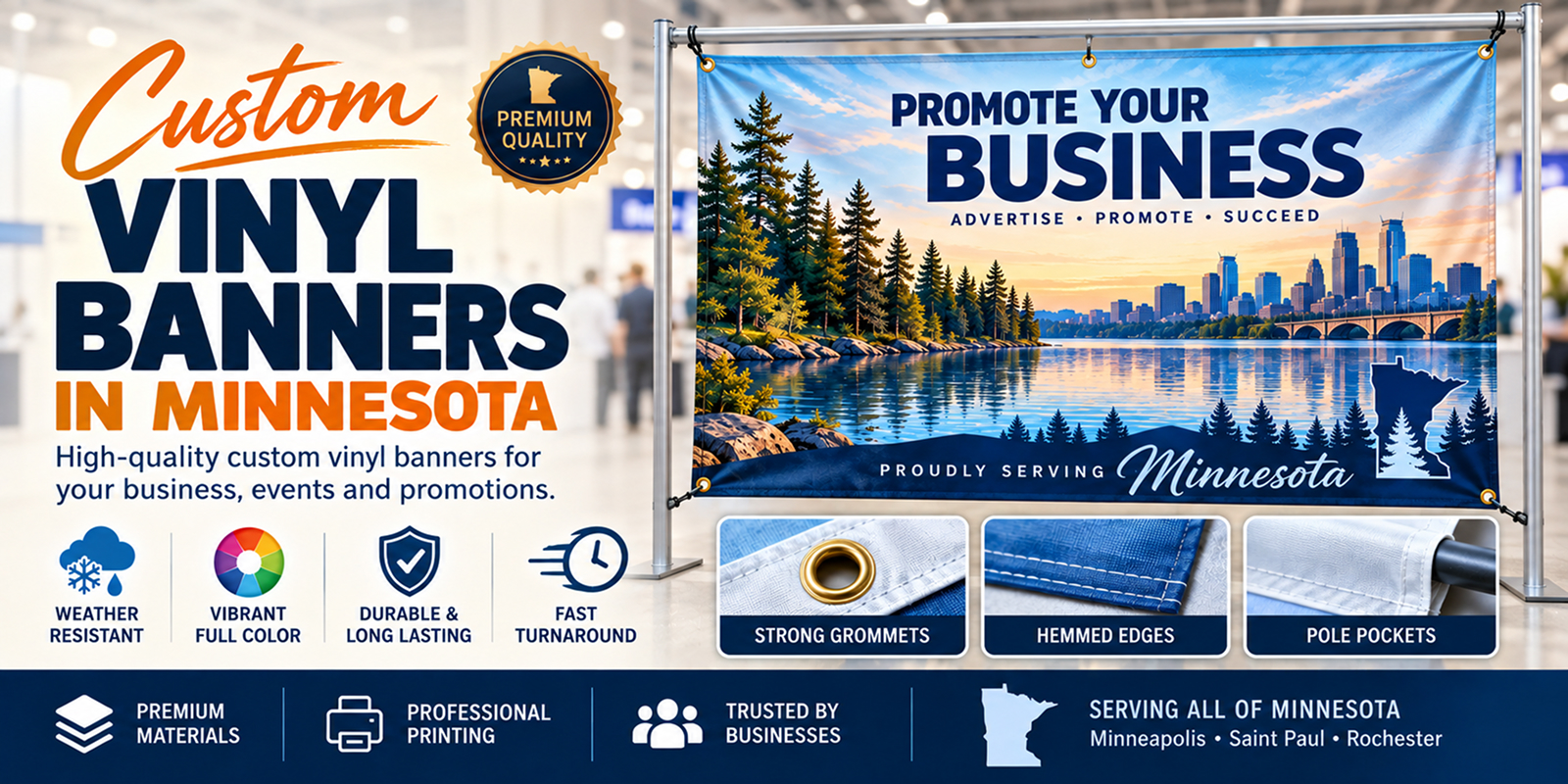
Printing Limitless provides custom vinyl banner printing in Minnesota with custom dimensions, full color printing, 13 oz and Superior 16 oz PVC Flex, single-sided and double-sided options, grommets, pole pockets, wind flaps, lamination, and design assistance.
The useful part is being able to select these specifications around the actual project instead of treating every banner order the same way.
Before choosing a material or finishing option, establish how the banner will be used.
A short campaign has a different exposure period than a banner intended to remain outside for an extended time. An indoor event does not place the same demands on the printed surface as an exterior installation. A banner that will be taken down and stored needs to be handled differently than one that remains mounted.
A simple planning brief can cover the essentials:
| Planning Point | What to Establish |
|---|---|
| Display location | Indoor, exterior, wall, fence, frame, pole, or another approved structure |
| Display period | A few days, several weeks, or extended use |
| Exposure | Sun, rain, wind, snow, ice, and temperature changes |
| Banner dimensions | Available display area and any applicable restrictions |
| Viewing direction | One face or two visible faces |
| Mounting | Grommets, adhesive grommets, pole pockets, or another suitable method |
| Artwork | Existing file, new design, or professional design assistance |
| Storage | Required after the banner is removed |
This information makes the rest of the order easier to determine.
Minnesota's outdoor conditions deserve attention because the state moves through substantial seasonal changes.
Summer can bring high temperatures, strong sunlight, humidity, thunderstorms, and periods of heavy rain. Wind can become a concern during storms and exposed outdoor displays.
Winter creates another set of conditions. Snow, ice, freezing temperatures, and repeated freezing and thawing can place additional demands on banners, mounting points, and supporting structures.
The important consideration is not simply the weather forecast on the day a banner is installed. The expected exposure period matters. A banner installed for a weekend event may have a very different exposure profile than one remaining outside for several months.
Direct sunlight can affect printed surfaces over prolonged exposure. For a banner planned for an extended outdoor campaign, the expected amount of sun should be considered when selecting the material and protective finish.
Lamination is available when additional protection against weather, abrasion, and regular handling is useful.
Vinyl is suitable for many outdoor banner applications, but the installation still needs to be handled properly.
The banner should remain securely attached, and its supporting structure should be appropriate for the conditions. Areas where water can collect against the material or mounting points should be avoided.
A large banner presents a broad surface to moving air. Strong wind can place pressure on the material and the points holding it in place.
This is where wind flaps can become useful. The openings allow air to pass through the banner, helping reduce pressure across the printed surface.
Grommets provide reinforced attachment points, giving the banner suitable places for ropes, ties, hooks, or other compatible mounting hardware. The combination of wind flaps and secure attachment can be considered when an outdoor display is likely to encounter significant wind.
A banner intended to remain installed through winter needs more planning than a summer display.
Snow and ice can add weight. Freezing temperatures can affect materials and supporting hardware. Repeated temperature changes can also affect how a banner behaves during an extended installation. For longer outdoor use, review the entire setup rather than focusing on the printed material alone.
One useful way to plan a banner project is to consider the point in the year when it will actually be used.
This also matters for storage.
A banner removed after a summer campaign can potentially be cleaned, rolled properly, stored in a suitable dry location, and prepared for another approved use later.
Instead of treating finishing as an afterthought, start with the structure holding the banner.
Metal grommets create reinforced attachment points around the banner.
They can work well when the banner will be secured directly to a wall, fence, frame, or another suitable structure using compatible fasteners.
Printing Limitless offers grommet placement options along the top, bottom, left, and right edges.
Adhesive grommets provide an alternative attachment configuration for selected installations.
The surface and mounting method should be checked before choosing this option to ensure the attachment approach is suitable.
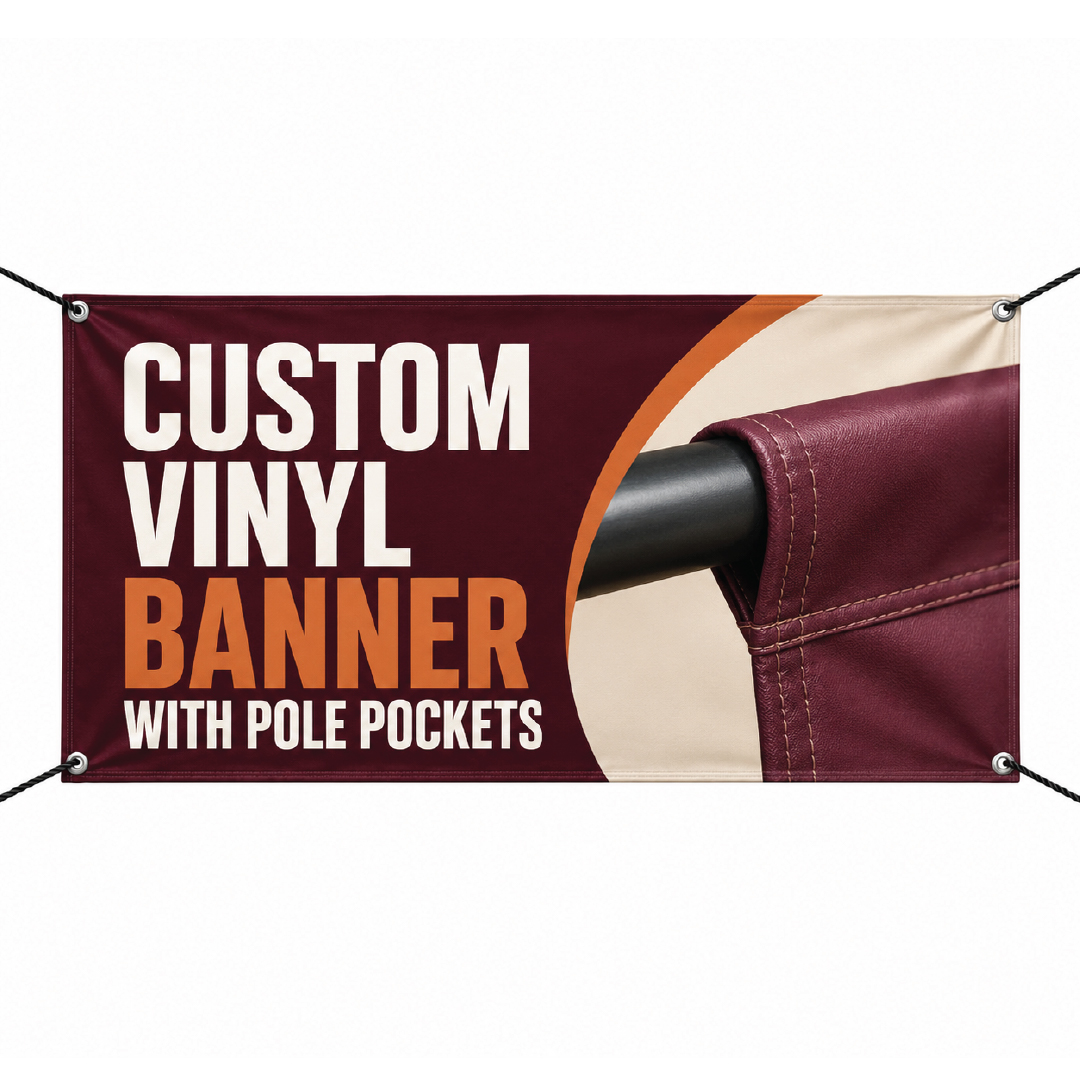
A pole pocket creates a sleeve along an edge of the banner.
A suitable pole or rod can pass through the pocket, allowing the graphic to be supported without relying on individual attachment points around its perimeter.
Pole pockets can be configured along selected edges based on the intended installation.
Wind flaps create openings within the banner that allow air to pass through.
They can be considered for exposed outdoor installations where wind pressure is a concern.
Lamination adds a protective layer over the printed surface.
It can be useful when a banner is expected to experience outdoor exposure, repeated handling, or additional surface wear.
The best finishing combination depends on the physical installation, exposure period, and intended use.
A banner can be printed correctly and still require additional planning before it is installed.
Local governments can establish their own sign requirements, and Minnesota has specific state rules covering certain signage and highway areas.
Minneapolis, for example, requires permits for banners attached to poles within the public right-of-way. Its current rules also restrict commercial advertising on banners permitted under that particular public right-of-way program.
Temporary signs are also addressed within Minneapolis zoning regulations, including requirements covering placement, duration, and location.
State highway areas require another level of attention. MnDOT states that objects generally cannot be placed within the limits of a state highway, and outdoor advertising is governed by Minnesota's Outdoor Advertising Control Act. Local governments can also have their own requirements.
This makes one step particularly important before production:
Confirm where the banner will be installed and check the rules that apply to that location.
A private property display, event banner, building-mounted banner, and public right-of-way installation can fall under different requirements.
Large event graphics should communicate quickly.
The event name usually needs to be the strongest element. Dates, locations, sponsor information, registration details, or other supporting information can then be arranged around it.
A useful hierarchy might look like:
Trying to give every piece of information equal prominence can make a large banner difficult to read.
Minnesota event organizers also need to consider local approval requirements when banners are displayed in public areas. Minneapolis, for example, reviews banners used for special events, while its public right-of-way banner program has specific permitted purposes and installation requirements.
For private property or venue installations, the venue or property owner may also have its own requirements.
A banner viewed at close range can carry smaller supporting information than one positioned across a large outdoor area.
This does not mean every large banner needs oversized lettering and almost no information. The design should reflect the distance, viewing time, and importance of each element.
For Minnesota outdoor displays, pay attention to:
Large format printing gives the design considerable physical space. Good design uses that space intentionally rather than filling every available area.
Printing Limitless offers two PVC Flex choices for custom vinyl banners.
| PVC Flex Option | Printing | General Use Consideration |
|---|---|---|
| Elite 13 oz | 720 DPI eco solvent printing | Suitable for a wide range of indoor and outdoor banner projects |
| Superior 16 oz | 600 DPI UV printing | Heavier material for projects calling for a more substantial banner |
The material should be selected alongside the expected exposure and installation.
A short indoor display may have very different requirements than a banner planned for extended outdoor use.
The heavier option is not automatically necessary for every project. The useful question is how the finished banner will be used and what conditions it is expected to encounter.
Single-sided printing provides one printed face. This works well when the banner has one primary viewing direction or when the reverse side will not be visible.
Double-sided printing provides graphics on both faces. That can be useful when people approach the banner in opposite directions or when the supporting structure leaves both faces exposed.
The two faces can carry identical artwork or separate designs. For example, one side can display a primary event message while the other communicates supporting information. The physical position of the banner should guide this decision. Printing both sides is useful when both faces actually contribute to the display.
Standard sizes make ordering straightforward, but some installations call for dimensions outside those formats.
Printing Limitless provides custom sizing so the finished banner can be prepared around the required dimensions.
Before settling on the size, confirm:
For large format projects, the physical dimensions should be established before the artwork is finalized.
If a banner needs to exceed the available standard formats, custom production can accommodate the required dimensions. Very large banners may need to be produced in multiple sections and joined during production.
A banner can serve as a temporary extension of an existing visual identity. That means the logo, brand colors, typography, photography, and messaging should work together.
A business launching a promotion can make the offer the visual priority while keeping the brand recognizable. An organization promoting a public program can give the program name the strongest position while using the organization's identity as supporting branding. A school, community group, or event organizer can build a consistent look across entrance graphics, sponsor displays, and other printed signage.
Printing Limitless offers Pantone color specification for projects where a particular brand color needs to be identified precisely. This is useful when the banner needs to align closely with established brand materials.
Not every customer begins with production-ready artwork.
Some projects begin with a logo, photographs, written information, brand colors, or an existing advertisement that needs to be converted into a large format design.
Printing Limitless accepts common artwork formats including PDF, AI, EPS, SVG, PSD, TIFF, PNG, JPG, JPEG, GIF, and WEBP.
Professional design assistance is available when the artwork needs to be created or prepared. A Design Proof can also be requested before production so the final artwork can be reviewed before printing. This is useful for checking the overall composition, text, branding, images, and placement of important elements.
Storage deserves attention when a banner is intended for recurring events or seasonal campaigns.
After removing a vinyl banner:
Proper handling can make a reusable banner easier to bring back into service for a future campaign.
Roadside visibility can be attractive for a promotional campaign, but this is also an area where regulations deserve particular attention.
Minnesota's Outdoor Advertising Control Act regulates advertising devices in designated areas, while MnDOT states that objects cannot generally be placed within state highway limits. The department also notes that local municipalities administer requirements on their own roads.
A banner should therefore never be installed in a highway right of way simply because the location provides good visibility. Check the property boundary, road classification, local requirements, and any applicable state rules before installation. The property owner may also have restrictions covering temporary signage.
The process can be reduced to a few decisions:
1. Confirm the location
Know where the banner will be installed and who controls the property.
2. Check applicable rules
Review municipal, county, venue, property, and state requirements where relevant.
3. Establish the dimensions
Measure the available area and confirm any permitted size.
4. Select the material
Choose between the available PVC Flex options according to the project requirements.
5. Select the finishing
Choose grommets, adhesive grommets, pole pockets, wind flaps, lamination, or another appropriate configuration.
6. Decide on printing direction
Select single-sided or double-sided printing.
7. Prepare the artwork
Upload an existing file or use professional design assistance.
8. Review the proof
Request a Design Proof when you want to review the artwork before production.
9. Place the order
Printing Limitless provides free shipping and door-to-door delivery for online banner orders.
Minnesota banner projects can range well beyond a basic printed graphic.
Outdoor conditions can affect the material and finishing. Installation structures influence the choice between grommets and pole pockets. Wind exposure can make wind flaps useful. Extended outdoor campaigns may benefit from lamination. Local rules can affect where temporary banners can be displayed. Artwork needs to communicate clearly at the intended viewing distance.
Printing Limitless provides custom vinyl banner printing in Minnesota with custom dimensions, full color printing, 13 oz and Superior 16 oz PVC Flex, single-sided and double-sided options, grommets, adhesive grommets, pole pockets, wind flaps, lamination, Pantone color specification, design assistance, and Design Proofs.
The result is a banner order built around the actual display requirements, with the material, artwork, and finishing selected before production begins.