
How to Display Your Country's Flag at FIFA World Cup 2026 - Custom Flag Ideas
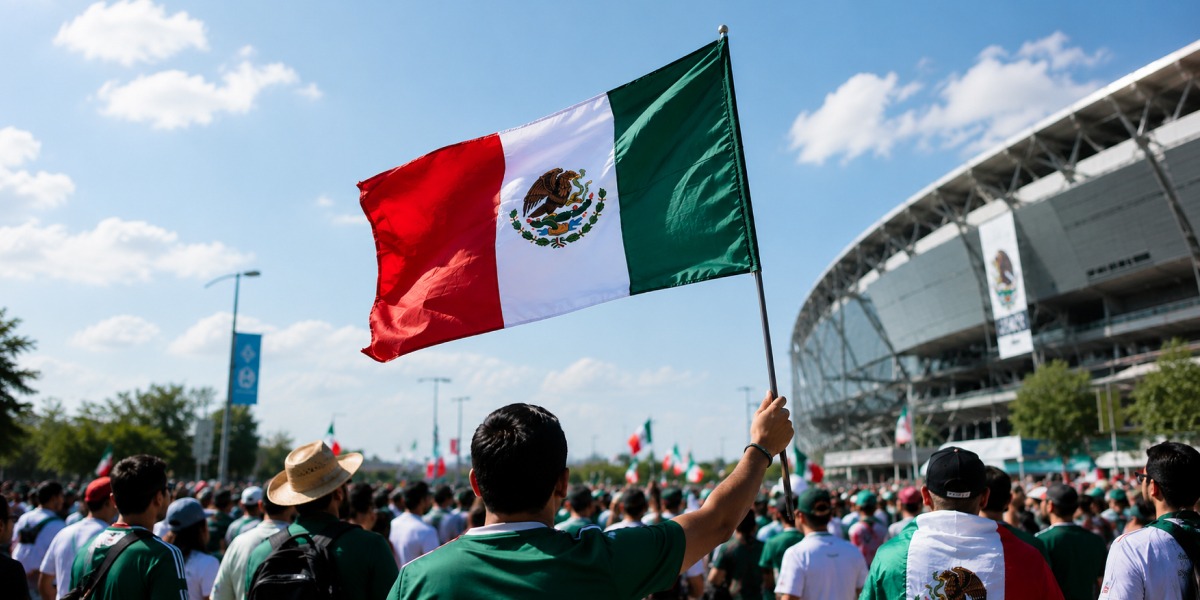
There's a specific moment that happens at every World Cup watch party. Someone walks in carrying their country's flag, drapes it over their shoulders or holds it above their head, and the whole room shifts. People who were strangers thirty seconds ago are suddenly on the same side.
That's what flags do at a tournament like this. They're not decoration. They're identity.
FIFA World Cup 2026 is different from any tournament before it - because it's here, on American soil, spread across 16 host cities from New York to Los Angeles. For fans, businesses, bars, and community groups across the US, that creates something that hasn't existed before: a genuine home-crowd World Cup energy, playing out in your own city, your own neighborhood, sometimes your own street.
If you're thinking about how to show up for it - whether you're a fan planning a watch party or a business trying to create the right atmosphere - flags are where you start.
Why This World Cup Hits Different for Flag Culture
Most American fans have watched the World Cup from a distance. Games played in Qatar, Russia, Brazil - places where the atmosphere was real but far away. You watched on TV and maybe hung something in a window.
2026 changes that entirely. Matches are being played in stadiums across the US. Fan zones are being set up in host cities. Watch parties are being organized at a scale the country hasn't seen for this tournament before. The streets outside venues in Dallas, Miami, Philadelphia, Seattle - they're going to look like the streets outside stadiums in Buenos Aires or Naples on a match day.
And on those streets, flags are everywhere. Handheld, worn as capes, tied to cars, hanging from apartment windows, stretched across bar fronts. It's one of the most visually distinctive things about World Cup culture, and it's coming to American cities this summer.
The Different Ways People Actually Display Flags
Not everyone displays a flag the same way, and the setting matters more than most people think.
At watch parties and bars
This is where handheld flags earn their place. A handheld flag at a watch party is participatory - you wave it when your team scores, hold it up for photos, drape it over your seat. It's personal in a way that a banner on a wall isn't.
For bars and restaurants hosting watch events, the flag display question is slightly different. You want something that creates atmosphere for the full room, not just for individual fans. That usually means a mix: larger flags mounted on walls or hung from ceilings to establish the visual environment, with smaller ones available for fans to grab and use during the match.
Outdoors and on storefronts
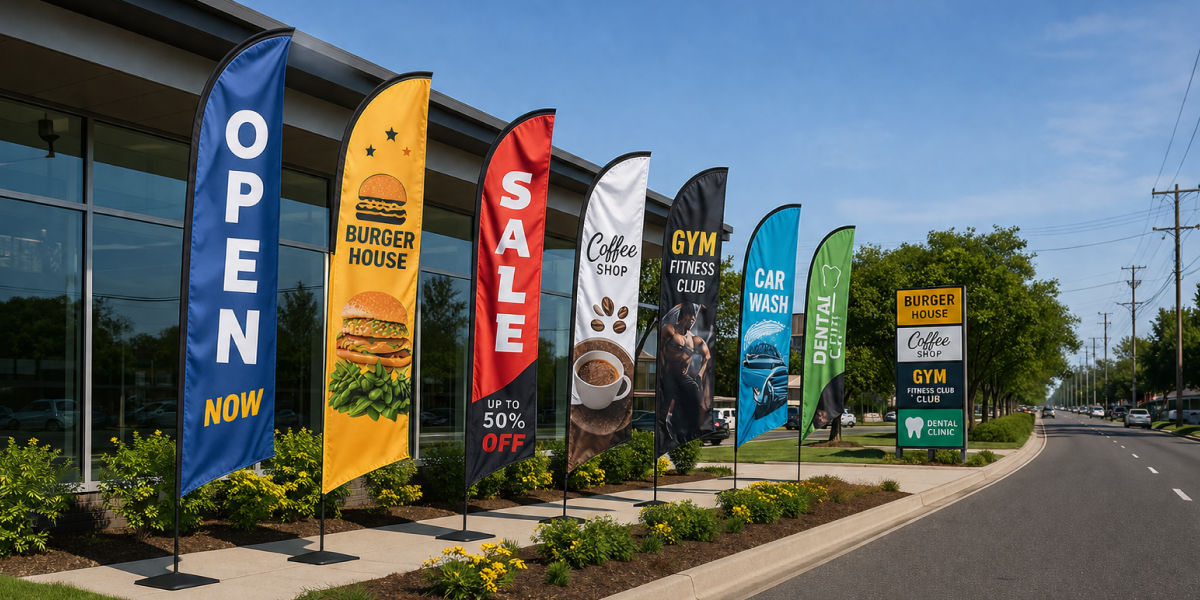
Businesses near host city venues, sports bars, and restaurants showing matches are going to want outdoor displays that are visible from the street. Country flags mounted on poles, flag banners running along a building front, or flags hung in windows - these signal to fans walking by that this is the place to be.
Outdoor display has its own set of practical requirements. Heat, wind, and direct sun in June will test any material. Flags meant to be displayed outdoors for days or weeks need to be made from something that won't fade or fall apart in the first rainstorm.
In fan zones and public spaces
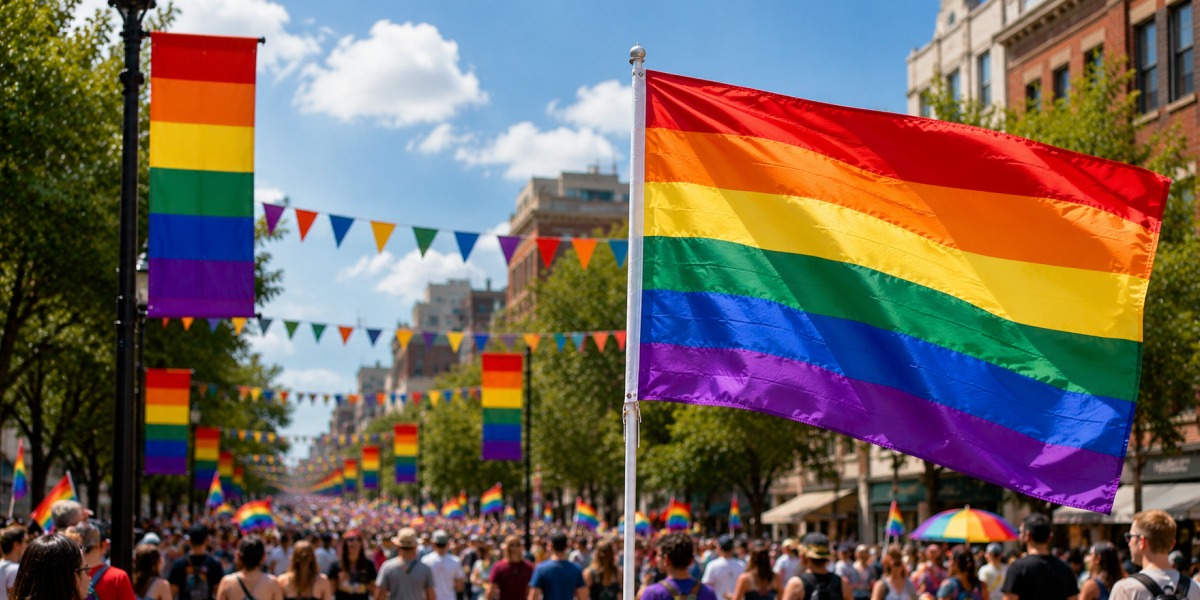
Community organizations and local groups putting together fan gatherings in parks or public spaces often overlook flags until the last minute. A well-flagged fan zone looks like an event. Without flags, it looks like people standing in a field watching a screen.
For these settings, the mix that tends to work best is a combination of large backdrop flags for the main viewing area, medium-sized flags on temporary poles around the perimeter, and handheld flags distributed to attendees. The effect - when you see it done well - is genuinely electric.
Thinking About Which Flags to Display
The World Cup 2026 has 48 teams. That's 48 different country flags, each with its own colors, design, proportions, and meaning.
For fans, the choice is obvious - you fly your country's flag. But for businesses and event organizers, the question is more complex.
Some bars choose to display the flags of every team in the tournament. This works visually and signals to fans from any country that they're welcome. It requires planning ahead - 48 flags is a significant display, and you want them properly mounted, not just taped to a wall.
Others display only the flags of countries with large fan bases in their area. A restaurant in Miami might lean heavily into Brazil, Argentina, and the various Central American and Caribbean nations. A bar in a city with a large Mexican-American population might center Mexico's colors. Knowing your neighborhood and your customers shapes what makes sense.
Some businesses go a different route entirely - displaying the host nation flag prominently alongside whichever teams are playing each match day, rotating the display as the tournament progresses.
There's no single right answer. The key is making the choice deliberately rather than just grabbing whatever's available.
Custom Flag Ideas Worth Considering
Stock country flags are widely available, but they have a ceiling. They're generic, they look the same as every other flag in the room, and they say nothing about the specific event, business, or community hosting the gathering.
Custom flags open up possibilities that stock flags don't.
A bar can put its name and logo alongside a country's colors - creating something that functions as both a flag and a piece of branded merchandise that fans might actually want to keep. A community organization can create a flag that represents both the host city and the tournament. A group of friends traveling to a match can design something that identifies their crew in a crowd of thousands.
The design possibilities for custom flags are wider than most people realize. You can incorporate national colors without reproducing an official flag exactly - which gives you room to add text, logos, or custom artwork. You can play with proportions, choose specific materials for specific uses, and order quantities that make sense for your situation rather than being limited to whatever's in stock.
For businesses especially, this is worth thinking about early. Custom flags for World Cup 2026 that also carry your brand are marketing material - they end up in fan photos, in social media posts, in the backgrounds of videos that get shared during matches. That kind of organic visibility during a tournament this size is genuinely hard to buy through conventional advertising.
Practical Things Nobody Warns You About
Sizing catches people off guard. A flag that looks appropriately sized on a website product page can look underwhelming in an actual room. For wall mounting, go bigger than you think you need. For handheld use, go smaller. A 3x5 foot flag is the most common standard size, but for large venue displays, 4x6 or bigger makes a real difference in visual impact.
Material determines everything outdoors. Polyester is the standard for outdoor flags - it's lightweight enough to catch wind, durable enough to handle weather, and holds color reasonably well. But not all polyester is the same quality, and UV resistance varies significantly between manufacturers. If flags are going to be in direct sun for weeks, ask specifically about UV-resistant options. Colors like red and yellow - prominent in dozens of World Cup team flags - fade faster than darker colors under sustained sun exposure.
Wind matters more than people expect. A large flag on a pole in a location with any breeze can become a significant structural issue. Flags that aren't properly grommeted and mounted can tear, wrap around poles, or pull hardware out of walls. For anything that's going to be outdoors and unattended, make sure the mounting is rated for the flag size.
Lead time is real. The World Cup starts in June. Businesses and organizers who wait until May to think about flags will find themselves either scrambling or stuck with whatever's left in stock. Custom flag orders typically need two to four weeks depending on quantity and complexity. For large orders of country flags or custom designs, earlier is always better.
Country Flag Colors - A Quick Reference for Designers
If you're designing anything around specific national teams, here are some of the most-watched nations and their primary flag colors:
USA - Red, white, blue Mexico - Green, white, red (with the eagle emblem at center) Brazil - Green, yellow, blue, white Argentina - Light blue and white, with a sun emblem England - White with red cross (St. George's Cross) France - Blue, white, red vertical stripes Germany - Black, red, gold horizontal stripes Spain - Red and yellow, with coat of arms Portugal — Green and red, with shield detail Morocco - Red with green pentagram
Each of these flags has specific proportions and design details that matter to fans from those countries. A rough approximation is fine for generic party decoration. For anything that's going to be prominently displayed or that represents a brand, get the colors and proportions right.
For the Fans Who Just Want to Show Up Right
Not every person reading this is planning an event or running a business. Some people just want to know how to carry their country's flag to a watch party without looking like they don't know what they're doing.
A few things worth knowing:
Draping a flag over your shoulders like a cape is completely standard at World Cup events. It's arguably the most common way fans wear their country's colors in a crowd. The flag stays visible, it's hands-free, and it reads clearly from a distance.
Handheld flags at watch parties work best when there's open space to wave them. In a packed bar where you're shoulder-to-shoulder with other fans, a full-size flag on a pole becomes a liability. Smaller flags on short sticks, or flags that can be folded and held, are more practical in tight spaces.
If you're going to an actual match at one of the host city stadiums, check the venue's flag and banner policy before you bring anything. Most stadiums allow handheld flags and small banners. Large poles, oversized banners, and flags that obstruct other fans' sightlines are usually restricted.
The Bigger Picture
World Cup 2026 is going to be the largest sporting event ever held in the United States. Sixteen host cities. Forty-eight teams. Matches running from June through mid-July. Fans traveling from every corner of the world to watch their countries compete on American soil.
For anyone selling, designing, or thinking about flags and event displays - the opportunity is real and it's right now. The fans are already planning. The bars are already booking. The community organizations are already talking about fan zones and watch parties.
The flags are part of what makes the whole thing look and feel like a World Cup. Getting that right - whether you're ordering country flags for a bar, designing something custom for your community, or just figuring out how to rep your team at a watch party - is worth thinking about before June arrives.